MPs probe Sh800million KEWI consultancy fee, flag Sh10.5million unsurrendered imprests
The committee further questioned why Sh330 million had already been paid despite Parliament not being furnished with adequate documentation detailing completed work and measurable outputs.

Members of Parliament have raised serious concerns over a proposed Sh800 million consultancy fee for the upgrading of the Kenya Water Institute (KEWI), demanding a detailed breakdown of the work undertaken and justification for the amount before any further public funds are released.
The scrutiny comes as the National Assembly’s Public Investments Committee on Commercial Affairs and Energy also questioned the institute over multiple audit queries, including the issuance of unsurrendered imprests worth Sh10.5 million to staff and weaknesses in debt recovery systems.
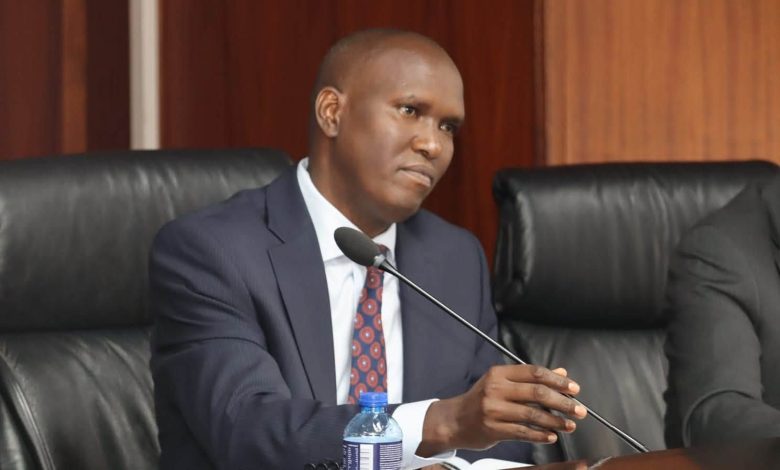
The issues emerged when KEWI management, led by Chief Executive Officer (CEO) Leiro Letangule, appeared before the committee chaired by Pokot South MP David Pkosing to respond to audit queries raised by the Office of the Auditor General covering the financial years 2019/2020 to 2024/2025.
A key concern was the consultancy contract linked to the upgrading of the institution, whose cost has been projected at Sh800 million.
Lawmakers disclosed that Sh330 million had already been paid to consultants involved in the project, with hundreds of millions of shillings still expected to be disbursed.
The committee questioned how the consultancy fee was arrived at, describing the amount as unusually high and demanding evidence that the taxpayer was receiving value for money.
MPs directed officials from the Ministry of Water, Sanitation and Irrigation and KEWI management to provide a comprehensive account of the consultancy services rendered before any further payments could be considered.
The legislators demanded an itemised breakdown of the consultancy work, including specific assignments undertaken, project milestones achieved, timelines, deliverables and the methodology used to determine the Sh800 million contract value.
They also sought clarification on the procurement process, questioning whether the consultancy was competitively tendered and whether due diligence was conducted before the contract was awarded.
Committee members expressed concern that consultancy services continue to consume a significant share of public development budgets, often without corresponding evidence of value delivered.
They insisted that implementing agencies must demonstrate that the consultants provided specialised technical expertise that could not have been sourced internally before Parliament approves any additional expenditure.
The committee further questioned why Sh330 million had already been paid despite Parliament not being furnished with adequate documentation detailing completed work and measurable outputs.
Officials were directed to submit consultancy agreements, payment schedules, technical reports, progress updates and all supporting documentation to enable the committee to determine whether the payments represented value for money or whether corrective action would be required.
The KEWI upgrade is intended to modernise the institution’s infrastructure and strengthen its capacity to train professionals in Kenya’s water sector.
However, MPs cautioned that the importance of the project should not be used to justify inflated consultancy charges.
Beyond the consultancy contract, lawmakers also turned their attention to financial management weaknesses identified by the Auditor General.
The committee noted that a review of the institute’s financial records revealed that several officers had been issued cumulative imprests amounting to Sh10.5 million, which remained unsurrendered at the close of the financial year.
Committee chairperson David Pkosing said the practice was in violation of Regulation 93(8) of the Public Finance Management Regulations, 2015.
“That regulation requires that in order to effectively and efficiently manage and control the issue of temporary imprest, an accounting officer or AIE holder shall ensure that no second imprest is issued to any officer before the first is surrendered or recovered in full from the officer’s salary,” Pkosing said.
Responding to the concerns, Letangule acknowledged the audit findings and told the committee that corrective measures had already been initiated.
“The officers concerned were formally notified to surrender or account for the outstanding imprest amounting to Sh10.5 million,” he said.
He added that the institute had strengthened compliance with imprest regulations by strictly enforcing its imprest policy to ensure that officers would not receive additional imprests before accounting for previous advances.
The committee also examined the consequences of recovering the outstanding imprests through salary deductions.
It heard that deductions had left six officers earning a net salary below one-third of their basic monthly pay of Sh86,323, contrary to statutory requirements designed to protect employees from excessive deductions.
Letangule told MPs that the institute had written to all affected employees directing them to regularise their net pay in compliance with the statutory one-third rule.
Another audit issue raised before the committee concerned the absence of a formal Debt Collection Policy at the institute.
The Auditor General observed that KEWI lacked documented guidelines outlining debt recovery procedures and actions to be taken where debts remained unpaid, making it difficult to assess whether receivables were being effectively managed.
In response, the management told the committee that while there was no standalone debt collection policy, the institute had established a receivables management process to guide debt recovery.
The committee said it would continue scrutinising the institute’s financial management systems to ensure full compliance with public finance laws and prudent use of taxpayers’ money.
Lawmakers maintained that all public institutions must uphold accountability, transparency and sound financial management, particularly in projects involving significant public expenditure, and vowed to pursue the outstanding audit issues until satisfactory explanations are provided.