“Why now, not Uhuru?” Murkomen’s remarks ignite ethnic profiling row in fuel crisis
"The question we must ask is this: why was there understanding during the tenure of Uhuru Kenyatta, yet now, under William Ruto, the response quickly turns to street action? There appears to be a level of profiling that needs to be addressed," Murkomen said.

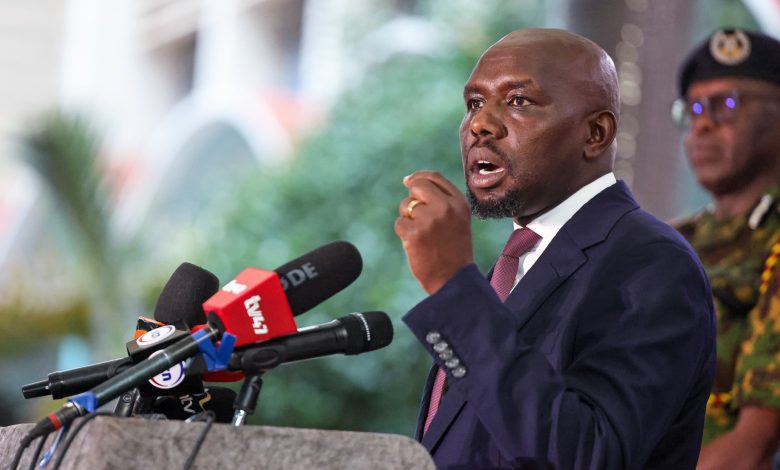
Interior and National Administration Cabinet Secretary Kipchumba Murkomen has sparked fresh controversy after accusing Public Service Vehicle (PSV) operators of selectively targeting President William Ruto through protests over rising fuel prices, remarks critics widely interpreted to amount to ethnic and political profiling of the transport sector.
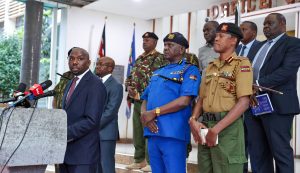
Speaking during a press briefing yesterday evening at Harambee House amid nationwide protests and a paralysing matatu strike, Murkomen questioned why PSV operators had not withdrawn services during the administration of the retired President Uhuru Kenyatta despite high fuel prices at the time, but had now resorted to demonstrations and street action under Ruto’s government.
“The matatu sector never protested against President Uhuru Kenyatta over high fuel prices. They did not stop their vehicles. Why are they doing this to President William Ruto now?” Murkomen posed.
The CS suggested that the hostility directed at Ruto was driven by more than economic hardship, claiming there appeared to be “a certain level of profiling” against the President.
“The question we must ask is this: why was there understanding during the tenure of Uhuru Kenyatta, yet now, under William Ruto, the response quickly turns to street action? There appears to be a level of profiling that needs to be addressed,” he said.
Murkomen’s remarks immediately triggered criticism from sections of the transport sector and political observers, who accused the government of introducing ethnic and political undertones into a crisis largely driven by the soaring cost of fuel and the rising cost of living.
The Interior CS made the remarks as he accused “rogue politicians” of mobilising criminal gangs to infiltrate Monday’s fuel protests and target government projects and businesses linked to pro-government leaders.
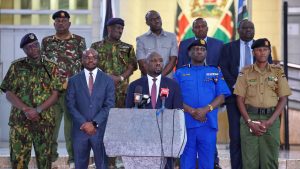
According to Murkomen, four people were killed and more than 30 others injured during protests that erupted in several towns across the country.
“It is unfortunate that we lost four Kenyans in today’s violence. It is very regrettable that there are politicians who measure the success of opposition by the number of innocent lives lost,” he said.
Murkomen claimed some of the violence witnessed during the protests was part of an organised campaign to intimidate government supporters and sabotage flagship state projects.
He cited the looting of supermarkets owned by a pro-government Member of Parliament, the burning of United Democratic Alliance offices in Wote and the torching of two trucks at the Rironi–Mau Summit highway project as evidence of coordinated attacks.
“The looting, the burning down of UDA offices in Wote, and the torching of two trucks are not coincidences but a calculated move to spread fear and intimidate government supporters and innocent public servants,” Murkomen said.
He further alleged that a section of the political class was using inflammatory rhetoric to fuel intolerance and mobilise gangs to destabilise the country.
“We are witnessing a clear scheme where a section of the political class is making incendiary statements, organising gangs to spread terror and sabotage government projects,” he added.
At the same time, Murkomen warned political leaders against profiling Kenyans based on political opinions, saying the government would hold them personally responsible for deaths and destruction linked to violent protests.
The CS also defended the government-to-government fuel importation programme, arguing that despite rising prices, it had ensured Kenya maintained stable fuel supplies while some neighbouring countries faced shortages.
“A number of countries in our neighbourhood do not have fuel. Because of the foresight and the G-to-G programme, we at least have a guarantee of supply of fuel, even if it is at a higher price,” he said.
Murkomen maintained that vandalism, looting and road blockades would not lower fuel prices and instead risked worsening the economic situation.
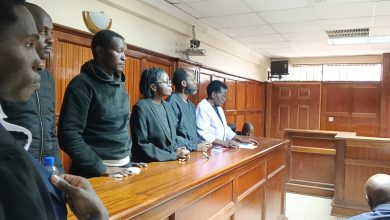
According to the Interior Ministry, at least four people were killed and 348 people were arrested during the protests over offences including unlawful assembly, destruction of property and attacks on police officers. Investigations into the unrest are ongoing.
The demonstrations, largely organised in response to soaring fuel prices, disrupted transport services in major towns as protesters blocked roads, lit bonfires and demanded immediate government intervention to reduce the cost of fuel and ease pressure on households and businesses.