MPs query student authenticity as government owe private varsities Sh49billion

The authenticity of government sponsored student population has been questioned after it emerged the government owes private universities a whooping Sh48.8billion.
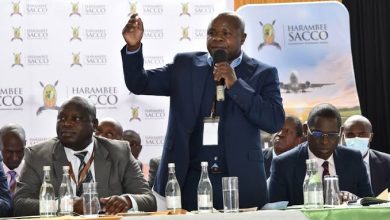
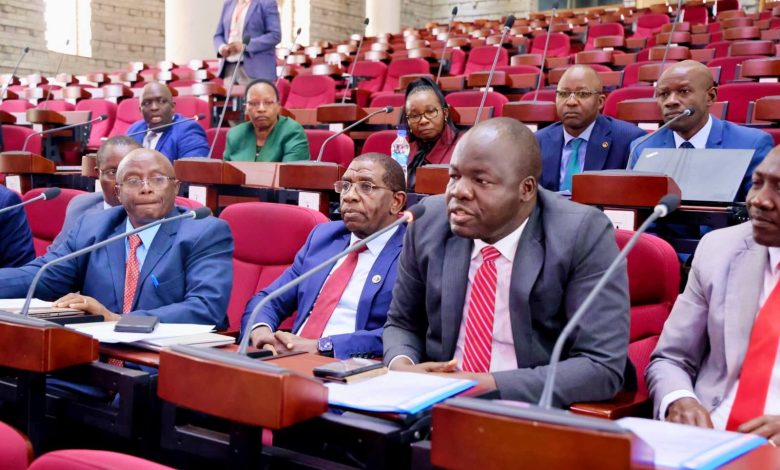
The revelations came to the fore when the National Assembly Committee on Education chaired by Tinderet Member of Parliament (MP) Julius Melly engaged the Kenya Association of Private Universities (KAPU) led by Very Rev. Prof. Stephen Mbugua, the Vice Chancellor of the Catholic University of Eastern Africa, to discuss challenges facing private universities, including pending government bills, and sustainability of university programmes.
During the session, Melly questioned the authenticity of student population data provided by KAPU, urging the association to work closely with the Ministry of Education and the Commission for University Education (CUE) to validate their figures.
Mbugua told the dumbfounded committee that government owes private varsities estimated Sh48.8billion, a debt that has accumulated since 2016 when government-sponsored students began joining these institutions through the Kenya Universities and Colleges Central Placement Service (KUCCPS).
KAPU decried that despite submitting detailed claims to the Treasury and Ministry of Education, payments remain pending, leaving universities to cover costs from their reserves.
The Kenya Association of Private Universities (KAPU) and the Ministry of Education (and related government bodies) have ongoing discrepancies regarding the exact number of government-sponsored students (GSS) in private universities, primarily stemming from unpaid tuition fees and inconsistent student data verification.
KAPU said the government owes them a substantial amount in accumulated unpaid tuition fees for GSS since the program started in 2016.
In the past, the government has disputed some of these claims, citing discrepancies like payments for students who had already graduated, deferred, or were not officially placed by the KUCCPS.
A new funding model introduced in 2023 changed the approach, meaning new students in private universities no longer qualify for government scholarships but can apply for student loans. This change has caused the total number of funded students to fall from a peak of 89,664 in 2022/2023 to 59,514 in 2024/2025.
Different reports have presented slightly different total numbers of students placed in private universities since 2016 (e.g., about 86,270 in one report and 88,000 in another), highlighting the lack of a single, agreed-upon figure.
There has been variances between the number of students placed by the Kenya Universities and Colleges Central Placement Service (KUCCPS), figures claimed by KAPU and those who actually enrolled.
“We have submitted details of the pending bills to the National Treasury, the Universities Fund, and the Ministry of Education. The Ministry has previously acknowledged the debt, and we have also presented our case to the Pending Bills Committee of the National Treasury,” Senior representatives of private universities led by Catholic University of Eastern Africa Vice Chancellor Mbugua told the committee.
He noted that prior to 2016, private universities were financially stable as they admitted students directly. However, the KUCCPS placement system and delayed release of Differentiated Unit Cost funds have forced institutions to finance education from their own reserves.
“While the government undertook to meet 80 per cent of the tuition fee for government-sponsored students, the disbursement process has not been smooth, forcing universities to finance learning from their reserves,” he added.
The association said Mount Kenya University (KMU) is owed Sh12.9billion, Kabarak University (Sh6.8billion), KCA University (6.7billion) and Catholic University of East Africa (Sh4.3billion) among others.
The committee chairman acknowledged the critical role of private universities in expanding higher education access but questioned the accuracy of data on government-sponsored student enrolment.
“When I look at your documents, you have a very large government-sponsored student population across all private universities. Have these students been ascertained by the Ministry of Education and the Commission for University Education? How many have dropped out and how many are still continuing?” he posed.
Baringo North MP Joshua Makilap stressed the need for accurate data, emphasising that verified figures on graduations, deferrals and dropouts are crucial when considering funding and pending bills.
“We need accurate data. How many students have graduated, how many have deferred, and how many have dropped out? This information is crucial as we look into funding and pending bills,” he said.
Moiben MP Phylis Bartoo echoed the call for verified data, warning that without accurate student records, proper budget allocation would be difficult.
The directed KAPU to consolidate data on government-sponsored students, including enrolment, deferrals, and graduation trends from 2016 to date and engage the Pending Bills Committee of the National Treasury to verify all claims.
“You need to ensure that your pending bills are certified by the National Treasury’s Pending Bills Committee,” the chairman said.
“This committee will work with you, the Ministry of Education, and the Treasury to resolve these issues so that private universities can continue offering quality education.”