Middle East skies shut as US-Israel strikes rock Iran

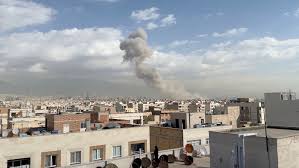
Global air travel was thrown into turmoil over the weekend after the United States and Israel launched coordinated strikes on Iran, triggering retaliatory missile fire across the Gulf and forcing widespread airspace closures in one of the world’s busiest aviation corridors.
Iran moved swiftly to shut its airspace “until further notice,” according to its Civil Aviation Organisation, as missiles were launched toward major cities in the region.
Israel followed by closing its skies to civilian traffic, while Iraq, Kuwait, Qatar, the United Arab Emirates and parts of Syria announced full or partial airspace restrictions.
Jordan said its air force was conducting drills to defend its airspace amid heightened regional tensions.
The unprecedented shutdown caused the largest disruption to global aviation since the Covid-19 pandemic. According to aviation analytics firm Cirium, nearly 23 per cent of the 4,218 flights scheduled to land in the Middle East on Saturday were cancelled.
Including departures, the number of cancellations rose above 1,800. By early yesterday, flight tracking platform FlightAware reported more than 19,000 delays worldwide and over 2,600 cancellations.
Major international carriers suspended operations across the region. Gulf giants Emirates, Etihad and Qatar Airways cancelled significant portions of their schedules, stranding thousands of passengers in transit hubs such as Dubai and Doha.
European airlines including Air France, British Airways, Lufthansa and Turkish Airlines halted flights to multiple Middle Eastern destinations, including Tel Aviv, Beirut, Tehran and Amman.
North American carriers Delta, American Airlines and United Airlines suspended routes to Tel Aviv, Dubai and Doha, while Air Canada halted services to Israel and parts of the Gulf.
Asian carriers such as Air India, IndiGo, Cathay Pacific and Singapore Airlines also announced widespread cancellations. In Africa, Ethiopian Airlines and Kenya Airways suspended services to key Gulf destinations.

The aviation chaos followed reports that Israeli and US strikes targeted senior Iranian leadership and strategic facilities.
Iranian state media confirmed the killing of Supreme Leader Ayatollah Ali Khamenei and a designated successor in the attacks, a development that has sent shockwaves through regional geopolitics and raised fears of a broader war.
The assassination of Iran’s top leadership marks a dramatic escalation, with Tehran vowing severe retaliation.
Economic repercussions are already rippling across global markets.
The Middle East serves as a critical transit hub linking Europe, Asia and Africa.
Closure of its airspace forces airlines to reroute flights over longer, costlier paths, increasing fuel consumption and operational expenses.
Oil markets reacted sharply to the news, with crude prices spiking amid fears of supply disruptions in the Strait of Hormuz, a chokepoint through which roughly a fifth of the world’s petroleum passes.
Any sustained conflict involving Iran risks interrupting exports from major producers in the Gulf, potentially triggering inflationary pressures worldwide.
Trade flows are also under threat.
The Gulf region hosts some of the world’s largest cargo hubs, including Dubai and Doha, which handle high volumes of electronics, pharmaceuticals, perishables and industrial components.
Prolonged instability could slow supply chains already strained by previous global crises. Shipping insurers are reportedly reassessing risk premiums for vessels operating near Iranian waters, potentially driving up freight costs.
Security analysts warn that the killing of Iran’s supreme leader could destabilise internal political structures and embolden proxy groups across Lebanon, Syria, Iraq and Yemen.
Heightened missile exchanges or cyberattacks targeting infrastructure — including ports, pipelines and airports — could widen the conflict beyond conventional battlefields.
Western embassies across the Gulf have issued travel advisories, while governments are reviewing evacuation plans for citizens in high-risk areas.
Diplomatic efforts to contain the crisis are underway at the United Nations, but prospects for immediate de-escalation appear uncertain.
With airspace closures disrupting commerce and travel on a global scale, the confrontation between Washington, Tel Aviv and Tehran threatens not only regional security but also the stability of international trade and energy markets.
As airlines scramble to adjust schedules and governments brace for potential escalation, the fallout from the strikes underscores how quickly geopolitical conflict in the Middle East can reverberate across the interconnected global economy