Majority of Kenyan children face up to four types of poverty, analysis reveals
At the county level, Nairobi presents the lowest multidimensional deprivation rate of 14 per cent, followed by Kiambu, Nyeri and Mugang’a(21 per cent, 30 per cent, and 32 per cent respectively

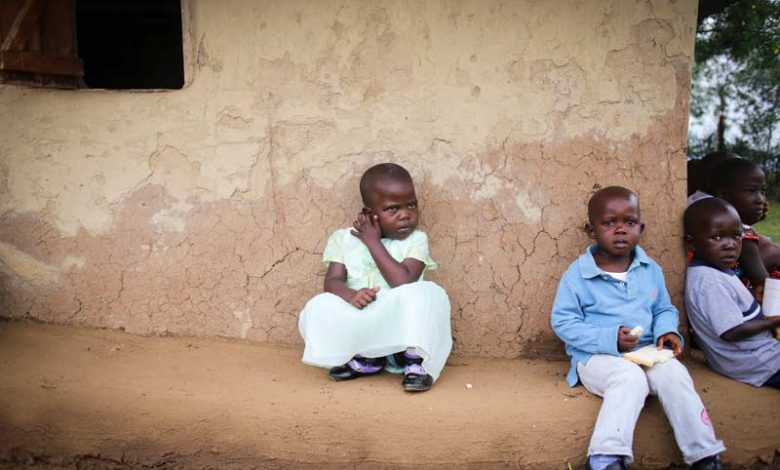
Multidimensional child poverty affects more than half of Kenyan children (around 55 per cent), a new report published by State Department for Economic Planning, through the Kenya National Bureau of Statistics (KNBS), says.
Using Multiple Overlapping Deprivation Analysis (MODA), the report shows the majority of children in the country are deprived in 2, 3 or 4 dimensions of their well-being at the same time (24 per cent, 27 per cent and 19 per cent).
It says a larger proportion of children living in rural areas suffer from three or more deprivations. On average, multidimensionally deprived children (0-17 years) in Kenya, suffer from 3.7 dimensions of their well-being, representing 71 per cent of the total number of dimensions analysed.
At the county level, Nairobi presents the lowest multidimensional deprivation rate of 14 per cent, followed by Kiambu, Nyeri and Mugang’a (21 per cent, 30 per cent, and 32 per cent respectively). On the other hand, children living in Mandera, Turkana, Samburu, Wajir, and Tana River are worse off, with around nine in ten children facing deprivation in three or more dimensions of their well-being.
The report adds that in addition to poverty, children in Kenya face various cross-cutting vulnerabilities across their life-cycle, including macroeconomic instability, climate-related risks and threats, health challenges, and social inequities.
“Rising poverty and unemployment, coupled with widening inequality, have strained access to essential services like healthcare, education, and nutrition, especially under fiscal austerity. Climate change intensifies these challenges, with over 12 million children exposed to medium to high risks, particularly in areas with fragile
infrastructure,” it says.
The report adds that health concerns persist, notably in HIV care, where children lag behind adults in diagnosis, treatment, and viral suppression. Urbanisation and disability further compound exclusion, as over a million people in informal settlements and children with disabilities face limited access to basic services and education.
Economic Planning Principal Secretary Dr Bonface Makokha, in a forward to the report, underscores that not all vulnerable children are poor, and not all poor children are vulnerable.
“Vulnerability is shaped by a complex interplay of factors, including household wealth, education, disability, orphanhood, maternal empowerment, and exposure to climate and economic shocks. This calls for a multidimensional, life-cycle approach to child wellbeing, one that goes beyond income-based measures and addresses the full spectrum of risks which children face,” he says.
According to the PS, despite these challenges, there is hope as Kenya has made significant strides in reducing child mortality, improving school attendance, and expanding social protection.
“The findings of this report offer a roadmap for building on these gains, through inclusive policies, strengthened data systems, and coordinated action across sectors. As we look to the future, let this report serve as both a mirror and a mandate: a mirror reflecting the lived realities of millions of children, and a mandate to act boldly and compassionately to break the cycles of poverty and vulnerability. Every child in Kenya deserves the opportunity to grow up safe, healthy, educated, and empowered.”
The study highlights the complex and interconnected nature of child vulnerability in Kenya, driven primarily by poverty, which limits access to essential services such as education, healthcare, and nutrition.
It shows that despite progress, significant disparities persist across regions, wealth quintiles, and marginalised groups, with rural and underserved areas facing the greatest challenges. Vulnerabilities span multiple dimensions, including health, nutrition, education, and protection, and are compounded by systemic issues like climate change, and socio-economic inequities.
The findings also underscore the need for holistic, multisectoral interventions and improved data systems to address overlapping deprivations and promote inclusive, evidence-based policies. A multidimensional understanding of vulnerability is essential to designing effective strategies that reflect the diverse realities of children across Kenya.
The study was commissioned by UNICEF Kenya Country Office and UN Women, in collaboration with KNBS. Its primary objective is to generate updated evidence on child vulnerability and women’s empowerment, building on
previous analyses conducted in the country.
It focuses on the analysis of child vulnerability, including its intersection with women’s empowerment. It utilises the most recent data from the 2022 Kenya Demographic and Health Survey (KDHS) to provide an updated assessment of child vulnerability and multidimensional deprivation. The analysis also builds on earlier work
published by UNICEF and KNBS in 2017 and 2018, which was based on the 2014 KDHS.