KRA defies economic headwinds to grow revenue by 6.8% to Sh2.751 trillion in 2024/25
Mulongo said domestic revenues registered a growth of 4.8 per cent after KRA collected Sh1.688 trillion against a target of Sh1.721 trillion. This translates to a performance rate of 98.1 per cent.

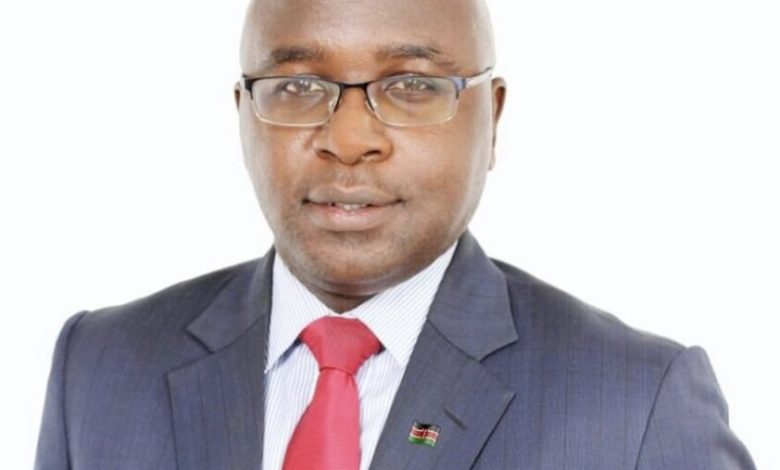
The Kenya Revenue Authority (KRA) has surpassed the revenue target of Sh2.555 trillion for the Financial Year 2024/2025 after collecting Sh2.571 trillion.
The performance is a growth of 6.8 per cent and a performance rate of 100.6 per cent, compared with the Sh2.407 trillion collected in the last financial year.
In a statement, KRA Commissioner General Humphrey Wattanga Mulongo said the revenue performance reflects the prevailing economic indicators especially the GDP growth of 4.7 per cent with notable growth recorded in key sectors like agriculture, forestry and fishing, financial and insurance activities, transportation and storage, and real estate.
Further, overall inflation eased to average at 3.6 per cent in 2024/25 compared to 6.3 per cent in 2023/24, while exchange rate of the Kenya Shilling against the US Dollar strengthened to an average of Sh129.35/US$ in the current year under review down from Sh144.1 in the previous year. In addition, international oil prices per barrel dropped by 12.5 per cent, with these factors leading to aggregate downward adjustment of local fuel pump prices for both petrol and diesel by 11.8 per cent and 12.2 per cent respectively.
“However, other factors moved contrary to expectations, thus impacting revenue negatively. For example, the first half of the Financial Year 2024/25 was characterised by numerous economic headwinds, including shelving of the Finance Bill 2024, high bank lending rates, global tariffs war, and international conflicts. In particular, overall import values recorded weak growth of 0.04 per cent, affected by drop in import values of fuels and lubricants, and food and beverages which recorded declines of 16.4 per cent and 14.6 per cent respectively. Further, export values declined by 2.0 per cent especially from horticulture (-2.5 per cent) and tea (-15.4 per cent),” Mulongo said.
In addition, access to credit by the private sector remained constrained due to higher commercial bank lending rates in the current year compared to the previous year. However, a downward adjustment in lending rates is anticipated following the Central Bank of Kenya’s decision to lower the benchmark rate to 9.75 per cent in June 2025. As at the end of December 2024, credit extended by commercial banks to the National Government grew by 13.9 per cent, while credit to the private sector declined by 1.1 per cent. This contraction in private sector credit dampens the prospects for investment and expansion across key economic sectors.
“Notwithstanding these challenges, KRA’s robust measures yielded a significant revenue collection turnaround in the second half of the financial year. Revenue grew by 9.1 per cent, compared to the 4.5 per cent growth recorded in the first half of the financial year,” he added.
According to the KRA chief, exchequer revenue grew by 4.5 per cent after KRA collected Sh2.323 trillion compared to Sh2.223 trillion collected in the previous financial year. This translates to a performance rate of 99.0 per cent, against a target of Sh2.347 trillion.
KRA also collected Sh248.276 billion on behalf of other government agencies, surpassing the target by Sh40.465 billion, translating to a performance rate of 119.5 per cent.
Mulongo said domestic revenues registered a growth of 4.8 per cent after KRA collected Sh1.688 trillion against a target of Sh1.721 trillion. This translates to a performance rate of 98.1 per cent.
Customs revenue recorded a performance rate of 105.9 per cent with a collection of Sh879.329 billion against a target of Sh830.368 billion, which translates to a revenue growth of 11.1 per cent, compared to the same period in FY 2023/2024.
On performance of key tax heads, domestic VAT collection stood at Sh327.336 billion, reflecting a growth of 4.2 per cent compared to the previous year. In the first half of the FY, KRA collected Sh148.374 billion. In the second half of the FY, KRA implemented a raft of VAT compliance initiatives to seal revenue loopholes, enabling the collection of Sh178.962 billion. These initiatives included strict VAT registration controls and verification of declarations.
Excise tax on betting services surpassed the target after registering a surplus of Sh1.945 billion with a performance rate of 117.2 per cent. The tax head collected Sh13.233 billion against a target of Sh11.288 billion. Betting Tax also registered a performance rate of 103.7 per cent after collecting Sh5.70 Billion against a target of Sh5.495 billion.
KRA also collected Sh560.963 billion from PAYE, signifying a growth of 3.3 per cent. Despite the slow growth, the tax head recorded a performance rate of 99.0 per cent. The slow growth was attributed to utilisation of adjustment vouchers by taxpayers to offset tax liabilities and policy impacts, which included adjustment of SHIF and Housing Levy from relief to allowable deductions before tax computation.
Corporation Tax grew by 9.9 per cent compared to 4.9 per cent in the last financial year, after KRA collected Sh304.833 billion against a target of Sh321.080 billion. The performance was boosted by a number of sectors, including ICT, manufacturing, financial, real estate, wholesale and retail, among others.
Domestic excise tax head recorded a performance rate of 97.2 per cent, with a collection of Sh69.385 billion. The performance is attributed to a decline of revenue remittance from manufacturers of beer and tobacco products by 13.9 per cent and 8.9 per cent respectively, Mulongo said, adding that KRA continues to enhance compliance measures in the sector.
“It is important to note that Section 47(2)(b) of the Tax Procedures Act, Cap 469B, stipulates that approved claims not settled within six months shall be offset against existing and future tax liabilities. In line with this provision, adjustment vouchers amounting to Sh49.673 billion were utilised by taxpayers to settle tax obligations across various tax heads in FY 2024/25. This reflects a significant increase from Sh24.845 billion utilised during the corresponding period in the previous financial year. Significant amounts of adjustment vouchers were utilized across various tax heads, with Corporation Tax accounting for Sh28.622 billion, PAYE for Sh10.422 billion, and Domestic VAT for Sh6.510 billion, among others.”
“During the period under review, KRA continued implementing its 9th Corporate Plan, which runs for a period of five years. Over this period, the organisation is focusing on enhancing revenue collection, increasing customer satisfaction, digitalising revenue administration and strengthening human resource management,” Mulongo said.
He noted that KRA has continued to leverage disruptive technology to enhance efficiency, transparency and effectiveness in revenue collection. These innovations are part of KRA’s broader digital transformation and tax modernisation strategy to improve compliance, reduce leakages and enhance taxpayer experience.
“Some of these technologies include Electronic Tax Invoice Management System (eTIMS), which has minimised VAT fraud; improved tax compliance; simplified VAT filing and payment process; facilitated tax base expansion and increased tax revenue. KRA recently rolled out eTIMS fuel stations system, designed specifically to streamline operations and address compliance challenges previously experienced within the industry. KRA has also deployed Artificial Intelligence (AI) to analyse scanner images. This has helped in interception of smuggled goods and sealed revenue leakages,” Mulongo added.
He also stressed that simplicity is one of KRA’s Core Values, aimed at eliminating complexities that taxpayers experience, noting that KRA has simplified filing of returns through VAT auto-population and adopted mobile and digital payment platforms to streamline tax payments.
“In addition, the introduction of a Centralised Release Office (CRO) has made cargo clearance at the ports easier and more efficient. This has subsequently improved cargo clearance time from an expected average of 110 hours to 43 hours and enabled KRA to collect Sh22.7 billion.”
KRA has also implemented organisational restructuring within its functional areas of revenue, technology and service to create an agile and responsive tax administration framework, strengthen the digital infrastructure for data-driven decision-making and automation, and to improve taxpayer engagement and support.
Among these changes included integration of the Large and Medium Taxpayers into a core functional area, and the Micro and Small Taxpayers as another core functional area. The changes provided more personalised support to address taxpayers’ unique needs.
“Despite the challenging economic environment in FY 2024/2025, taxpayers exhibited resilience and voluntarily paid their taxes to support the country’s economic transformation. As at 30th June, 2025, KRA recorded 79 per cent on-time filing. On behalf of the KRA Board of Directors and staff, I appreciate all Kenyans for remaining committed to honouring their tax obligations, which plays a key role in Kenya’s economic sustainability and development.”
“As KRA commemorates its Pearl Anniversary this July, the organisation celebrates remarkably significant milestones over the last 30 years, growing revenue collection from Sh122.066 billion in 1995 to more than Sh2.5 Trillion this year. KRA remains committed to simplifying tax payment processes and ensuring a positive taxpayer experience. KRA emphasises its unwavering dedication to upholding integrity and professionalism in all interactions with taxpayers,” Mulongo said.