Khamenei’s hardline son Mojtaba named Iran’s Supreme Leader as oil prices surge from war aftermath
The position of Supreme Leader is Iran’s most powerful office, giving Mojtaba ultimate authority over the military, judiciary and key state policies

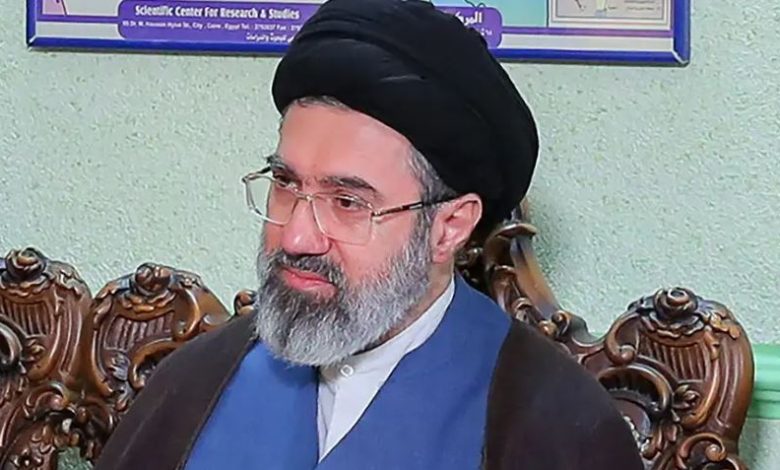
Iran has named Mojtaba Khamenei as the country’s new Supreme Leader, succeeding his father Ali Hosseini Khamenei who was killed in recent U.S.-Israeli strikes, in a move that signals the continued dominance of hardliners in the Islamic Republic even as the conflict in the Middle East escalates.
Mojtaba’s appointment, a reportedly hardline son to his father was announced shortly after midnight in Tehran following a vote by the Assembly of Experts — the powerful body of 88 clerics constitutionally mandated to select Iran’s Supreme Leader.
“By a decisive vote, the Assembly of Experts appointed Ayatollah Seyyed Mojtaba Hosseini Khamenei as the third Leader of the sacred system of the Islamic Republic of Iran,” the assembly said in a statement.
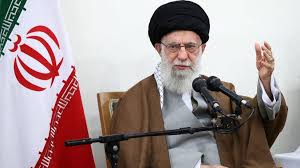
The position of Supreme Leader is Iran’s most powerful office, giving Mojtaba ultimate authority over the military, judiciary and key state policies.
His appointment comes amid a rapidly intensifying war involving Iran, the United States and Israel, which has already triggered global economic shocks and pushed oil prices sharply higher.
Global markets reacted immediately to the worsening crisis. Brent crude surged more than 17 percent to about $108 a barrel on Monday, after already rising nearly 28 percent the previous week, while U.S. crude futures climbed more than 20 percent in early trading — their highest level since July 2022.
The surge reflects fears of prolonged disruptions to global oil supplies, particularly shipments passing through the strategic Strait of Hormuz, one of the world’s most critical energy transit routes.
The leadership transition follows the killing of Ali Khamenei in the opening wave of U.S.-Israeli strikes against Iran just over a week ago. Tehran has since launched retaliatory attacks against American and Israeli targets across the region, dramatically expanding the conflict.
According to Iran’s ambassador to the United Nations, the U.S.-Israeli attacks have killed at least 1,332 Iranian civilians and injured thousands more.
The United States has also suffered casualties. The U.S. military confirmed that a seventh American service member died from wounds sustained during Iran’s initial counterattack, a day after Donald Trump presided over the return of the remains of six other American personnel killed earlier in the conflict.
Washington has since ordered the evacuation of non-emergency staff from its embassy in Saudi Arabia, reflecting fears of further Iranian retaliation against U.S. facilities in the region.
Mojtaba Khamenei’s appointment is likely to heighten tensions with Washington and Israel. Trump earlier suggested that the United States should have a say in the selection of Iran’s next leader.
“If he doesn’t get approval from us, he’s not going to last long,” Trump said in an interview with ABC News before the announcement.
After the appointment was confirmed, Trump declined to comment directly on Mojtaba’s selection but told the Times of Israel that ending the war would require a “mutual” decision between Washington and Israeli Prime Minister Benjamin Netanyahu.
Israel has also warned that Iran’s next supreme leader could become a military target. Israeli defence officials had previously stated that whoever succeeds Ali Khamenei would be considered “an unequivocal target for elimination.”
Despite being widely seen as a powerful figure within Iran’s political and security establishment, Mojtaba Khamenei has maintained a notably low public profile throughout his life.
Who is Mojtaba Khamenei?
Born on September 8, 1969, in the northeastern Iranian city of Mashhad, he is the second of Ali Khamenei’s six children. He attended Tehran’s religious Alavi School before briefly serving in the military during the Iran–Iraq War in the 1980s.
Later, he pursued religious studies in the holy city of Qom, a major centre of Shia Islamic scholarship. However, unlike many senior clerics in Iran, Mojtaba has never held formal government office, delivered major public speeches, or given media interviews.
Nevertheless, analysts and leaked diplomatic cables published by WikiLeaks in the late 2000s described him as a powerful behind-the-scenes figure within the Iranian system, calling him “the power behind the robes.”
He is believed to wield considerable influence within the country’s security establishment, including links to the Islamic Revolutionary Guard Corps (IRGC) and the Basij militia.
Mojtaba first emerged in the public spotlight during the 2005 presidential election that brought hardline populist Mahmoud Ahmadinejad to power.
Reformist politician Mehdi Karroubi accused Mojtaba of interfering in the election through the IRGC and Basij networks, alleging that money was distributed to religious groups to secure Ahmadinejad’s victory.
Similar accusations resurfaced during the disputed 2009 presidential election, which triggered massive demonstrations known as the Green Movement protests.
Some protesters openly opposed the possibility that Mojtaba could one day succeed his father, arguing that it would turn the Islamic Republic into a hereditary system — a direct contradiction of the revolutionary principles that overthrew Iran’s monarchy in 1979.
The promotion of Mojtaba to the clerical rank of “Ayatollah” in recent days has also drawn scrutiny. In Iran’s religious hierarchy, the title is typically associated with senior scholars qualified to teach advanced theological classes — one of the traditional prerequisites for becoming Supreme Leader.
A similar elevation occurred in 1989 when Ali Khamenei himself was rapidly promoted to Ayatollah shortly after assuming leadership following the death of Ruhollah Khomeini.
Observers say Mojtaba now faces a daunting challenge: maintaining the authority of the Islamic Republic while guiding the country through a devastating war and deep economic hardship.
Some analysts believe that personal losses — including the deaths of several family members in recent U.S.-Israeli strikes — may harden his stance against Western pressure.
At the same time, critics warn that the perception of dynastic succession could deepen public discontent inside Iran.
With the country under military pressure and its leadership newly installed, Mojtaba Khamenei now assumes power at one of the most volatile moments in Iran’s modern history.