Kenya’s youth mobilisation could shape 2027 elections: Rise of a “Third Force”

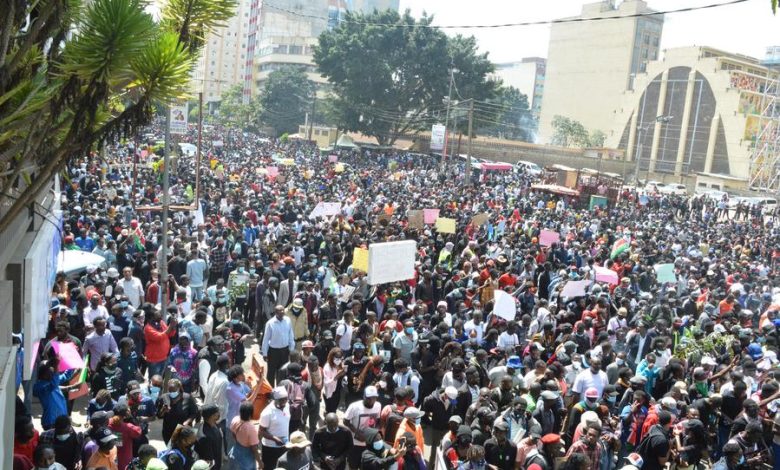
Kenya’s youthful population, which drove the June 2024 anti-government protests over corruption, bad governance, and the controversial 2024 Finance Bill, is emerging as a potentially decisive factor in the 2027 general elections.
On Thursday, March 19, 2026, thousands of young Kenyans have flocked to voter registration centres across the country under the rallying call “Tuko Kadi”, signalling a newfound determination to translate street activism into formal political influence.
The ongoing mobilisation drive, led predominantly by Gen Zs, reflects a broader trend of a generation unwilling to be dismissed as apathetic or confined to online activism.
Long queues were observed long queues at Nairobi’s Anniversary Towers IEBC registration centre just before closing on Thursday, illustrating the depth of engagement among first-time voters.
Similar enthusiasm was reported in towns such as Thika, Nyeri, and Trans Mara, where youth turnout was bolstered by family members, suggesting a collective effort to impact electoral outcomes.
At the heart of the campaign is Allan Ademba, one of the architects of the Tuko Kadi initiative, who asserts that the youth are ready to shape Kenya’s political trajectory.
“The numbers are clear—Kenya’s youth are prepared to lead and influence the future,” Ademba told reporters.
Across the country, young Kenyans are not only registering as voters but are also engaging in civic education, peer mobilisation, and discussions about policies, governance, and leadership.
Political analysts argue that this surge in youth participation could create a “third force” in Kenya’s electoral landscape, independent of the traditional power blocs led by older political elites.
Historically, the youth vote has been fragmented or underutilized, with voter apathy limiting their impact.
The Tuko Kadi movement, however, suggests a more coordinated, conscious effort to consolidate young voters as a bloc capable of influencing presidential, parliamentary, and county-level elections.
The implications for 2027 are profound. If the youth maintain momentum, candidates and parties will be forced to address issues like unemployment, education, climate change, governance, and corruption more directly.
Parties that fail to engage meaningfully with the youth risk losing critical support, while those able to harness this demographic’s energy could reshape Kenya’s political calculus.
However, challenges remain. Logistical constraints at voter registration centres, misinformation campaigns, and skepticism from older political actors could dampen the impact if not addressed.
Additionally, while youth mobilisation is high in urban and semi-urban areas, extending this influence to rural constituencies will be crucial for creating a nationwide electoral wave.
Nevertheless, the Tuko Kadi phenomenon marks a turning point. From Nyeri to Narok, from Nairobi to Thika, young Kenyans are seizing the opportunity to assert their political agency. For a generation long dismissed as disinterested or disengaged, the message is clear: they intend to shape Kenya’s future, not merely comment on it.