Kenya health crisis deepens as Pharmaceutical Technologists threaten strike
The convergence of the nurses’ strike, the threatened action by pharmaceutical technologists and the continuing concerns over hospital deaths has placed Kenya’s health system under renewed pressure.

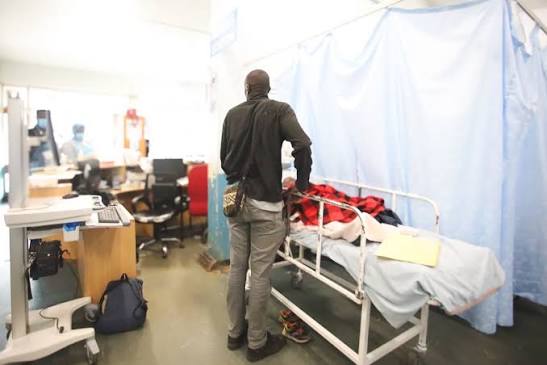
Kenya’s health crisis is deepening, with more than 11,000 pharmaceutical technologists threatening to down their tools over new regulations restricting their roles in higher-level health facilities, as the prolonged nurses’ strike continues to disrupt services and trigger mounting concern over patient deaths.
The latest dispute threatens to further strain an already stretched health system, with the pharmaceutical technologists warning that their planned action could cripple medicine services in thousands of public health facilities at a time when the government is pursuing Universal Health Coverage (UHC).
The dispute comes against the backdrop of an even more severe disruption in Kenya’s public health system, with the nationwide nurses’ strike having persisted for 41 weeks.
The prolonged industrial action has left patients bearing the consequences of reduced healthcare services, with reported hospital deaths exposing the human cost of the crisis.
The Kenya National Commission on Human Rights (KNCHR) has now warned that the nurses’ strike has escalated beyond a labour dispute into a public health and human rights crisis.
KNCHR chairperson Claris Ogangah said the disruption of healthcare services was threatening fundamental rights and could no longer be addressed solely as an employment disagreement.
“The disruption threatens the rights of patients to life, the highest attainable standard of health, emergency medical treatment and dignity,” Ogangah said.
The commission said it was particularly concerned about reports of deaths during the strike, including maternal, neonatal and perinatal deaths.
It called for the reported fatalities and the circumstances surrounding them to be independently verified.
The Pharmacy and Poisons Board (PPB) has adopted new Good Pharmacy Practice Standards that would reserve the administration of medicines in Level Three to Six health facilities for practitioners with degree-level qualifications, while diploma holders would be restricted largely to managing dispensaries.
The Kenya Pharmaceutical Association (KPA) has rejected the guidelines, describing them as discriminatory and warning that they would remove more than 11,000 pharmaceutical technologists from medicine-handling roles across 3,569 public facilities.
KPA chairman Chitechi Amboka said the association had rejected the standards in their entirety, arguing that diploma-level practitioners are properly trained, licensed and legally authorised to perform pharmaceutical duties.
“The new guidelines adopted by the Pharmacy and Poisons Board will bar over 11,000 of our members from handling medicines across 3,569 public facilities, retaining those functions for degree holders only,” Amboka said.
“We hereby reject this in totality.”
Amboka, speaking to journalists in Naivasha, said the proposed rules were expected to take effect in January next year and had been gazetted before the association reached consensus with stakeholders in the sector.
He said the association had already petitioned the Ministry of Health and the Pharmacy and Poisons Board over the matter but had received no satisfactory response.
According to Amboka, pharmaceutical technologists account for more than 70 per cent of healthcare practitioners and are central to the day-to-day running of health services.
He warned that removing diploma holders from their current roles could disrupt access to medicines and undermine the government’s UHC programme.
The association plans to hold demonstrations on Thursday to demand withdrawal of the guidelines, with Amboka warning that its members could ultimately close their facilities if the dispute is not resolved.
“We demand the immediate suspension of the new guidelines, to allow for a genuine, inclusive and consensus-driven review, and that all qualified pharmacists holding diploma-level qualifications be allowed to practise across all levels of facilities,” he said.
Amboka also urged regulators to focus on eliminating unqualified practitioners from the sector, arguing that quacks posed a more immediate danger to patients.
He maintained that diploma holders had undergone the required training and were approved and licensed by the Pharmacy and Poisons Board and should therefore be allowed to perform pharmacy-related duties across the country.
The Kenya National Union of Pharmaceutical Technologists has also threatened street protests.
Union chairman Kenneth Omogi said the organisation supported proper regulation of medicines and patient safety but maintained that the proposed standards were inconsistent with existing laws governing pharmaceutical practice.
He said members possessed the requisite qualifications, training and licences and warned that implementation of the guidelines in January would undermine access to affordable healthcare and deal a blow to the UHC agenda.
The government, however, has rejected the technologists’ interpretation of the new standards.
Health Cabinet Secretary Aden Duale said no practitioner would be prevented from performing pharmacy-related duties provided they obtained the necessary qualifications and licences.
Duale said the standards were intended to distinguish the responsibilities of practitioners working at different levels of health facilities, including those assigned superintendent roles, who carry broader professional and regulatory responsibilities within facilities.
Ogangah urged the Kenya Medical Practitioners and Dentists Council, in collaboration with the Ministry of Health and county governments, to determine whether mortality rates during the strike have exceeded those recorded during comparable periods.
Such an assessment, she said, would help establish the circumstances and causes of the reported deaths and guide urgent interventions to prevent further loss of life.
“The continued disruption of health services exposes patients to preventable suffering, indignity and loss of life, and undermines the realisation of Universal Health Coverage,” she said.
The Commission said the disruption was particularly dangerous for vulnerable groups, including expectant and new mothers, newborns, children, older persons, people with disabilities and patients living with chronic illnesses.
It called on the National and County Governments to urgently intervene and restore essential services, stressing that critical care cannot be allowed to collapse amid an unresolved labour dispute.
KNCHR specifically called for continuity of maternity, neonatal, emergency, intensive care, dialysis, oncology, trauma, ambulance and referral services.
The convergence of the nurses’ strike, the threatened action by pharmaceutical technologists and the continuing concerns over hospital deaths has placed Kenya’s health system under renewed pressure.