Inside Ruto’s power play to fold ODM into UDA post-poll jitters

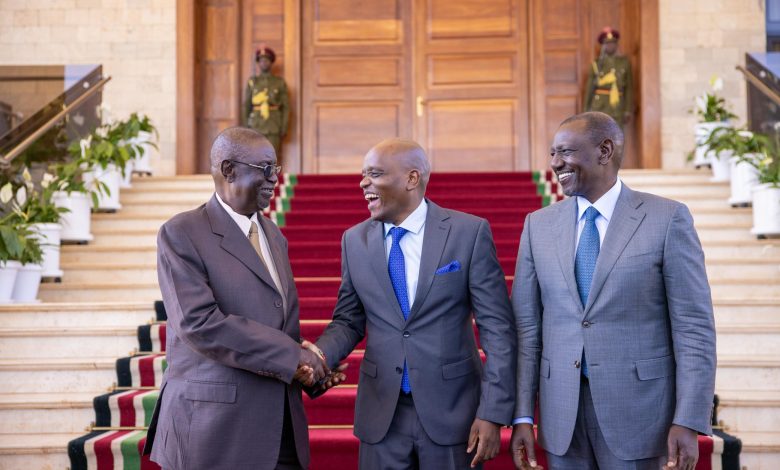
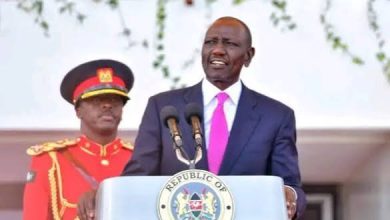
President William Ruto is quietly engineering one of the most audacious political realignments in recent Kenyan history, a possible merger between his United Democratic Alliance (UDA) and the Orange Democratic Movement (ODM), the party built and sustained for decades by the late Raila Odinga.
What is emerging is not a fleeting handshake or a temporary parliamentary pact, but the foundations of a grand coalition that could dramatically reshape the 2027 political landscape.
Interviews with senior government officials, legislators, and political strategists, combined with a review of recent legislative manoeuvres and party decisions; reveal a president increasingly convinced that survival in 2027 will require reinventing his coalition, neutralising his rivals, and inheriting Raila’s vast grassroots machinery, especially after his own party’s lacklustre performance in the November 27 by-elections.
UDA won both the Malava and Mbeere North parliamentary by-elections. But the figures tell a troubling story for the ruling party. In Malava, UDA’s David Ndakwa edged out DAP-K’s Seth Panyako by just 1,300 votes.
In Mbeere North, Leo Wamuthende scraped through with under 500 votes against Newton Kariuki of the Democratic Party.
Sources in the presidency say the narrow victories, delivered despite heavy deployment of state machinery, left Dr Ruto “deeply unsettled”.
Officials describe him as frustrated with local UDA leaders, Cabinet Secretaries, and regional coordinators who had assured him of “comfortable wins”.
“He took the results as a personal warning,” a UDA operative intimated.
“The president believes the party has become complacent and that some people around him have become liabilities,” he added.
The by-elections, insiders say, confirmed what internal polling has been indicating for months: UDA’s once formidable grassroots network is fraying, especially in Mt Kenya, Western Kenya, and the Coast.
The President now views the reconfiguration of his political base not as an option, but as a necessity.
Behind the scenes, Ruto has ordered expedited implementation of the National Dialogue Committee (NADCO) report, whose recommendations Parliament has already adopted chaired by Agnes Nzani.
On Thursday, December 4, 2025 Ruto suffered a major setback after the High Court nullified his proclamation establishing an 18-member Panel of Experts to oversee compensation for victims of demonstrations and public protests.
A High Court in Kerugoya ruled that President William Ruto has no authority to form the Compensation Taskforce for Victims of Political Violence.
Instead, the court ordered that the process be conducted through the Kenya National Commission on Human Rights (KNCHR), with 30 days to amend the directive or face nullification.
The court further directed that the panel’s report be submitted to the KNCHR, which will oversee the necessary actions to ensure the compensation framework aligns with the Constitution.
High Court Judge Edward Muriithi declared both the presidential proclamation of August 6, 2025, and the subsequent Gazette Notice of August 25, 2025, “constitutionally invalid.”
The now quashed panel chaired by legal scholar Prof. Makau Mutua, had been sworn in on September 4, 2025.
The NADCO report initially crafted to cool post-2022 electoral tensions, has become the legal scaffolding for a more ambitious project: building a super coalition ahead of 2027.
NADCO provides a path for restructuring the political party system, legalising new coalition formations, reforming IEBC with greater cross-party oversight, and enabling consensual power-sharing agreements.
Multiple officials confirm that State House wants NADCO legislation passed before June 2026, clearing the way for deeper cooperation between UDA and ODM.
Perhaps the most dramatic political development since 2022 is the speed with which UDA’s fortunes have deteriorated in Mt Kenya. Local leaders complain openly about taxation, economic stagnation, and the removal of former Deputy President Rigathi Gachagua, whom many in the region viewed as their shield within government.
Now, internal polling shows significant decline in UDA’s approval ratings, rising anti-Ruto sentiment among small traders, and a resurgence of ethnic-based political identity.
Without the Mt Kenya bloc which delivered nearly 3 million votes in 2022, Ruto’s re-election arithmetic becomes perilous.
In contrast, ODM’s traditional strongholds of Nyanza, parts of Coast, and pockets of Western and Nairobi, remain highly mobilised, disciplined, and loyal. For Dr Ruto, absorbing this network is politically irresistible.
“It is the most dependable grassroots structure outside Rift Valley,” one ODM MP allied to the President told The Informer Media Group. “No other political formation has that level of mobilisation capacity.”
A UDA–ODM merger gives Ruto the rare opportunity to inherit Raila’s legacy base. Sources in UDA and ODM independently confirm that one proposal being assessed is the formation of a new political outfit tentatively dubbed the Orange Democratic Alliance (ODA).
UDA alone is insufficiently broad to secure Ruto’s re-election, ODM alone risks fragmentation without Raila and a merger creates a formidable national machine.
Ruto’s conspicuous presence at the ODM @ 20 celebrations, where he nostalgically recalled his days as a young ODM organiser, was part of this recalibration.
The re-engineering of Kenya’s political architecture will not be painless. Several high-profile figures both in government and within UDA are staring at political extinction.
No one is more vulnerable than ANC leader Musalia Mudavadi. With ODM’s Western network merging with UDA, Mudavadi’s already diminished influence becomes negligible.
“In a UDA–ODM coalition, Mudavadi becomes redundant,” a UDA insider said. He said Mudavadi risks losing political bargaining power because of folding his ANC party to merge with UDA.
Speaker of the National Assembly Moses Wetang’ula faces a similar threat.
A UDA–ODM coalition is expected to renegotiate the leadership of both Houses of Parliament. ODM, armed with significant numbers and historical grievances, will likely demand either: the Speaker of the National Assembly or the Speaker of the Senate.
Either scenario weakens Ford-Kenya and sidelines Wetang’ula’s regional grip.
The Principal Secretary for Internal Security Raymond Omollo, is also vulnerable. Omollo, a trusted technocrat from Nyanza, may be eased out to accommodate ODM political loyalists who will demand tangible rewards in a merger. He is likely to join Ruto’s presidential campaign team.
Those already on the chopping block include several Cabinet Secretaries whose performance, scandals, or political weight have made them liabilities.
Significant changes in UDA’s secretariat and NEC are also expected as part of the party overhaul.
At the Coast, President Ruto is working more through business elites than political leaders.
Beyond the margins, the November by-elections exposed a deeper malaise in Kenya’s politics.
Mbeere North’s contest reflected not just party rivalry but entrenched clan and regional divisions, with Deputy President Kithure Kindiki and his predecessor, Rigathi Gachagua, backing opposing candidates.
Reports of killings and injuries during the polls echo unresolved wounds from 2007 and 2017, raising questions about the durability of reforms.
Bribery, mobilisation cash, opaque financing, and state patronage remain central to electoral outcomes. UDA’s and ODM’s ability to deploy vast resources left smaller parties at a disadvantage.
For Ruto, the calculus behind a UDA–ODM political union is straightforward. Without Raila on the ballot and with ODM under the same political umbrella, the opposition shrinks dramatically, leaving only fragmented outfits like Wiper, DCP, Jubilee, KANU, and small Mt Kenya parties.
What Ruto is pursuing is not new in Kenyan politics. The late President Mwai Kibaki built a similar grand alliance in 2002, while Uhuru Kenyatta and Raila attempted rapprochement in 2022.
By merging with ODM, Ruto is betting that Kenyan politics remains, at its core, coalition-driven and ethnicity-anchored. The gamble could secure him a second term, or it could fracture both parties and provoke a new wave of political realignments.
Either way, the political terrain is shifting beneath the country’s feet, and the contours of 2027 already taking shape.