ICT CS Kabogo calls for responsible AI governance to unlock Africa’s digital economy

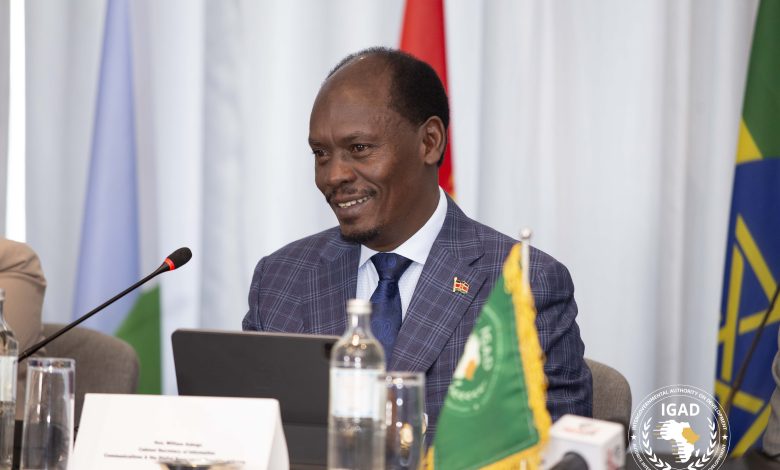
Information, Communications and the Digital Economy Cabinet Secretary William Kabogo has called for the development of inclusive and responsible governance frameworks for artificial intelligence (AI) across Africa, saying the technology holds immense potential to transform the continent’s economies if properly managed.
Speaking during a high-level discussion in Nairobi on the role of AI in Africa’s development, Kabogo said trust, transparency and accountability will be essential in guiding the adoption and use of the emerging technology.
“Artificial intelligence has the potential to generate millions of jobs across Africa and spur economic growth if the continent invests in digital skills, research infrastructure and policy frameworks,” Kabogo said yesterday.
The meeting brought together policymakers, development partners and technology experts from the African Union, the Organisation for Economic Co-operation and Development (OECD) and other international partners to examine how AI can support economic transformation across the continent.
Participants noted that AI technologies are already reshaping several key sectors, including agriculture, healthcare and telecommunications.
The CS highlighted agriculture as one of the sectors already benefiting from AI-driven innovations, noting that farmers are increasingly accessing location-specific information on climate patterns, planting seasons and seed selection through digital tools powered by artificial intelligence.
“These innovations are helping farmers improve productivity, make more informed decisions and strengthen food security,” he said.
According to the CS, such applications demonstrate that AI is not only an advanced technology but also a practical tool capable of improving livelihoods, strengthening economies and accelerating development outcomes across Africa.
Kabogo said wider adoption of AI could create millions of new jobs across the continent, particularly in areas such as telecommunications, healthcare and digital services.
However, he cautioned that governments must simultaneously establish robust governance structures to ensure the technology is deployed responsibly and ethically.
“There is need for inclusive and responsible AI governance frameworks that promote trust, transparency, safety and accountability,” he said.
Kabogo also urged African governments to strengthen institutional capacity, expand investments in digital skills development and build critical infrastructure, including data centres, to support the growth of the digital economy.
He further stressed the importance of ensuring that citizens—especially women and young people—are actively included in the digital economy so they can benefit from opportunities created by emerging technologies.
“We must ensure that our citizens, particularly women and youth, participate actively in the digital economy if we are to fully harness the opportunities presented by AI,” he said.
Among those who attended the discussion were Diana Dalton, Deputy High Commissioner and Development Director at the British High Commission in Nairobi; Peter Addo of the French Development Agency; and Audrey Plonk, Director at the OECD Directorate for Science, Technology and Innovation.