Honour Asiyo, Nyamato by implementing two-thirds gender rule
It is a shame that as we mourn these two great women who shone the light on the path to leadership for future women generations, there is a fresh effort to have the 13th Parliament dissolved

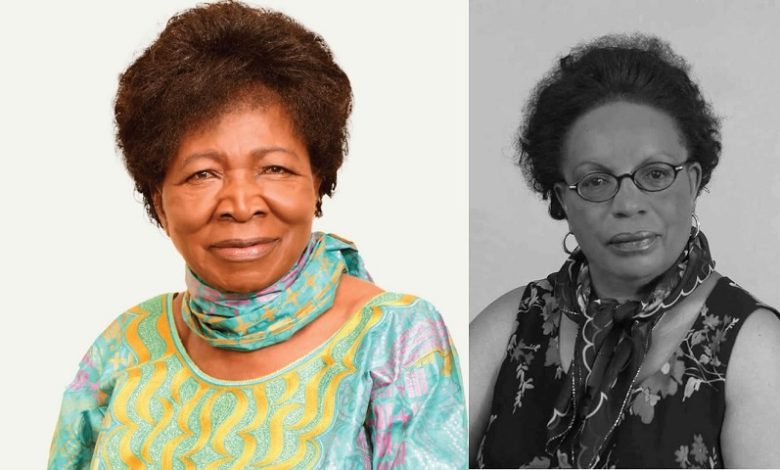
The country is mourning two women trailblazers who died in a span of two days this week.
Phoebe Muga Asiyo, who passed on Thursday in the United States where she suffered a stroke while visiting her family, was a woman of many firsts.
Mama Asiyo has been mourned by both family and friends as a pioneer and trailblazer—the first Senior Superintendent of Kenya Prisons, the first African chairperson of Maendeleo Ya Wanawake, the first woman Elder among the Luo, the first Goodwill Ambassador for UNIFEM, Commissioner in the Constitution of Kenya Review Commission, and a distinguished representative for Karachuonyo in Parliament.
At just 31, Asiyo made history as the first African woman appointed as Senior Superintendent of Women’s Prisons in 1963, just before Kenya’s independence. Earlier, in 1958, she became the first black African president of the Maendeleo Ya Wanawake Organisation (MYWO), five years after joining the movement.
Asiyo became a MP for Karachuonyo in 1982 serving until 1983 when Parliament was dissolved following the abortive coup on August 1, 1982. At the time, very few women had ventured into the male-dominated politics leave alone being successful.
On the other hand, Catherine Nyamato passed on a day earlier after collapsing while supervising a project near her home, was the first woman MP from the larger Gusii community, after being nominated by former president Moi, serving between 1997 and 2002, a rare feat at the time.
She also served as the Narc-Kenya National Women Leader and the Secretary General of the League of Kenyan Women Voters.
While mourning her, Kisii Senator Richard Onyonka took note of her strong commitment to fighting gender-based violence, harmful cultural practices, and systemic inequality, “a significant legacy that will continue to inspire our society for generations.”
It is worth of note that the Gusii community has largely remained solidly patriarchal where most women were for long told that their place was in the kitchen and not at the table, while practices such as female genital mutilation and lack of land rights for women are still being fought.
While the community now boasts of four women MPs (after the expulsion of Senator Gloria Orwoba), it is instructive that two of them occupy Woman Rep positions while the other two, Irene Nyakerario Mayaka and Esther Anyieni Okenyuri, are nominated.
Indeed, no woman politician has won an elective seat as a Member of Parliament since independence.
In the 2022 General Election, for instance, only Beatrice Kerubo won an election as a member of the Kisii County Assembly.
It is against this background that Nyamato joined other leading women figures in the country to actively engage in the constitutional review process from the early days of the Prof Yash Pal Ghai-chaired Constitution of Kenya Review Commission (CKRC), to push for issues such as ender equity, equality and affirmative action in a push to give women a seat at the decision making table and also shield them from entrenched social, economic and political discrimination.
But thanks to affirmative action, championed first by Asiyo, the Kisii and Nyamira County Assemblies were forced to nominate more women in order to adhere to the two thirds gender rule enshrined in the 2010 Constitution through the efforts of Nyamato and others.
But these nominations have been turned into tokenism and can be taken away by the powers that be if one falls out of line as Orwoba’s expulsion simply for turning up at the airport to welcome former Interior Cabinet Secretary Dr Fred Matiang’i illustrates.
While a lot of progress has been made since the return of multi-party democracy with many women winning seats, including as governors, the need for a constitutional formula to safeguard gender representation is long over due.
In 2020, after Parliament severally failed to enact legislation to actualise the two thirds gender rule, then Chief Justice David Maraga wrote to President Uhuru Kenyatta asking him to dissolve the House.
Though the President did not, his successor, William Ruto, included the agenda as among constitutional reforms he wanted MPs to tackle so as to avoid a similar scenario.
He noted that the Constitution mandates progressive realisation of the gender representation ratio through legislative and policy measures.
Ruto proposed enactment of a constitutional amendment establishing a formula to guide the computation of the gender ration in the National Assembly based only on the members elected from the constituencies (National Assembly) and counties (Senate) per Article 97 (1) (a) and Article 98 (1) (a) and proposed that the amendment can be set out in Article 97 (3).
Were MPs to enact this amendment, according to the President’s proposal, the formula would set one third at 97 members and with 47 women already elected as Woman Reps, it will mean topping up with 50 more women to meet the constitutional threshold.
In the case of the current National Assembly, with 26 women already elected from the constituencies, the nomination of an additional 26 women will suffice to meet the requirement.
“By the same formula, the constitutional gender inclusion threshold will be met through the nomination of 16 women to the Senate,” Ruto said in his memo, adding that the increase in wage bill in the effort to be compliant with the Constitution.
It is a shame that as we mourn these two great women who shone the light on the path to leadership for future women generations, there is a fresh effort to have the 13th Parliament dissolved for failing to meet the gender rule, which stipulates that not more than two thirds of the same gender should constitute an elective or appointive both.
While Ruto encouraged political parties to embark on sustained, institutionalised and robust initiatives to facilitate the empowerment of women to successfully contest for elective seats and even proposed establishment of Political Participation Fund to finance such initiatives, it is unlikely that the need for top-ups will end any time soon.
In our view, the best way to honour these great matriarchs is to expedite implementation of constitutional decree on gender representation, which was strangely sidestepped by the National Dialogue Committee (NADCO), which, among others, considered the President’s proposals, some of which have either been implemented or are under consideration.