High cost of living and bulging public debts

The country is weighed down by swelling public debt that faces the possibility of a debt crisis as Kenyans struggle to put food on the table.
The worsening cost of living situation in the country has been compounded by rising crude oil prices and weakening shilling that fell to as low as Sh110 against the dollar last week, leading to increased landed cost of petroleum products in the country.
The sharp increase in fuel prices in the country has had a ripple adverse effect on the economy leading to a rise in the cost of living and the cost of doing business on an already overburdened citizenry grappling with the effects of the pandemic.
Food inflation rose 8.89 per cent in January 2022 despite the decline in the overall rate of inflation, according to the Kenya National Bureau of Statistics (KNBS) monthly Consumer Price Index.
A number of Kenyans have called for a reduction in food prices and the implementation of President Uhuru Kenyatta’s directive on electricity tariffs, which will see a decline in electricity costs.
A review at retail prices for essential household food items reveals that high costs have impacted Kenyans, the majority of whom are poor, and that more Kenyans are at risk of falling further into poverty.
In 2014, a loaf of bread cost between Sh40 – Sh45; now, it costs up to Sh60; cooking oil, which used to cost Sh120 a litre, now costs up to Sh300; and tomatoes, which used to cost Sh20 for four large ones, now cost up to Sh10 each
Meat currently costs Sh700 after slaughterhouse rates jumped from Sh300 per kilo to up to Sh400 per kilo. A sack of charcoal that used to cost Sh1,500 now costs Sh3,300, making food preparation ridiculously expensive.
A 2kg packet of maize flour costs between Sh115 and Sh145, a litre of cooking oil costs between Sh326 and Sh346, a kilogram of sugar costs between Sh124 and Sh138, and a kilogram of rice costs between Sh170 and Sh297.
A 10kg box of Pembe maize flour costs Sh630, yet half of it is available for Sh325 at local stores. While a 2kg pack of Kabras sugar costs Sh245, a kilo of the item costs Sh132, and two litres of Golden Fry cooking oil costs Sh637, half a litre of the commodity costs Sh188.
The above variations imply that a person buying in small portions pays between three and 18 per cent more than one buying larger quantities.
Kenyans took to social media over the weekend to protest the rising cost of food and groceries.
Under the hashtag, Lower Food Prices, the netizens decried the increase in prices of basic food commodities such as sifted maize flour, bread, vegetables and fruits.
Some Kenyans who are feeling the pinch have expressed their frustrations, saying the fluctuations in food prices were hurting both consumers and producers.
However, Raila Odinga, the head of the Orange Democratic Movement (ODM), has criticized a statement made by the Kenya Kwanza Alliance (KKA)on the country’s state food pricing.
Odinga reprimanded the camp claiming they lack awareness of how the economy is governed, hours after Amani National Congress (ANC) party head Musalia Mudavadi read out a joint statement by Kenya Kwanza.
While campaigning in the Coastal region, Odinga termed Kenya Kwanza’s statement on the expense of living “noise.”
Loosely translates to: “There is no need of making unnecessary noise, and barking that the cost of living is high. Which country doesn’t have debts? (Hakuna haja ya kupiga kelele tu, na kubweka eti gharama iko juu, nchi gani ambayo haina deni?)” Raila said.
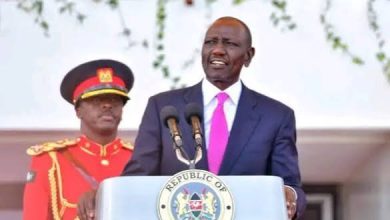
KKA, led by Deputy President William Ruto, Mudavadi, and Moses Wetangula of Ford Kenya, has accused the government of wanting to borrow more money at a time when Kenyans are suffering.
Ruto’s staff asked the National Treasury not to borrow any more money last week.
The team claims that the country has exceeded the Sh9 trillion borrowing ceiling, putting the country in jeopardy.
Ruto further requested the National Treasury to budget within the country’s income to prevent overburdening taxpayers with debts.
According to the DP, the country can no longer fulfill its obligations because it already pays Sh1 trillion a year.
“We want to plan our budget in line with our income,” Ruto said.
Mudavadi appealed to the National Treasury CS Ukur Yattani not to incur unnecessary debts as the current administration’s term nears the end.
“They should not commit Kenyans on anything that will put them into trouble,” Mudavadi said.