Grilling of Kenya Power Board of Directors commence over rampant tender fraud

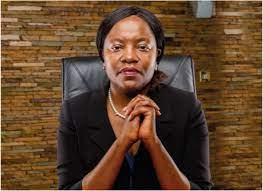
Grilling of embattled directors of the cash-strapped power utility firm, Kenya Power by the Ethics and Anti-Corruption Commission (EACC) detectives has commenced in earnest over fraudulent tendering that has financially crippled the perennial lose making entity.
Summons against the nine directors through the board of directors chairperson Vivienne Yeda were issued last week to help shed light into investigations over premeditated and designed interference in procurement processes at the Kenya Power.
“We expect the three due to record statements to avail themselves as requested in compliance with the summons issued.” A source from Eacc has told The Informer.
Engineer Abdirazaq Ali, Caroline Kittony and Njoroge Muhu are set to be questioned today.


Engineer Elizabeth Rogo, Kairo Thuo, and Sachen Gudka are set to appear at EACC headquarters are Integrity Centre tomorrow while Engineer Isaac Kiva, Humphrey Muhu and Yeda are will record statements on Thursday.
In a letter dated September 10, EACC’s CEO Twalib Mbarak directed the officials to appear before investigators for interview and statement recording.
“To progress the investigations, kindly facilitate the below listed members of the Board of Directors to appear before our investigators at our Integrity Centre offices.
The probe comes barely a month after the former CEO of the troubled state-controlled electricity distributor Bernard Ngugi was sacked, barely two years after his appointment. Before his appointment, Ngugi was the head of the procurement division.
Ngugi had come under pressure from shareholders of the Nairobi Securities Exchange (NSE) listed firm, government and trade unions over turn around plans amid a streak of losses at the company. Eng Rosemary Oduor was then appointed as the acting CEO with effect from August 4, 2021.
In May this year, The Informer exposed how Kenya Power is losing billions of shillings through stockpile of unprioritised purchases some covering up to 8,050 years.
In what appears to be a well-orchestrated brazen looting spree choreographed as material stock up in an attempt to cover possible trace of theft of taxpayers’ money, the materials have overtime been purchased without financial prudence.
At the time, the sacked MD served as the Manager in charge of Supply Chain and has served at the company for over three decades now.
According to insiders, senior officials at the Ministry of Energy were privy to the dealings that saw colossal amount of money from the public coffers committed to unwanted stock.
The materials are lying unutilised and could soon be declared obsolete.
Additionally, the purchases were made without requisitions by the user departments to a tune of over Sh8billion.
Some of the materials itemised as; Clamp suspension (11kV ABC) bought at Sh14.6million has been quoted at stock cover of 8,050 years.
From the inventory records seen by us, other items booked under material code 174827 were purchased at Sh690million were assigned stock cover of 127 years.
Others mostly cables and conductors were bought at a cost of Sh129million, Sh463million, Sh185million and Sh139million among others.
According to the highly guarded procurement record, ‘bracket steel pole top swer’ under material code 181202 was bought at Sh18, 569,600.00 and assigned a stock cover of 183 years while ‘joint 66KVXLPE 400mm2 AL S/C’ under code material 153416 was purchased for Sh26, 687, 604.79 to cover 35 years.
Concrete fitting U-bolt and nut (20*700M) under code material 186806 assigned stock cover period of 27 years was purchased for Sh18,370,473.70 while ‘Pvc Trunking Type II (Perforated) was bought at a cost of Sh17,552,709.44 for a period of 797 years.
Other scandals that have hit the firm include token theft.
In June this year, while appearing before the Public Investments Committee (PIC) of the National Assembly, Ngugi cited Non-Disclosure Agreements and confidentiality clauses in declining to reveal the owners of beneficiary firms and 17 Power Purchase Agreements (PPAs) that committed the lose making entity to the shady dealings through what appeared to be an apparent protected looting of public coffers.
The committee chaired by Abdulswamad Nassir heard that taxpayers have no means or right to scrutinise how their money is spent to buy power generated by private producers.
However, Abdulswamad ordered Kenya Power to disclose the identity of the owners of power producer firms which pocketed Sh50.2 billion in sales to the utility in the year to June 2020.
Kenya Power’s electricity purchase costs stood at about Sh82.1billion in the financial year 2020, accounting for over half of its operating costs.
It is not clear why Kenya Power opts to buy power from individual producers without giving national power producer, Kenya Generating Company (Kengen) which the former owes billions of shillings in debt.
“Power Purchase Agreements have contractual provisions which would require more time to obtain consent and authorisation from court processes because of confidentiality clauses such as Non-Disclosure Agreements.” Ngugi said.
According to Kenya Power records, some of the listed independent power producers in the country are, Iberafrica Power, Tsavo Power, Thika Power, BioJuole Kenya Limited, Mumias-Cogeneration and OrPower 4.
Others are Rabai Power, Imenti Tea Factory Hydro, Gikira Hydro, Triumph Power, Gulf Power, and Regen-Terem Hydro.
Reports indicate that the contracts were so secretive that even the Auditor-General said they had never seen them. The PIC however maintained that the secrecy was unconstitutional as the company was a public company.
While appearing before the committee, Ngugi said he would need a court order and consent from the contractors to make the contracts public.
Last year, Members of Parliament demanded a forensic investigation on how the company bought faulty transformers and prepaid token metres.
Experts said the transformers had failed the company’s own quality tests as they were found to be of poor build, made of poor quality materials, were leaking oil and losing too much power.