BusinessCrime WatchHomeMain StoryNational NewsNewsPolitics
FKE denies refusing to increase minimum wage, seeks reduction of housing levy
Besides raising workers' minimum wage, FKE also proposed reforms aimed at improving workers welfare and to support business enterprises

The Federation of Kenya Employers (FKE) wants the housing levy reduced to 0.5 per cent from 2.5 per cent, among other cost-cutting proposals.
In a statement issued after she was excluded from addressing this year’s Labour Day celebrations, FKE CEO Jacqueline Mugo also recommended the zero-rating of Value Added Tax (VAT) on basic food items in order to cushion families from inflation and also revising tax relief bands from the current Ksh 24,000 to Ksh 36,000.
If adopted, Mugo observed, those steps would ease the cost of living, increase the disposable income of lowest paid employees and make Kenyan businesses more competitive.
Besides raising workers’ minimum wage, FKE also proposed reforms aimed at improving workers welfare and to support business enterprises.
“It is unfortunate and surprising that the 2025 celebrations have broken this established tradition to exclude employers from the programme,” Mugo said.
She noted that the International Labour Day has over the years been celebrated in the spirit of tripartism and collaboration where COTU(K) has taken a lead in the planning and organisation of the celebrations in collaboration with FKE and the ministry of Labour and Social Protection.
“The International Labour Day provides a moment for social partners to reflect on the achievements, wins and lessons learnt in the previous years,” she added.
“It is a moment where the social partners and government take a step back to reflect on the journey we have had in the development of our labour movement over the years.
Ms Mugo added: “Although we are not where we aspire to be, we also agree that some significant progress has been made and need to remember that nation building is always work in progress. We therefore need to work together to address the challenges we face as we celebrate the successes we have had.”
The CEO maintained that the Federation reaffirms its strong commitment to social dialogue and emphasizes its continued support for tripartism and representing employers on key national labour issues.
“We will continue to play our role and make significant contribution to the development of the labour movement, growth of enterprises and improvement of the wellbeing of our employees,
“In every policy decision made we need to strike a balance between protecting the welfare of workers and supporting business growth,” the official stated.
She noted that these principles guide FKE’s support of the 2024 directive to review minimum wages through a proper legal framework.
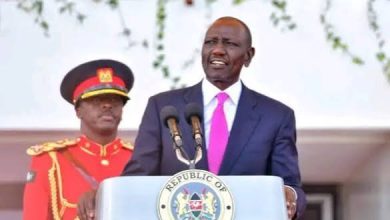
During the celebrations at Uhuru Gardens in Nairobi, Central Organisation of Trade Unions (Cotu) Secretary General Francis Atwoli had accused employers of frustrating government efforts by failing to increase the minimum wage by 6 per cent as directed by President Ruto last year.
In his speech, Ruto also directed the ministry of Labour and Head of Public Service Felix Koskei to ensure the order is effected.
“It is not right, it is unacceptable. I am directing the ministry to work with the Head of Public Service to ensure employers implement the six per cent increase and to quickly embark on the exercise to put together the next agreement.”
But Mugo denied the claims by Atwoli.
“We want to thank President William Ruto, because following his guidance, the Wages Councils were reconstituted, consultations were held and consensus on a 6% increase was reached and gazetted,” she said, adding that FKE had advised employers to fully comply from November 1, 2024.
Beyond minimum wages, FKE also proposed broader reforms to improve workers’ welfare and support business sustainability.
She added that FKE also supports the President’s directive on the ratification of ILO Conventions 189 and 190.
“However, we urge that this is done through the proper legal and procedural framework, as outlined in the Treaty Making and Ratification Act, ILO Convention 144, ILO Recommendation 152 and related international instruments that guide ratification of the ILO Conventions,” the statement reads.
It goes on; “Our concern is simply that Kenya needs to follow all the required steps before ratification and, although progress has been made, no comprehensive report confirms full compliance.”
“We understand the many challenges the country faces from high youth unemployment, high informality, high cost of living, to high debt levels, among others. Our perspective is that there is no single country that does not have challenges.”
However, Mugo asserted that there are no challenges that Kenyans are not able to overcome if all, including the government, workers and employers work together.
“As employers, we believe in turning challenges into opportunities. COVID-19 taught us this. Today’s realities rapid technological change, regional instability, global trade disruptions can become engines for growth if we act boldly,” reiterated the CEO.
She pointed out that a stable, predictable, simple, and business-friendly taxation policy framework one that supports business growth, encourages capital formation, and promotes investments is needed.
The official also called for clarity in the country’s economic direction so that policy should be clear whether Kenya is positioning herself as a producing or trading country.
“We desire a producing country, exporting goods across Africa and the world. We must fill our shelves, trucks, and homes with ‘MADE IN KENYA’ products and brands,
“Collaboration and meaningful social dialogue. We may disagree at times, but one thing unites us: the need for prosperous Kenya, workers and businesses,” the FKE Chief Executive said.