Experts laud reduction of bank’s cash reserve ratio, say it will boost access to cheap loans
Moses Kuria, an advisor on economic matters to President William Ruto, lauded a move by MPC to reduce the CRR, saying the move will allow more people to borrow money from commercial banks

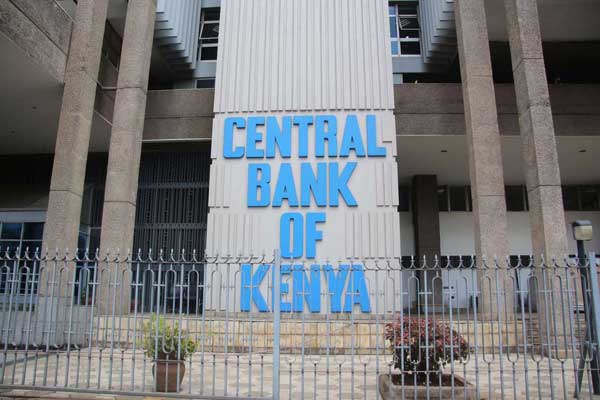
Kenyans have lauded the decision rendered yesterday by the Central Bank Monetary Policy Committee (MPC) that cut down the Cash Reserve Ratio (CRR) to 3.25 per cent.
According to economists and investment analysts, reduction of Cash Reserve Ratio by 100 basis points to 3.25 per cent will definitely ensure that commercial banks in Kenya lower down their lending rates to the enterprises especially the small and medium enterprises in the country.
Moses Kuria, an advisor on economic matters to President William Ruto, lauded a move by MPC to reduce the CRR, saying the move will allow more people to borrow money from commercial banks.
“The cutting of the Cash Reserve Ratio to 3.25 by the Central Bank Monetary Policy Committee is the significant economic development of 2025. I see banks knocking doors again looking for people to lend money,” he said.
On his part, Hezbourne Ong’elle, an economist at Breinscop Consultants, argued that the reduction of the CRR from 4.25 per cent to 3.25 per cent is expected to unlock up to Ksh 57 billion in additional liquidity for banks to lend.
“The reduction in the portion of deposits that banks hold as reserves with the CBK is designed to lower borrowing costs and boost credit to the private sector,” Ong’elle says.
The ratio was first adjusted in 2003 after President Mwai Kibaki came to power – a move that surprised many banks, some of who had chased away and closed account holders who had less than Ksh 3,000 to Ksh 10,000 in their accounts.
The move made many banks in Kenya innovate in order to open accounts. Former President Uhuru Kenyatta, also with the assistance of CBK adjusted CRR in March 2020 when Covid-19 pandemic struck. During the period, the CRR was revised from 5.25 per cent to 4.25 per cent to provide commercial banks with extra liquidity to support borrowers facing financial distress.
However, despite three previous reductions to the base rate between August and December 2024, the CBK Governor Dr Kamau Thugge, who chairs the MPS, noted that lending rates had only dropped marginally, with private sector credit contracting by 1.4 per cent in the 12 months to December 2024.
“The reduction in the CRR will release additional liquidity to banks. This is expected to lower the cost of funds and lending rates, and support the growth of credit to the private sector,” he said.
The CBK also revealed that it has started inspecting banks to ensure they are adopting the Risk-Based Credit Pricing Model (RBCPM), which aims to link lending rates to the risk profile of borrowers.
Caleb Mugendi, the Jubilee Asset Manager, said reducing the cash reserve ratio (CRR) signals that monetary policy is loosening, which can lead to lower interest rates and increased economic activity.
He says when the CRR is reduced; banks have more funds available for lending, which can increase the money supply. This can lead to lower interest rates, which can encourage economic activity and growth.
Similarly, when the CRR rate is low, banks have more money to invest in other businesses which reduces the interest rates charged on loans.