Evergrande boss Hui Yan gets life sentence as China cracks down on property empire

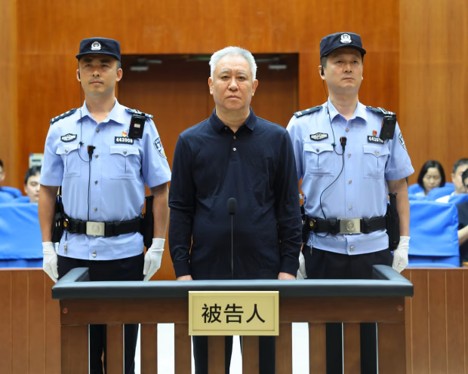
Hui Ka Yan, the founder of Chinese property giant Evergrande Group, has been sentenced to life imprisonment after being convicted of multiple financial crimes linked to the collapse of the heavily indebted developer.
The 67-year-old businessman, once ranked by Forbes as China’s richest man with an estimated fortune of $42.5 billion in 2017, was also ordered to forfeit all of his personal assets.
Hui pleaded guilty in April to eight offences, including misuse of funds, fundraising fraud, illegally accepting public deposits, unlawful loan practices, fraudulent securities issuance and bribery.
A court in Shenzhen, southern China, found that Hui had used large-scale financial fraud between 2016 and 2021 to inflate Evergrande’s assets and conceal its liabilities.
The court said his conduct seriously disrupted China’s financial and market order and caused exceptionally heavy economic losses.
Evergrande Group was fined 8.8 billion yuan (about $1.2 billion), while its property subsidiary was ordered to pay another 7 billion yuan. More than 50 other people linked to the company were also sentenced, receiving prison terms ranging from 20 months to 18 years.
Hui’s conviction is the latest chapter in the spectacular downfall of Evergrande, once one of China’s biggest property developers and a symbol of the country’s debt-fuelled real estate boom.
The company accumulated liabilities estimated at about $300 billion as it borrowed heavily to finance rapid expansion across China’s property market.
It eventually defaulted on most of its obligations and was delisted from the Hong Kong Stock Exchange last year.
Evergrande’s collapse became a major component of China’s wider property crisis, which intensified after Beijing introduced restrictions in 2020 aimed at curbing excessive borrowing by developers.
The measures exposed weaknesses in a sector that had become heavily dependent on debt and traditionally contributed between one-quarter and one-third of China’s economic output.
As access to credit tightened, developers struggled to raise funds, construction projects stalled and suppliers and homebuyers were left exposed.
The crisis was compounded by weak property demand during the Covid-19 pandemic, triggering a wave of defaults among developers and leaving hundreds of housing projects unfinished.
A study published this year estimated that the regulatory crackdown resulted in about $347 billion in sunk costs across the Chinese economy.
Hui’s life sentence underscores Beijing’s tougher stance on financial misconduct as it seeks to contain the fallout from the property crisis and restore confidence in China’s financial system.
It also represents a dramatic reversal for a businessman who once ranked among the world’s wealthiest individuals.