End of an era for Kenya Met as MPs pass Bill to establish Board to run weather services
However, the current staff are assured of job security and MPs amended Clause 53 to guarantee the transition of both technical and non-technical staff into the new Authority, with an option to remain or be redeployed within the civil service

The National Assembly has approved a Bill seeking to establish the Kenya Meteorological Services Authority to replace the current department with a view to modernising Kenya’s weather services while safeguarding indigenous knowledge and community rights institutional governance.
The Meteorology Bill (Senate Bill No. 45 of 2023), which was considered in the Committee of the Whole House during which several amendments were passed, establishes an independent Board anchored in law to run weather forecasting operations in the country.
If assented to by President William Ruto, the new law will mark the end of an era for the Kenya Meteorological Department, which has existed since 1977 when the original East African Community (EAC) collapsed.
However, the current staff are assured of job security and MPs amended Clause 53 to guarantee the transition of both technical and non-technical staff into the new Authority, with an option to remain or be redeployed within the civil service. This, the lawmakers stressed, ensures no worker is rendered jobless during the institutional shift.
MPs amended Clause 7 to compel the Authority to integrate traditional and indigenous knowledge into weather forecasting “through participatory scenario planning.” The House also inserted a requirement for collaboration with the National Drought Management Authority (NDMA) in developing drought early warning systems.
“This ensures the science of weather prediction does not ignore the centuries-old wisdom of local communities,” Mwala MP Vincent Musau told the House, as lawmakers cited examples of traditional forecasting methods among communities such as the Ogiek and Turkana.
Clause 12 was amended to align with the Mwongozo Code of Governance. The amendment replaced the reference to a “board of directors” with simply “the Board,” included the Principal Secretary responsible for Agriculture, and introduced drought risk management to the Board’s functions.
“This amendment not only ensures compliance with Mwongozo but also guarantees representation of critical sectors like agriculture in the Authority’s decision-making,” Molo MP Kuria Kimani noted.
Further, Clause 19 was amended to allow the Board to co-opt experts in indigenous knowledge as advisors.
Dagoretti South MP John Kiarie supported the move, remarking that “Kenya cannot afford to dismiss cultural heritage simply because it does not come with academic papers.”
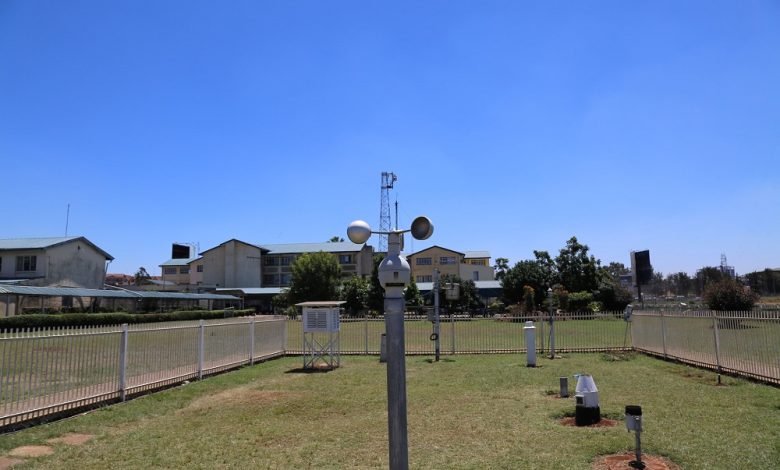
Under Clause 38, the Bill provides that landowners must consent in writing before meteorological equipment, such as observation masts, can be erected on their property. The clause also provides for compensation and dispute resolution in line with existing laws.
“This amendment protects both privacy and property rights, ensuring that digitisation does not come at the expense of rural families,” Kimani said, noting concerns about data protection and community trust.
The House also adopted New Clause 43A to amend the Air Passenger Service Charge Act (Cap. 475), making the Meteorological Services Authority a beneficiary of the levy currently shared by the Tourism Fund and the Kenya Civil Aviation Authority.
Musau explained that the resources would strengthen Kenya’s aviation safety through enhanced weather services.
Once enacted, the Meteorology Bill is expected to strengthen the country’s ability to predict weather patterns, mitigate climate risks, and support aviation safety, while balancing modern science with traditional forecasting knowledge.