DPP Ingonga calls for regional collaboration in combating emerging crimes
Speaking during the third Annual Prosecutors Conference in Lusaka, Zambia, DPP Ingonga emphasized that 21st-century prosecutors must be equipped with both legal and technological skills to effectively respond to complex crimes

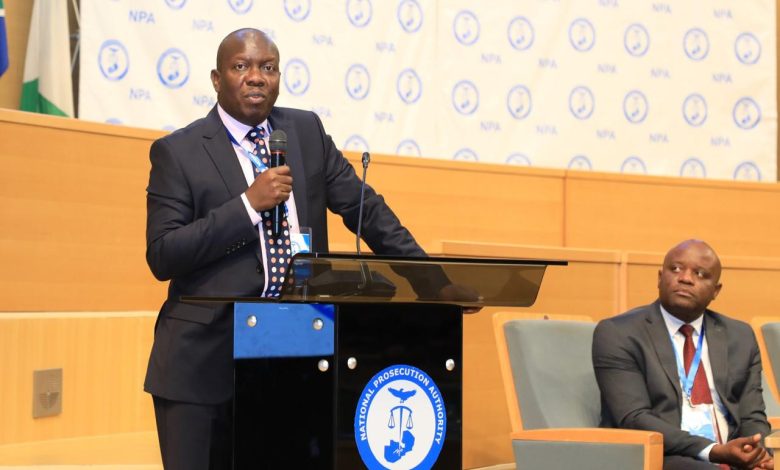
The Director of Public Prosecutions (DPP), Renson Ingonga, has urged prosecutors across Africa to embrace innovation, technology, and regional collaboration in the fight against evolving forms of crime, noting that modern-day prosecution demands more than just legal expertise.
Speaking during the third Annual Prosecutors Conference in Lusaka, Zambia, DPP Ingonga emphasized that 21st-century prosecutors must be equipped with both legal and technological skills to effectively respond to complex crimes.
“As the global environment is evolving, so must our approach to prosecution. The challenges we face do not just require legal expertise but also strategic foresight,” Ingonga stated, adding that prosecutors should be at the frontline of safeguarding public trust while operating with limited resources.
As President of the Africa Prosecutors Association and the Eastern Africa Association of Prosecutors, Ingonga highlighted the organization’s recent efforts in training prosecutors on transnational organized crimes such as terrorism, money laundering, drug trafficking, cybercrime, and human trafficking.
He underscored the urgent need for an effective regional mechanism to dismantle cross-border criminal networks.
Ingonga revealed that Kenya’s Office of the Director of Public Prosecutions (ODPP) has embraced innovative strategies to tackle the challenges.
He mentioned that his office has entered into a Memorandum of Understanding with the Human Trafficking Institute to provide specialized training to prosecutors, established an Innovative Prosecutions Performance Framework Council to encourage creative solutions against emerging crime trends as well as increased use of forensic accounting, electronic data analysis, and prosecution-guided investigations, which have led to convictions of high-profile corruption and financial crime cases.
He added that ODPP Kenya has revamped its Anti-Money Laundering and Asset Forfeiture Division to confront financial crimes linked to cryptocurrency and illicit financial flows.
On child protection, the DPP described online child sexual exploitation as “an urgent crisis of our digital age” and revealed that Kenya has set up child-friendly interview rooms in its regional offices and is leveraging digital forensic evidence and pre-recorded testimonies to prosecute cases involving child pornography, trafficking, and online abuse.
He stressed that combating transnational crime requires reinforced regional cooperation and stronger mutual legal assistance frameworks, while ensuring prosecutions remain victim-centered and uphold fundamental rights.
Beyond legal reforms, Ingonga called for attention to the mental health and well-being of prosecutors, citing the high-pressure nature of their work.
He disclosed that the ODPP has embedded clinical officers within its structure and rolled out wellness programs under its Strategic Plan 2023-2027, which have reduced burnout and improved resilience among staff.
“As prosecutors, we must foster a culture where mental wellness is treated with the same seriousness as case preparation. Mental wellness is not a weakness but a strategy,” he noted.