Digital evidence takes center stage in Ahmed Rashid case
Among those scheduled to testify are an officer from the Directorate of Criminal Investigations (DCI), a representative from the Communications Authority of Kenya (CA), and the lead Investigating Officer.

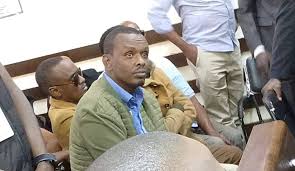
At exactly 9am, Courtroom Three at the Kibera Law Courts is expected to reconvene in one of the country’s most closely watched police accountability trials — the case against Police Sergeant Ahmed Rashid, the officer long branded in public discourse as the “Eastleigh killer cop.”
Before Justice Kavedza, the prosecution is set to line up three critical witnesses in proceedings that could significantly shape the direction of the case.
Among those scheduled to testify are an officer from the Directorate of Criminal Investigations (DCI), a representative from the Communications Authority of Kenya (CA), and the lead Investigating Officer.
Their testimony is expected to delve into the technical and forensic backbone of the State’s case — including call data records, digital trails, ballistic analysis and the chain of command surrounding the fatal shooting of two young men in 2017.
Rashid faces two counts of murder in connection with the deaths of Jamal Mohammed and Mohammed Dahir Kheri, who were shot outside Amal Shopping Complex in Eastleigh, Nairobi, on March 31, 2017.
The killings, captured in widely circulated footage at the time, sparked public outrage and intensified scrutiny of alleged extrajudicial executions linked to specialised police units operating in Nairobi’s Eastlands area.
At the time of the incident, Rashid was a member of the elite Starehe Special Police Initiative and Vigilance Unit — popularly known as the “Pangani Six” — a squad that civil rights groups have previously accused of operating with lethal force under the guise of crime suppression.
The State has indicated its intention to call 25 witnesses to establish what prosecutors describe as the unlawful and deliberate killing of the two men.
Those witnesses are expected to include police officers, forensic experts, digital analysts, and civilian eyewitnesses.
Today’s testimony from the Communications Authority official is likely to focus on call data records and location mapping — evidence often pivotal in reconstructing movements and communication patterns before and after fatal police encounters.
Such data could either strengthen the prosecution’s assertion of premeditation or support the defence’s argument of lawful action in the line of duty.
The DCI officer’s testimony is expected to outline investigative findings, including scene reconstruction and internal police reports. The Investigating Officer will likely tie together the documentary evidence, witness statements, and technical analysis gathered over years of inquiry.
However, the trial has not advanced without resistance.
The defence has mounted a multi-pronged challenge, contesting the court’s jurisdiction, objecting to the plea-taking process, and questioning the admissibility of certain summons and pieces of evidence.
Proceedings have also faced delays after Rashid previously cited illness, prompting adjournments that slowed momentum in a case already nearly nine years removed from the incident.
Behind the courtroom drama lies a broader national debate over policing methods, accountability mechanisms, and the limits of force in high-crime urban zones.
Civil society organisations, including the Police Reforms Working Group and the Missing Voices Alliance, have closely monitored the case. They argue that its outcome could set an important precedent for how Kenya handles allegations of extrajudicial killings involving law enforcement officers.
For families of the deceased, the case represents more than legal procedure — it is a long wait for answers.
As Justice Kavedza prepares to hear technical evidence that could either tighten or unravel the prosecution’s case, the courtroom is likely to become a battleground of data interpretation, procedural objections, and competing narratives about what truly transpired outside Amal Shopping Complex that March evening.
With 25 witnesses expected to testify before the trial concludes, today’s session may only mark another step in what has become a prolonged legal reckoning — one that sits at the intersection of law enforcement power, digital forensics, and the pursuit of justice.