Court reprieve for Ruto’s 21 advisors after High Court blow

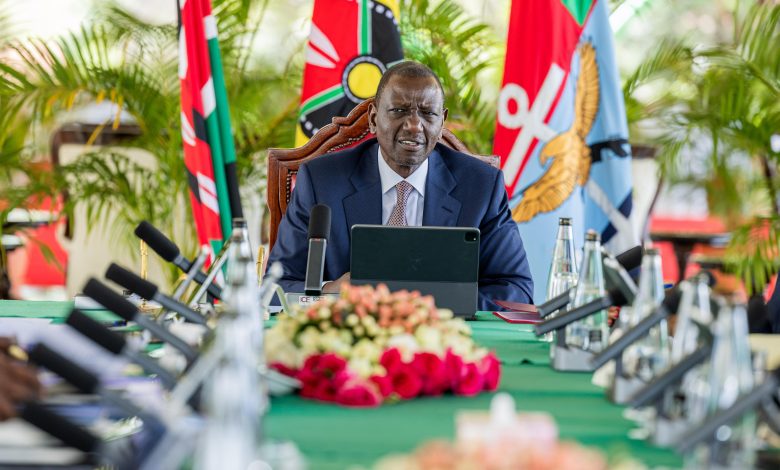
President William Ruto’s inner circle of 21 advisors has received a temporary reprieve after the Court of Appeal of Kenya suspended a ruling by the High Court of Kenya that had declared their offices unconstitutional.
In a decision delivered by the Court of Appeal in Nairobi today, March 14, 2026, a three-judge bench comprising Justices William Korir, Hedwig Ong’udi and Samson Okong’o granted a stay of execution of the earlier judgment.
The ruling allows the advisors to remain in office and continue receiving their salaries and benefits pending the hearing and determination of an appeal filed by the Office of the Attorney General of Kenya.
In their decision, the appellate judges noted that removing the advisors immediately could interfere with the smooth functioning of the presidency.
The court observed that dismissing the officials at this stage risked disrupting operations at the Office of the President, especially since the advisors were already actively performing their duties.
The order effectively suspends a January ruling by High Court judge Bahati Mwamuye, who had declared the advisory positions unconstitutional and barred the government from paying the officials’ salaries or benefits.
Justice Mwamuye had ruled that the appointments did not comply with constitutional requirements, triggering a legal dispute over the legality of the advisory team established by the President.
Following the appeal by the Attorney General, the Court of Appeal lifted the injunction, meaning the advisors will continue serving in their roles until the matter is fully heard and determined.
The advisory team was created to support the President and the broad-based government by providing policy guidance and strategic advice on key national issues.
Those affected include several prominent figures within the President’s advisory circle such as economist David Ndii, National Security Advisor Monica Juma and constitutional scholar Makau Mutua, alongside 18 others responsible for portfolios ranging from foreign relations to gender and intergovernmental coordination.
The case stems from a petition filed by activists and civil society organisations including Katiba Institute, who argued that the creation of the advisory positions bypassed constitutional procedures.
The petitioners convinced the High Court that the offices duplicated roles already assigned to Cabinet Secretaries and the Attorney General, and that maintaining them would place an unnecessary financial burden on taxpayers.
However, the Public Service Commission of Kenya and the Attorney General argued that the appointments were lawful and made in line with the Public Service Commission Act, maintaining that the President has the authority to appoint personal staff to assist in carrying out constitutional duties.
While granting the stay orders, the Court of Appeal said the underlying constitutional questions remain unresolved and recommended that the President of the court fast-track the appeal due to its significant public interest.