CMC sack 169 staff after losing key car deals, to focus on agriculture
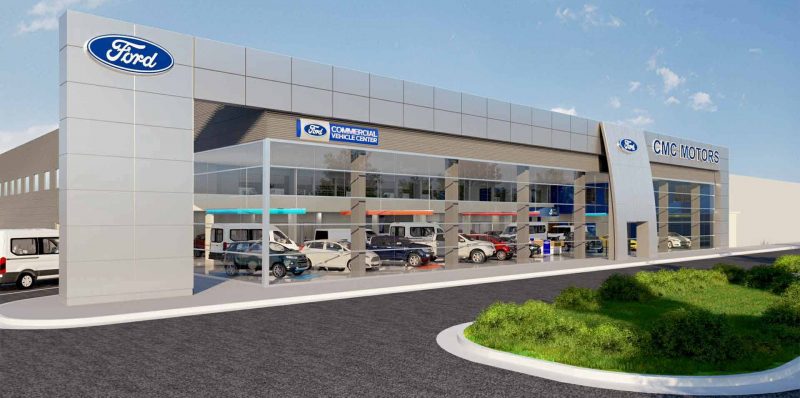
Automobile dealer, CMC Motors Group has declared at least 169 of its workers countrywide redundant after losing dealerships on Ford, Suzuki and Mazda franchises in Kenya.
CMC lost Ford dealership to rival Salvador Caetano.
In 2018, CMC also lost exclusive dealership of Suzuki cars after CFAO Motors (then trading as Toyota Kenya) was appointed as the second representative of the Japanese automaker.
On the other hand, Mazda is expected to announce the new distributor in the coming months.
Effectively, Salvador Caetano will handle Ford from the third quarter of 2023 while Suzuki will be supported by CFAO motors (formerly Toyota Kenya), from the second quarter of 2023.
The three vehicle brands have since terminated their distribution deals with the company choking key lifeline of the motor industry dealer with subsidiaries in Kenya, Uganda and Tanzania all wholly owned by the Al-Futtaim Group based in the United Arab Emirates (UAE).
In 2014, the Dubai-based multinational Al-Futtaim Group acquired the company for Sh7.5billion after it had been paralysed by internal wars pitting its main shareholders.
In a statement issued by the Group’s Managing Director Sakib Eltaff today, the move will affect employees in all levels of management and will be done gradually between the first and fourth quarters of the year.
Eltaff explained that the termination of the said three contracts will mean a decline in business, which will directly affect employees’ structures and roles in the company, hence the need for retrenchment.
Those affected by the redundancy are drawn from Administration and Support, Finance, IT, Legal, Logistics, Senior Management, Parts, Procurement, Projects, Sales, and Service departments.
“This means that it will become necessary to declare 169 employees redundant. The employees affected are in both management and unionisable categories. The company intends to undertake the redundancy in 3 phases as the distributors wind up their operations with CMC Group between the 2nd quarter of 2023 and the 4th quarter of the year.” Eltaf said.
According to Eltaff, the company has in recent years, been confronted with rapid changes in market dynamics owing to the pandemic, production slowdowns and supply-chain disruptions, which have impacted the passenger vehicle market hence the shift.
“We thoroughly studied the situation and took the decisive step to shift focus. It wasn’t an easy choice for us, as we have been very proud to represent global automotive brands. We will certainly ensure our customers continue to experience high standards of service during the transition,” Eltaff said.
For over 75 years, CMC Motors Group Limited has been a widely successful and established name in the automotive and agricultural sector, with presence in Kenya, Tanzania, and Uganda.
This is the latest franchise loss for CMS after it also lost the Jaguar, Land Rover and Volkswagen franchises to Inchcape Kenya (the successor of RMA Kenya) and DT Dobie respectively.
The change in strategy, however, management says follows closely on the government’s agenda to transform and rapidly grow Kenya’s agricultural sector, which contributes approximately 33 per cent of the country’s GDP.
CMC has already made in-roads in the agricultural sectors of Tanzania and Uganda with good tractor sales in 2022 within both countries.
The company is setting up an assembly facility in collaboration with CNH Industrial and the Ministry of Agriculture in Uganda.
CMC aims to further strengthen its agriculture sector interests in the region with plans to expand reach and continue selling its portfolio of New Holland tractors, alongside an extensive range of farming implements from New Holland, Nardi and Fieldking, management notes.
It also intends to further solidify its position in the two-wheeler sector as the company is exploring the possibility to set up a two-wheeler assembly facility in Nairobi.
“Two- wheelers are an essential tool of trade in East Africa and a strong localisation plan will enable the company to deliver on its promise of being a customer-centric organisation,” Eltaff said.