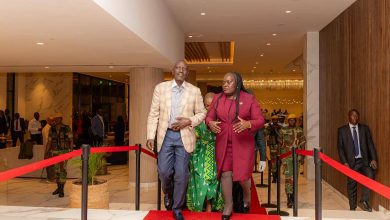
CJ Koome accuses executives of frustrating their efforts to deliver legal mandate


The Judiciary has accused the Executive of being the most significant impediment to constitutional commissions and independent offices (CCIOs) carrying out their legal powers, rendering the majority of them ineffective.
Various agencies of the Executive branch of government are accused by the CCIOs of thwarting their efforts to deliver due to budgetary restrictions and a failure to enforce their judgments.
They also pointed to regular delays in choosing key office holders to replace those whose terms had expired as another way the Executive has stifled their ability to conduct their duties.
CCIOs are commissions and offices established under the Kenyan constitution and acts of Parliament to provide supervision, capacity building, and overall improvement to the country’s democracy.
Among them are the Controller of Budget, Auditor-General, Independent Electoral and Boundaries Commission, Ethics and Anti-Corruption Commission, Independent Policing Oversight Authority, and Judicial Service Commission.
The CCIOs noted that while most of them had made huge strides in promoting governance and democracy in the country, there were still challenges that if not addressed would continue to affect their operations. Yesterday marked ten years since the official start of their operations under the 2010 Constitution.
Koome said that the Executive’s continued allocation of meagre funds to CCIOs had hampered their optimal operation, saying it is a concern that Parliament should address.
“We have often witnessed delays in commencing the recruitment of new commissioners, leading to legal challenges as the legality of the decisions undertaken by the independent institutions during such transitioning times cannot be binding,” she said.
The CCIOs’ other significant concern, which has had an impact on their institutions’ reputations, is in the execution and enforcement of their rulings, where they claim that disdain for their recommendations impedes their job.
“Once we make a determination, we are expected to talk to the parties to enforce that determination.
But the law as it is, CAJ (Commission on Administration of Justice) Act, does not tell us how then we can move to the next step to enforce that determination.
There are also some powers that have been given to us by the constitution but when it comes to execution it becomes a challenge,” said CAJ Chairperson Florence Kajuju.
This is even as the issue of disobedience of court orders by the government came up, with the CJ indicating that this has had implications on the Judiciary’s independence, dignity and authority.
Budget restrictions forced certain commissions to share offices in some parts of the country in order to provide services to more Kenyans, according to some of the commissions.
They asked Parliament to organize a committee to deal with issues made by individual and collective CCIOs to deal with the challenges faced over the last decade through the CCIOs Forum, an umbrella organisation representing the country’s 21 CCIOs.
“But we must also acknowledge that this impact has come against the backdrop of a challenging operating environment and one of the major hurdles that we have experienced as commissions and independent offices is in respect to financial and budgetary constraints,” the Chief Justice, who was the chief guest at the event, added.