Before the vote: IEBC must come clean on 2027 election tech
The credibility of an election begins much earlier, in the systems, people, technology and procurement processes that determine how voters are registered, identified, counted and results transmitted.

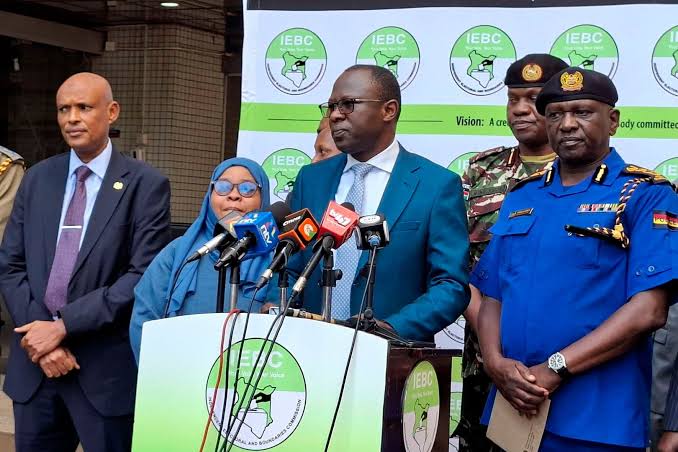
Kenya has learnt, often at a terrible cost, that an election is not secured simply because voters turn up, cast their ballots and a winner is declared.
The credibility of an election begins much earlier, in the systems, people, technology and procurement processes that determine how voters are registered, identified, counted and results transmitted.
That is why I believe the controversy surrounding the Independent Electoral and Boundaries Commission’s (IEBC) proposed Integrated Elections Management System (IEMS) for the 2027 General Election deserves serious scrutiny.
The allegation that the tender specifications could favour South Korean election technology firm Miru Systems Co. Ltd is serious. While it remains an allegation and IEBC has denied that it has predetermined a winner, that should not end the conversation.
A prospective bidder, Galadirel Investment Limited, has challenged the procurement before the Public Procurement Administrative Review Board (PPARB). More significantly, the IEBC has acknowledged an error in its tender documents.
One error does not prove corruption or demonstrate that Miru Systems Co. Ltd has been secretly selected. But in a multi-billion-shilling election procurement, even seemingly administrative mistakes deserve scrutiny. This is not paranoia. It is institutional memory.
Kenya’s electoral history gives us ample reason to be vigilant.
In 2007, a fiercely disputed presidential election helped plunge the country into devastating post-election violence. The Kriegler Commission subsequently exposed serious weaknesses in the electoral process.
The lesson was unmistakable that when citizens lose faith in the machinery that produces election results, the consequences can extend far beyond politics.
Then came 2017.
Uhuru Kenyatta was declared the winner, but the late Raila Odinga challenged the result at the Supreme Court. On 1 September, the court annulled the presidential election and ordered a fresh poll, finding that the electoral process had failed to meet constitutional and statutory requirements.
That ruling remains crucial to today’s debate. The court did not find that Kenyatta had personally committed electoral misconduct.
Rather, it found that the process through which the result was produced had not met the required constitutional standard. That distinction matters.
An election is not credible merely because politicians behave themselves. It is credible when the machinery behind the vote is transparent, verifiable, secure and trusted. Technology is now at the heart of that machinery.
The 2022 election offered another lesson. The IEBC’s use of Smartmatic technology became a major political battleground, with questions raised about voter identification, results transmission, access to servers and the transparency of the systems involved. The Supreme Court ultimately upheld the presidential result, but the technology debate did not disappear.
For me, that is the central point: a court ruling can settle a legal dispute, but it cannot manufacture public trust. Trust must be built before election day.
That is why the current IEMS tender cannot be dismissed as another political quarrel. The procurement was advertised on 11 August 2026 and covers the supply, installation, testing, commissioning, support and maintenance of an integrated election management system and associated hardware.
Galadirel has raised concerns about technical specifications it considers discriminatory and potentially advantageous to Miru Systems Co. Ltd. It has also questioned aspects of the tender documentation, including the absence of a clearly stated tender value and what it describes as vague or incomplete technical requirements.
Then came the IEBC’s admission that its tender documents had mistakenly required successful bidders to provide performance security equivalent to 20 per cent of the contract price, instead of the applicable 10 per cent ceiling.
Again, that does not prove wrongdoing. But it raises an obvious question: if the IEBC expects Kenyans to trust it with the technological infrastructure of the 2027 election, why should Kenyans settle for assurances when transparency can provide answers? The best response to allegations of favouritism is not outrage. It is disclosure.
If the technical specifications are genuinely based on objective electoral requirements, the IEBC should explain them. If those requirements happen to correspond closely with the capabilities of one particular bidder, the commission should explain why they are necessary and whether equivalent technologies can meet them.
If the evaluation criteria are neutral, publish them. If the procurement timetable is lawful, explain it. If the tender structure is sound, demonstrate it. If the performance-security clause was simply an error, correct it openly and show that no bidder was unfairly advantaged.
The opposition, however, must also examine its own conduct. It would be a serious mistake to wait until August 2027 to start complaining about the electoral system. By then, the opportunity to prevent problems will have largely passed.
If opposition parties believe the procurement is defective, they should challenge it now, with evidence. They should demand independent technology audits, credible cybers-ecurity assessments, system testing, source-code scrutiny where legally and technically appropriate, and robust mechanisms for verifying results.
The same standard should apply to Miru Systems Co. Ltd. But neither should it expect immunity from scrutiny. Any company seeking to provide technology at the centre of Kenya’s democratic process must be prepared to answer questions about its technical capacity, cyber-security, data protection, auditability, international experience and ability to operate within Kenya’s constitutional framework.
Ultimately, the question is bigger than Miru, Smartmatic or any other technology provider. Who controls Kenya’s election? My answer is simple: the Kenyan people, through institutions accountable to the Constitution.
Technology companies should provide tools. They should never become the unexplained custodians of electoral credibility. The IEMS must be auditable, secure and independently verifiable. Political parties, observers, courts and citizens must have sufficient visibility to understand how the system works and how its outputs can be independently checked.
The credibility of the 2027 election will not be decided on polling day. It is being decided now, in procurement offices, courtrooms, boardrooms and public hearings. That is why I see the tender controversy as a warning, not proof that the 2027 election is already rigged.
The IEBC says no winner has been selected. Good. Then let the process prove it. Let every disputed specification be explained. Let every correction be published. Let every qualified bidder compete on equal terms. Let the technology be independently tested and audited.
Kenya has already learnt what happens when electoral doubts are ignored until after the vote. We do not need a fourth lesson.
The author is a veteran journalist, current affairs and political commentator, Patrick Akalomba