Survey shows inflation, job security and housing costs major concerns for Kenyans amid optimism
According to the TransUnion survey, more than half (55 per cent) of respondents expected discretionary spending to decrease in the next three months


A new survey shows that 42 per cent of Kenyan households reported income gains over the past three months and 84 per cent remained optimistic about household finances in the next 12 months. However, others faced job losses, wage cuts and business closures.
According to TransUnion Q2 2025 Consumer Pulse for Kenya, 43 per cent said their finances at this point in the year were better than planned, 16 per cent said their finances were as planned and 41 per cent reported their finances were worse than planned. Looking ahead, 84 per cent of respondents felt optimistic about their financial futures, with only 9 per cent feeling pessimistic.
The survey shows that in the past three months, many Kenyan households experienced both financial setbacks and gains. On the downside, 31 per cent reported wage or salary reductions, 29 per cent experienced job losses, and 26 per cent said a household business closed or lost orders. On the upside, 34 per cent indicated someone in their households started a new business, 18 per cent started a new job and 20 per cent stated wage increases.
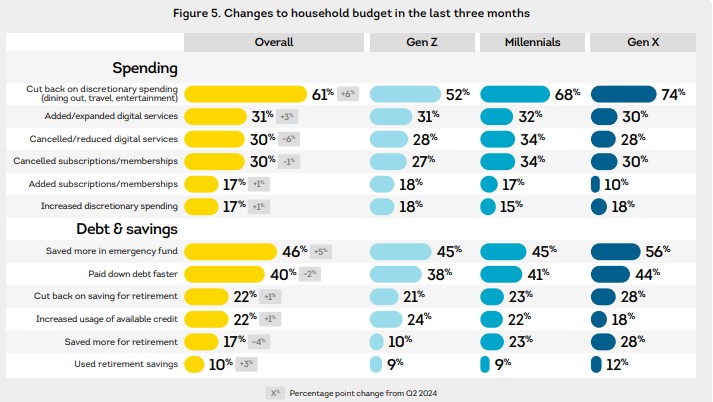
In terms of financial behaviour, 40 per cent of consumers paid down debt faster, slightly lower than in the previous year. In addition, 46 per cent increased their emergency savings, a five-percentage-point rise from Q2 2024. Meanwhile, 22 per cent reported using more of their available credit.
However, despite their relatively positive income outlooks, Kenyans were concerned about macroeconomic
dynamics — particularly inflation, job security and housing prices. Three-quarters (76 per cent) of consumers
put inflation as one of their top three financial concerns followed by job losses at 60 per cent and housing
prices (rent or mortgage) at 55 per cent.
Possibly due to these concerns, 61 per cent of consumers indicated they cut back on discretionary spending (dining out, travel, entertainment) in the past three months, and 30 per cent of respondents indicated they both cancelled subscriptions or memberships and either discontinued or scaled back their use of digital services. At the same time, 31 per cent added or expanded digital services (e.g., wireless, cable TV, internet).
According to the survey, more than half (55 per cent) of respondents expected discretionary spending to decrease in the next three months. This percentage was higher than those respondents who expected discretionary spending to remain the same (16 per cent) or increase (28 per cent). Also, 42 per cent expected their spending on in-store or online retail shopping to decrease, and 49 per cent expected reduced spending on large purchases.
With regard to payment obligations in Q2 2025, 62 per cent of respondents said they expected to miss at least one bill or loan payment in full — slightly down from 64 per cent in Q2 2024. Among those who indicated they would be unable to pay at least one of the current obligations in full, almost half (48 per cent) said they’d pay a partial amount that they can afford. Also, 48 per cent said they would take on temporary/gig work to service their debt obligations and 34 per cent indicated they’d use money from savings.
At the same time, 30 per cent of respondents indicated they would borrow money from a friend or family member. This highlights a continued strain on household finances and growing reliance on flexible, short-term solutions to manage debt.
With regard to attitudes and plans for economic participation, the TransUnion survey indicates that nearly all (98 per cent) Kenyan consumers viewed access to credit as important in Q2 2025, yet only 36 per cent felt
they had sufficient access.
Despite this gap, 69 per cent planned to apply for new or refinanced credit within the next year. Among those, 54 per cent intended to seek personal loans, 39 per cent mobile loans and 27 per cent aimed to refinance existing personal loans. Additionally, 32 per cent were interested in buy now, pay later services, while 23 per cent were planning to apply for a new credit card.
Overall, the survey shows that 68 per cent of consumers considered applying for credit or refinancing but ultimately chose not to proceed. The top reasons for inaction were high borrowing costs (42 per cent), access to alternative funding (31 per cent), and concerns about being rejected due to income or employment status (29 per cent).
The survey report says these findings highlight how affordability and perceived ineligibility continue to limit access to formal credit channels in Kenya. It notes that rising interest rates also influenced consumer behaviour: 61 per cent of respondents (up three percentage points from the previous year) said interest rate increases significantly impacted their decisions to apply for credit — while 32 per cent reported a moderate impact. This reflects growing consumer sensitivity to economic conditions, particularly interest rate fluctuations.
With regard to attitudes and behaviour to manage financial choices, in Q2 2025, 43 per cent of surveyed consumers believed monitoring credit is very important and 40 per cent believed it was extremely important. Nearly two-thirds (65 per cent) of respondents said they monitor their credit at least monthly — while 8 per cent said that they do not monitor their credit reports at all, an improvement from 13 per cent in the previous year.
Common reasons consumers said they check their credit reports included trying to improve their credit scores (55 per cent), monitoring accuracy (50 per cent), learning of credit offers they might qualify for (43 per cent), and to protect against fraud (32 per cent).
Almost two-thirds (64 per cent) of consumers believed their credit scores would increase if businesses used information not on the standard credit report, such as rental payments, gym membership payments, among others. In Q2 2025, 44 per cent of consumers claimed they performed more than half of their transactions online, with only 2 per cent indicating none of their transactions were done online.