Power void at KTDA as Muthaura’s term lapses amid turf Wars

In PART ONE of our THREE PART investigative series inside the Kenya Tea Development Agency (KTDA), we expose the vicious infighting within the board and a stalemate occasioned by lapse Muthaura’s tenure in October that has brought key agency operations to a standstill, with CEO Wilson Muthaura unable to legally execute decisions of the Board since he currently holds neither the substantive nor acting title.
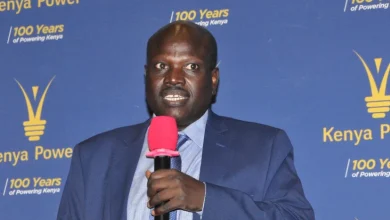
A deepening leadership crisis has engulfed the Kenya Tea Development Agency (KTDA) after the term of its Group Chief Executive Officer, Wilson Muthaura, expired in October this year and the Board failed to either renew his contract or appoint an acting CEO.
The stalemate, The Informer Media Group has learnt, has brought key agency operations to a standstill, with Muthaura unable to legally execute decisions of the Board since he currently holds neither the substantive nor acting title.
The paralysis arises despite a firm directive issued on 1 February 2023 by the Head of Public Service, Felix Koskei, requiring State Corporation boards to appoint acting CEOs within seven days of a vacancy.
Further, a section of the Board members accuse Muthaura for continuing to discharge his duties illegally.
“His continued stay in office and discharging duties amounts to an illegality. He has no mandate to transact as it stands,” One of the board members who spoke to us on condition of anonymity intimated.
Although KTDA is a private entity, the government involvement stems from the tea sector’s critical role in the national economy and the large number of livelihoods it supports.
The directive further stipulates that if a suitable replacement cannot be found internally, the Board Chair must consult the relevant Cabinet Secretary to second an officer from the parent ministry.
Insiders now claim vested interests and infighting have stalled the process, placing KTDA in direct violation of the national directive.
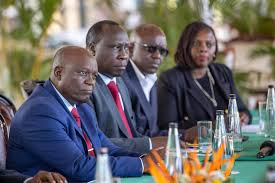
KTDA’s 12-member Board is reportedly sharply divided into two camps: one faction supports renewing Muthaura’s term, citing continuity and ongoing reforms.
The rival camp insists the CEO position must be advertised, arguing that both Muthaura and KTDA chairman Chege Kirundi hail from the Mt Kenya region, and that the top two positions should not be held by individuals from the same side of the Rift Valley.
Those pushing for a new appointment argue the next CEO should come from the West of the Rift; covering Kericho, Bomet, Nandi and Western Kenya, where frustrations over tea prices and bonuses have reached boiling point.
The leadership vacuum comes as KTDA faces mounting scrutiny over stark bonus disparities between East and West of the Rift Valley farmers, with growers in Mt Kenya consistently receiving higher payouts than those in Kericho and Bomet.
The issue is currently before the National Assembly’s Agriculture Committee, which has been grilling industry stakeholders amid accusations of mismanagement, unfair pricing, and inequitable investment across regions.
Industry analysts say the latest governance crisis could worsen an already volatile situation.
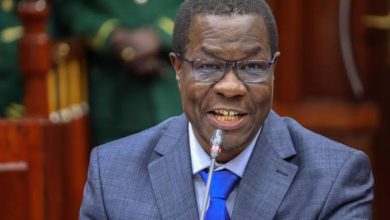
In a dramatic escalation, a section of tea farmers have launched a fierce public attack on Agriculture Principal Secretary Dr Paul Ronoh, accusing him of “tribal politics” and of using KTDA disputes to build momentum for a 2027 gubernatorial bid in Kericho.
Farmers have condemned Dr Ronoh’s recent claims that KTDA directors are sabotaging government reforms and presiding over collapsing bonuses, describing his remarks as “reckless, divisive, and driven by personal ambition”.
They further accused the PS of running a private tea factory producing “inferior, machine-picked tea” that depresses market prices, questioning his moral authority to lecture the industry.
They argue that the PS who is a member of the KTDA Board of Directors is the one fronting the idea of a new CEO who wants to come from Rift valley region.
Several growers have threatened nationwide protests if Parliament or the Ministry continues “political meddling” in KTDA governance or if proposed Sh3 per kilo deductions are implemented.
The government has already ordered a sweeping audit of KTDA-run factories, but farmers insist such exercises must be carried out strictly within KTDA’s established systems to avoid scaring away international buyers and damaging the reputation of Kenyan tea.
They are also demanding the reinstatement of the Rainforest Alliance certification, seen as vital in protecting Kenya’s position in premium global markets.
While political tempers flare, experts warn that the long-running price disparity between eastern and western tea regions is driven largely by quality differences, climatic conditions, inconsistent plucking standards, and the burden of carry-over stocks in the West.
Tea from Mt Kenya, grown in cooler, higher-altitude zones, continues to fetch higher prices at the Mombasa auction due to superior flavour and aroma. Meanwhile, some factories in the West struggle with older infrastructure, higher costs, and inconsistent leaf quality.
Nevertheless, farmers in the West accuse KTDA of inadequate investment, insufficient transparency in auction management, and allowing private brokers to distort prices.
With the leadership vacuum unresolved, political tensions rising, and farmers threatening industrial action, the national mood is increasingly anxious.
Stakeholders now say only President William Ruto can restore order and prevent the surging crisis from inflicting long-term damage on a sector that supports millions of livelihoods and anchors Kenya’s export economy.
As KTDA struggles to function without a chief executive—and as regional, political, and economic tensions compound—the future stability of the country’s most iconic cash crop hangs in the balance.
At the same time, High Court has barred KTDA and its subsidiary Chai Trading them from executing or implementing a multi-million-shilling security tender pending the determination of a case challenging the award process.
The order follows an application filed by Anthony Manyara and Youth Advocacy Africa, who accuse KTDA of irregularly awarding the tender for the Provision of Security Services under Tender Reference No. CTCL/127/2025 (KTDA/127/2025) to a preferred bidder in violation of principles of fairness and transparency.
In the suit filed through Okoth Elly & Company Advocates, the petitioners claim that KTDA and Chai Trading had already initiated steps toward signing or partially executing the contract, an action they argue could render the case useless if the tender execution is not stopped.
“The defendants have already initiated steps towards execution of a contract with the said bidder and are in the process of signing, or may have already partially executed, the contract, actions which may occur at any moment, thereby extinguishing the plaintiffs’ rights and rendering this suit and application nugatory,” the petitioners said.
The applicants, who are long-term service providers to KTDA, argue that they have a legitimate commercial interest in ensuring that the procurement process is conducted lawfully and competitively.
Through lawyer Elly Okoth, the petitioners contend that they stand to suffer irreparable harm, including permanent loss of business opportunity, reputational damage, and loss of client confidence, if the tender is not halted.