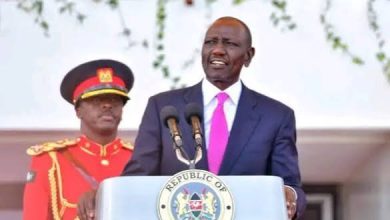
Cabinet approves proposed Sh4.2 trillion 2025/26 budget
County allocation represents 25.8% of the most recent audited revenue (Ksh 1.57 trillion from the 2020/21 financial year), aligning with constitutional requirements.

The Cabinet approved the 2025 Budget Policy Statement (BPS), which sets a Ksh 4.2 trillion budget for the 2025/26 financial year.
The total expenditure, equivalent to 22.1% of GDP, includes KSh3.09 trillion for recurrent spending, Ksh 725.1 billion for development, Ksh 436.7 billion in county transfers, and Ksh 5 billion for the Contingency Fund.
The BPS was passed during a Cabinet meeting chaired by President William Ruto at State House Nairobi today.
Under the Division of Revenue Bill 2025, the National government proposes a shareable revenue of Ksh 2.8 trillion, with Ksh 405.1 billion allocated to county governments as an equitable share and Ksh 10.6 billion for the Equalisation Fund.
The county allocation represents 25.8% of the most recent audited revenue (Ksh 1.57 trillion from the 2020/21 financial year), aligning with constitutional requirements.
The County Allocation Revenue Bill 2025 will distribute the county share based on the Third Basis
Formula, while the County Governments Additional Allocation Bill 2025 proposes an extra Ksh 69.8 billion – Ksh 12.89 billion from the National Government and Ksh 56.91 billion from development partners.
With these additional funds, total county transfers for 2025/26 will amount to Ksh 474.87 billion. The 2025 BPS outlines the government’s economic priorities, focusing on sustaining growth, ensuring fiscal stability, and
promoting inclusive green development.
“Under the Bottom-Up Economic Transformation Agenda, GDP growth rebounded to 5.6% in 2023, up from 4.9% in 2022, driven by a strong recovery in agriculture after two years of drought. Growth is projected to remain stable at 5.3% in 2025 and 2026, supported by increased agricultural productivity, a resilient services sector, and strategic government interventions,” a Cabinet media brief said.
To maintain economic momentum, the government has outlined six key priorities: reducing the cost of living, eradicating hunger, creating jobs, expanding the tax base, improving foreign exchange balances, and fostering inclusive growth. These will be achieved through strategic investments in key economic sectors, strengthening production and market access, and attracting local and foreign investments.
The government’s fiscal policy for 2025/26 prioritises fiscal consolidation to reduce debt vulnerability while ensuring adequate funding for essential public services.
The Cabinet media brief said this will be achieved through expenditure rationalisation, revenue mobilisation, and enhanced tax compliance. The Medium-Term Revenue Strategy will guide tax reforms, ensuring efficiency, fairness, and progressivity while balancing revenue generation with social protection.
Key measures include expanding the tax base, leveraging technology for tax efficiency, sealing revenue loopholes, and maximising non-tax revenues from ministries, departments, and agencies.
Public finance management will be strengthened through zero-based budgeting, a transition to accrual-based accounting, and the adoption of the Treasury Single Account to improve cash flow management. The government will also fully operationalise Integrated Management Information System (IFMIS) asset inventory management modules and scale up public-private partnerships (PPPs) to enhance private sector involvement in public service delivery.
The Cabinet meeting also approved the proposed 2024/25 Supplementary Estimates No. II, authorising an additional Ksh 344.8 billion in expenditures, with Ksh 199.0 billion allocated for recurrent spending and KSh145.8 billion for development.
“These funds will address government and externally financed projects, personnel emoluments, budget realignments, and revenue adjustments,” the brief said, adding that the approval comes amid economic disruptions, including civil protests in June, July, and August 2024, which led to the withdrawal of the Finance Bill 2024. The Bill had initially proposed raising Ksh 344.3 billion in additional revenues but faced strong
public opposition.
At the meeting, Cabinet also endorsed a comprehensive plan to enhance passenger experience at Jomo Kenyatta International Airport (JKIA) by streamlining operations and bolstering security.
Key changes include exempting all African citizens from Electronic Travel Authorisation (ETA) requirements and easing intra-African travel. Kenyan citizens will benefit from an increased duty-free threshold of goods brought into the country, which has now been increased from Ksh 50,000 to Ksh 250,000.
Security screening at JKIA will be enhanced through risk-based profiling, ensuring only flagged bags undergo manual inspection in a dedicated screening room, reducing delays and improving efficiency.
To further expedite travel, the number of immigration booths and staff will be doubled, while E-Gates will be introduced to eliminate long queues and speed up clearance. Accountability measures will also be strengthened with new monitoring technology deployed to oversee airport staff, and mandatory uniforms with visible name
tags required for all agency employees and retail concessionaires.
JKIA infrastructure will also undergo major upgrades, including modernised baggage handling systems, improved stormwater drainage and access roads, installation of covered walkways, enhanced air conditioning, and clearer signage. Meet-and-greet services will be strictly regulated, ensuring only licensed facilitators operate within the airport to enhance security and order. These measures take immediate effect, reinforcing JKIA’s position as a
leading aviation hub by improving efficiency, security, and overall passenger experience.
On other matters, Cabinet approved several host country agreements, reinforcing Kenya’s role as a regional hub for international organisations. These include agreements with the International Institute for Democracy and Electoral Assistance, Save the Children International, Shelter Afrique Development Bank, Oxfam International, Norwegian Refugee Council, and Population Services International, among others.
Additionally, Cabinet approved the ratification of an agreement with Singapore to eliminate double taxation and prevent fiscal evasion, further strengthening Kenya’s global trade and investment ties.
Cabinet also endorsed Kenya’s hosting of the International Air Transport Association (IATA), underscoring the country’s commitment to enhancing international cooperation and economic diplomacy.