BusinessMain StoryNational NewsNewsPolitics
Breakthrough as mediation committee agrees to allocate counties Sh415 billion
The agreement marks a crucial step in finalising the national budget and ensuring fair and equitable distribution of resources to the counties for the upcoming financial year

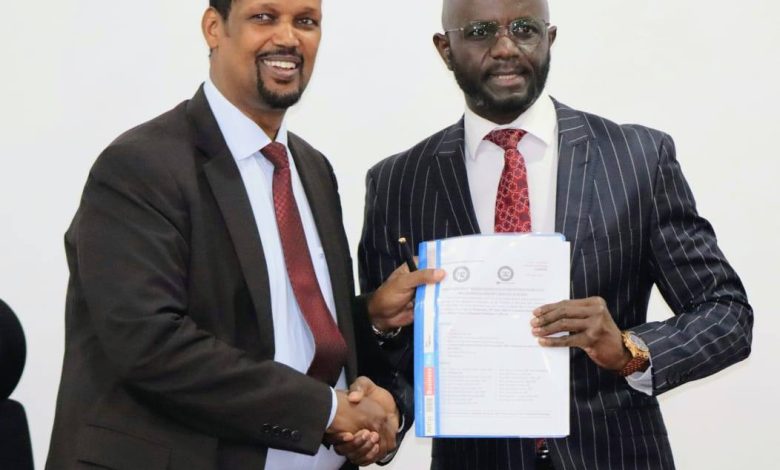
The Mediation Committee on the Division of Revenue Bill, 2025 has reached a final agreement on a Sh415 billion allocation for the County Equitable Share for the Financial Year 2025/26.
This decision came after extensive deliberations during the fourth meeting of the committee, which included separate sessions with representatives from both the National Assembly and the Senate.
The agreed-upon allocation represents a Sh10 billion increase from the National Treasury’s initial proposal of Sh405.1 billion, marking a 4.8 per cent rise.
The mediated version of the Bill is now set to be tabled in both Houses for debate and subsequent passage. The National Assembly is expected to introduce the Bill this afternoon.
The new allocation of Sh415 billion is a significant increase compared to the Sh387.4 billion allocated for the Financial Year 2024/25, reflecting a Sh27.6 billion rise in funding for the counties.
The agreement marks a crucial step in finalising the national budget and ensuring fair and equitable distribution of resources to the counties for the upcoming financial year.
It comes after both the National Assembly and the Senate continued to hold firm on Tuesday, with a deadlock persisting over the equitable share allocation to county governments.
Co-chair Samuel Atandi (Alego Usonga) had reiterated the National Assembly’s position, stating that the House can only commit to an allocation of Sh410 billion, citing economic realities that limit fiscal flexibility.
“Out of the Sh2.7 trillion revenue that is projected to be realized in the coming financial year, Sh1.1 trillion will be used to pay interest on debts,”Atandi explained.
“I just want to remind you, even as you insist on advancing your figures upwards, you look at the fiscal space left. That is why you realise that from our side, climbing up is very, very difficult.”
On the Senate’s side, Co-chair Ali Roba (Mandera) had pushed for a higher allocation, arguing that counties have seen minimal increases in revenue share over the years despite growing needs and inflationary pressures.
“There is a bit of goodwill that has been shown by both sides in the reality of the circumstances, and we need to find convergence as quickly as possible,” said Roba.
“We should do that within the context of the fact that revenues to county governments have not been growing for the last six years as much. It’s only one year when we moved from Sh316 billion to Sh370 billion.”
Kakamega Senator Boni Khalwale had argued that any shortfall in actual revenue collection should be absorbed by the national government, not the counties.
“We want our counties now to take off. We have managed debt. The President has spoken as much that the indicators of a performing economy are on the upward trajectory, and therefore I want to affirm my collection of the Senate that we remain at Kshs. 427 billion,” he said. “Let the National Assembly listen to us and come up. If they refuse to come up, the Constitution is live. It will speak.”
Endebbes MP Dr Robert Pukose, supporting a realistic approach, agreed with the principle that counties should not suffer due to revenue shortfalls.
“I agree with Senator Khalwale that once the Division of Revenue is passed and we have a shortfall in revenue, then the national government bears the responsibility and that means it bears it through the supplementary budget, but the counties will not bear that responsibility,” said Dr Pukose.
“But what happens is that if we pass a figure that is unrealistic, we end up with the counties having pending bills because the exchequer is not able to release money to the counties.”
Senators had maintained that revenue raised nationally should be shared equitably among the national and county governments as envisaged in the Constitution.
However, the Senate later lowered its demand from Sh427 billion to Sh425 billion, while the National Assembly held firm at Sh410 billion leading to an adjournment to allow for further consultations.