Ancestral land at risk: Laikipia locals accuse NLC of inaction on historic injustices
Affected communities remain marginalised, living as squatters without permanent infrastructure or land security

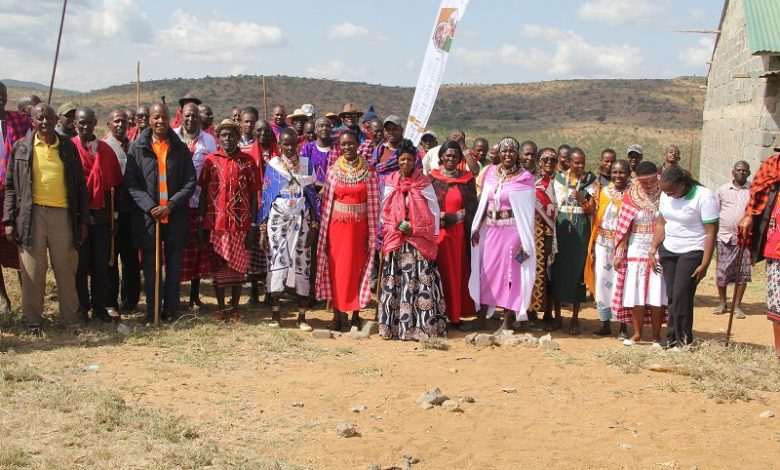
More than 50,000 residents in Laikipia County are living in fear of displacement over unresolved historical land injustices that threaten to hand over close to one million acres of ancestral land to private investors.
The victims, drawn mainly from pastoralist communities, say they risk becoming squatters in their own land if the National Land Commission (NLC) fails to act on their long-standing grievances.
They warn that delays in addressing their claims are paving the way for illegal acquisition of community land, contrary to the provisions of the 2010 Constitution.
Speaking at Mayanat community land in Mukogodo East, the affected groups expressed frustration that, since submitting their petitions to the NLC in 2021, they have not seen any meaningful progress.
“Our claims met the threshold for hearing and investigation, yet to date, nothing has been done,” said Edward Ramat, Director of Livestock Direct at the Paaran Alliance, an organisation that supports justice and conflict resolution in arid and semi-arid areas.
Ramat added that the 2010 Constitution gave communities like theirs a framework to seek justice for colonial-era and post-independence land dispossessions.
However, he noted that without implementation, the constitutional provisions mean little.
“The struggle has been long and painful, but the Constitution gave us hope. Now, we need NLC to fulfill its mandate,” Ramat said.
Joseph Ole Soili, the chairman of Il-Laikipia Maasai Council, accused the NLC of dragging its feet despite numerous follow-ups.
“We have submitted all necessary documents. We have made countless inquiries about our hearing date, but there has been no response,” said Ole Soili.
“We are still waiting to be heard, as was promised. Since independence, we’ve never had the freedom to acquire or own land. We are still living in what feels like a colonial reserve,” he added.
Ole Soili said the affected communities remain marginalised, living as squatters without permanent infrastructure or land security.
He pointed out that despite Laikipia’s vast and fertile rangelands, they are forced to survive in overcrowded and under-resourced areas with no space for their livestock.
“This land is our life. Without it, we lose our culture, our way of living, and our identity,” he said.
Julius Lemali Ole Shuel, another community leader, said the lack of formal land ownership documents has left residents vulnerable, not just to displacement, but also to escalating human-wildlife conflict.
“Without land rights, we cannot develop our homes, build schools, or even fence off grazing areas. Wild animals now roam freely in our settlements, leading to constant conflict and danger,” Ole Shuel said.
He added that the scarcity of grazing land due to private enclosures has worsened tensions between communities and wildlife.
The community now pins its hopes on the government to intervene and deliver long-overdue justice.
They are demanding that the NLC expedite hearings and launch investigations into the land injustices they say stretch back to the colonial period.
The Constitution of Kenya, 2010, under Article 67, mandates the NLC to investigate historical land injustices and recommend appropriate redress.
In 2019, the NLC began receiving official claims, with the process concluding in 2021.
However, many petitioners across the country continue to lament delays in response or action.
As Laikipia communities wait for a verdict, anxiety is mounting, especially with increasing interest from private developers and commercial ranchers.
“We have nowhere else to go. If the land goes, our people go with it,” said Ramat.
The residents are now urging the Ministry of Lands and the Presidency to intervene and ensure that the NLC prioritises the Laikipia cases, warning that failure to act may spark future conflicts over land access and ownership.