Fears of full-blown Ebola scare as Kenya confirm third case, border screening under scrutiny
A third infection raises fears of wider spread as questions emerge over airport checks, porous land borders and the country’s preparedness to contain the deadly virus

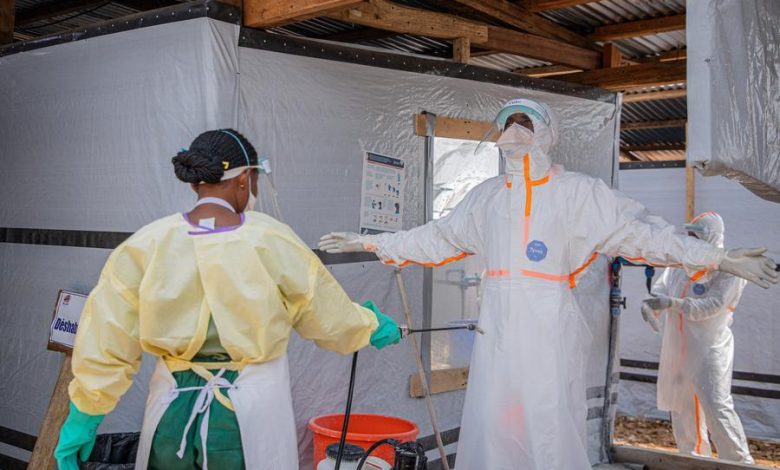
Kenya’s Ebola scare has intensified after the Ministry of Health (MoH) confirmed a third case of the deadly Bundibugyo strain, raising fresh concerns about the country’s ability to prevent a potentially wider outbreak despite heightened surveillance and contact-tracing efforts.
The latest infection involves a 65-year-old woman, a close relative and primary contact of the first two patients, who tested positive while in quarantine, according to a statement issued by Director-General for Health Dr Patrick Amoth on October 16, 2026.
The woman had developed fever, a sore throat and general malaise before being isolated and tested. Samples returned positive results at both the National Virology Reference Laboratory and the Kenya Medical Research Institute (KEMRI) laboratory.
She was subsequently transferred to the Infectious Diseases Unit, where she is receiving supportive care from trained health workers.
Although the government maintains that there is no evidence of community transmission, the third infection has heightened anxiety over the possibility of the virus spreading beyond the known chain of contacts.
The Ministry said 127 of the 130 contacts identified in connection with the outbreak had been traced and placed under quarantine, leaving three still unaccounted for with some already out of the country.
“Being quarantined means the rest of her family and the general public is protected from exposure to the virus, hence reducing chances of community transmission,” Amoth said.
First case exposed screening concerns
Kenya’s first confirmed Ebola case involved a Kenyan man who had been living in the Democratic Republic of Congo (DRC), where the Bundibugyo outbreak has caused thousands of infections and deaths.
The patient reportedly fell ill while in the DRC before travelling overland through Uganda to Kampala. He then boarded Jambojet flight JM 8523 to Nairobi, arriving at Jomo Kenyatta International Airport on October 3.
He was taken to Nairobi Hospital, where he was isolated and tested. He subsequently died on October 5, according to international reports.
His journey through multiple locations before the diagnosis raised questions about the effectiveness of screening at points of entry and the ability of health authorities to identify infected travellers before they move through communities.
The second case, a 39-year-old male relative of the first patient, was confirmed on October 14 after he developed fever, fatigue and joint pains while under quarantine.
The third case, also a close family member, was detected two days later.
The fact that the second and third patients were already under quarantine when they developed symptoms demonstrates the importance of contact tracing. However, it also highlights the need to account for every person who may have been exposed to the initial patient.
Airports and porous borders under scrutiny
The outbreak has renewed scrutiny of screening at JKIA and other airports, as well as at land crossings along Kenya’s borders with Uganda and other countries connected to the regional outbreak.
Busia and Malaba are particularly important because of the movement of traders, passengers, transporters and pedestrians between Kenya and Uganda. Other crossing points, including Lwakhakha, also require effective surveillance.
Kenya has established screening measures at major points of entry and deployed mobile laboratory capacity at Busia and Lwakhakha.
The ministry has also introduced enhanced airport screening and plans to use digital surveillance forms completed by arriving passengers and crew before disembarkation.
However, screening at official crossing points alone cannot eliminate the risk posed by informal routes used by people moving between neighbouring countries.
Temperature checks may also fail to identify infected people who have not yet developed symptoms. Health authorities therefore need to combine screening with accurate travel histories, symptom reporting, contact tracing and rapid laboratory testing.
The ministry said it had screened 685,027 people since the outbreak began in May 2026, underlining the scale of the surveillance operation.
Nanyuki Ebola centre controversy
Kenya’s preparedness has also come under scrutiny over the proposed Ebola quarantine and isolation facility at Laikipia Air Base in Nanyuki.
The planned 50-bed facility, backed by the United States, was intended to accommodate American citizens exposed to Ebola in the DRC.
The project triggered protests by residents and opposition from local leaders, who questioned its purpose, transparency and potential implications for public safety.
The High Court temporarily halted the facility’s establishment, and Health Cabinet Secretary Aden Duale subsequently ordered construction-related activities to stop in June while the legal dispute proceeded.
The controversy resurfaced when Kenya confirmed its first Ebola case in October, with residents demanding clarity on whether the facility was operational and whether it would be available to Kenyans.
The dispute has exposed the importance of transparent public communication, adequate treatment capacity and clear contingency arrangements when preparing for dangerous infectious diseases.
Government intensifies response
The Ministry of Health says it has distributed personal protective equipment, infection-prevention supplies and screening equipment to high-risk counties and points of entry.
It is also strengthening infection-control measures in health facilities and training workers to manage suspected cases safely.
The government maintains that the risk to the general public remains low as long as established precautions are followed. It has imposed no restrictions on travel, trade or public gatherings.
Members of the public have been urged to seek medical attention if they develop symptoms including fever, unusual tiredness, muscle or joint pain, vomiting, diarrhoea or unexplained bleeding.
Ebola spreads through direct contact with the blood or other body fluids of an infected person or someone who has died from the disease. It does not spread through the air.
Anyone experiencing concerning symptoms has been advised to contact the nearest health facility or call the Ministry of Health toll-free line on 719.
So far, with three confirmed cases and one death, the immediate challenge is to contain the known chain of transmission, locate the remaining contacts and ensure that surveillance systems identify any new infections before they spread further.