South Sudan’s bumpy road to its first general elections
Nearly 15 years after independence, the world’s youngest country is once again promising to deliver what has repeatedly been postponed: its first general election, now scheduled for December 22, 2026.

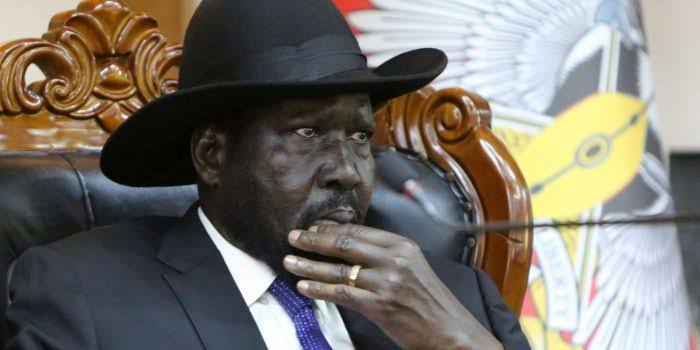
South Sudan is approaching a defining moment in its troubled political history.
Nearly 15 years after independence, the world’s youngest country is once again promising to deliver what has repeatedly been postponed: its first general election, now scheduled for December 22, 2026.
But the central question is no longer simply whether South Sudan can hold elections.
It is whether the country can move from a prolonged transitional order to an elected government without dismantling the political guarantees and institutional checks that were intended to prevent a return to conflict.
President Salva Kiir’s decision on September 22 to dissolve the Transitional Government of National Unity, remove the five vice-presidents and dissolve the national legislature represents a dramatic break with the power-sharing architecture established under the 2018 Revitalised Agreement on the Resolution of the Conflict in South Sudan (R-ARCSS). The government says the move clears the way for the December elections.
Legally, the authorities have also removed some of the conditions that had complicated the electoral timetable.
Amendments to the National Elections Act eliminated requirements for a national census and completion of a permanent constitution before the elections.
The amended framework also leaves the incumbent executive with full constitutional powers until an elected president is sworn in.
From a narrow electoral perspective, this may remove significant procedural obstacles.
From a peacebuilding perspective, however, it raises a much larger question on what happens when the mechanisms designed to manage political competition disappear before credible electoral institutions are fully established?
That question cannot be separated from the history of South Sudan.
The 2018 peace agreement was not merely an arrangement for sharing government offices. It was conceived as a bridge between armed conflict and a more permanent constitutional and democratic order.
Its implementation was linked to security-sector reforms, constitutional processes, institutional reforms and eventually elections.
The African Union has continued to call for full implementation of the agreement alongside inclusive dialogue and credible elections by December 2026.
The problem is that several of these foundations remain incomplete.
Most significantly, the country enters the electoral period with its principal opposition leader, Riek Machar, under house arrest and facing serious criminal charges, including treason. Machar denies the allegations.
Human Rights Watch has raised concerns about due process and the detention of opposition figures.
Machar’s political exclusion matters because the rivalry between him and Kiir has been at the centre of South Sudan’s political and military crises since independence.
The 2018 peace arrangement specifically brought the two camps into a transitional coalition in an effort to prevent political competition from again becoming a military confrontation.
The Sudan People’s Liberation Movement-in Opposition (SPLM-IO), Machar’s party, has now rejected the December election process, arguing that the required constitutional, security and legal reforms have not been completed.
This creates a fundamental diplomatic dilemma.
An election without the participation of significant political forces may satisfy the calendar but struggle to satisfy the broader test of political legitimacy.
Conversely, another postponement could deepen public frustration and reinforce the perception that transitional arrangements have become an indefinite substitute for democratic government.
Thus, South Sudan therefore faces two competing risks of an election that is too early, or a transition that never ends.
Neither is a sustainable foundation for state-building.
There is also an institutional question. The elections commission has reportedly faced major financial constraints.
Its former chairman, Abednego Akok Kacuol, said in August that the commission required about $250 million to conduct the election but had received only $21 million. Kiir subsequently replaced him with the commission’s secretary-general, Gabriel Bol Deng.
This matters because elections are not simply a voting-day event.
They require voter registration, electoral logistics, dispute-resolution mechanisms, security arrangements, political-party participation, civic education, ballot administration and credible mechanisms for challenging results.
The geopolitical implications extend beyond Juba.
South Sudan sits at the intersection of East Africa, the Horn of Africa and the Nile Basin. Its instability affects neighbouring Sudan, Uganda, Kenya and Ethiopia, while its oil resources give the country’s political stability wider economic significance.
A disputed election could therefore become a regional security concern rather than merely a domestic constitutional dispute.
For the African Union and the Intergovernmental Authority on Development, the challenge is particularly delicate.
They must encourage South Sudan to end transitional rule while simultaneously insisting that elections do not become a mechanism for replacing one form of political exclusion with another.
International partners similarly face a difficult balance. Excessive pressure for an immediate election could overlook the institutional weaknesses surrounding the process. Yet excessive insistence on perfect preconditions could unintentionally create another justification for indefinite postponement.
The most constructive diplomatic approach may therefore be to focus less on whether elections happen on December 22 at any cost and more on whether the process can command sufficient political confidence to survive the result.
That requires meaningful dialogue among the principal political actors, credible electoral institutions, adequate financing, security arrangements acceptable to the competing political constituencies and a clear pathway towards a permanent constitutional order.
South Sudan’s first election should not merely mark the end of a transitional government. It should mark the beginning of a political system in which losing an election does not mean losing access to the state, security or political survival.
The author is Senior Reporter at The Informer Media Group, James Wasike.