Why Nairobi won the 2029 World Athletics Championships
Kenya positioned the bid as one for the continent. No African city had ever hosted the senior World Championships despite Africa's (and especially Kenya's) outsized role in producing global stars.

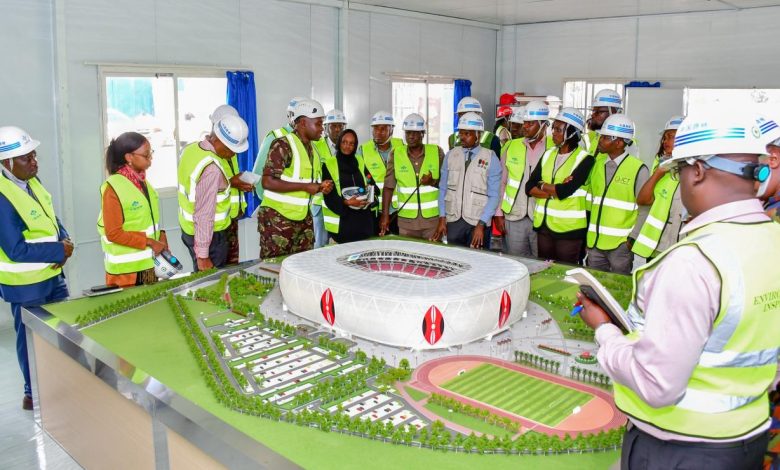
Key factors that helped Nairobi/Kenya win the 2029 World Athletics Championships bid (announced 15 September 2026), beating London and Rome (Munich took 2031).
This marks the first time the senior World Athletics Championships will be held in Africa.
Historic first for Africa and continental backing
Kenya positioned the bid as one for the continent. No African city had ever hosted the senior World Championships despite Africa’s (and especially Kenya’s) outsized role in producing global stars.
The proposal drew strong support from athletics stakeholders across Africa, framing it as a long-overdue moment to bring the sport’s flagship event home. World Athletics President Sebastian Coe described the bid as “compelling and emotional,” noting that athletics is “woven into the fabric” of Kenya and that it was important the Championships come to Africa with the right host, bid, and circumstances.
Infrastructure and readiness
Major stadium upgrades, especially the ongoing complete structural overhaul of the 48,000-capacity Moi International Sports Centre (Kasarani), which will serve as the hosting venue. The work is already underway ahead of Kenya’s co-hosting of the 2027 Africa Cup of Nations, giving clear evidence of delivery capacity.
The new Talanta Stadium (also referred to as Raila Odinga International Stadium / Talanta Sports City), a large modern multi-purpose facility, impressed the evaluation team during site visits even though it is primarily a football venue without a permanent athletics track. Adjacent athletics facilities are part of the broader complex.
Redevelopment of Bomas of Kenya into a state-of-the-art multi-purpose conference and convention centre capable of hosting large numbers of delegates, with associated high-quality accommodation. This addressed the need for modern conference and hospitality infrastructure.
Improved city transport networks, including the Nairobi Expressway, and the practical advantage of stadiums and hotels being relatively close to the airports. These elements showed tangible progress and seriousness after Kenya’s unsuccessful 2025 bid (which lost to Tokyo partly on facilities).
Deep athletics pedigree and proven hosting experience
Kenya is the second-most successful nation in World Championships history (72 gold medals overall cited in coverage) and finished second in the medal table at the 2025 Tokyo Championships with seven golds. Kenyan athletes have set and held numerous official world records across track, road, and related events (particularly in middle- and long-distance disciplines for both men and women).
The country has already successfully staged major World Athletics events: the 2017 World U18 Championships and 2021 World U20 Championships in Nairobi, plus the 2007 World Cross Country Championships in Mombasa. This track record of delivery, combined with annual high-level meets, demonstrated operational capability.
Marathon significance and unique course
Kenya has long dominated marathon running and world titles in the event. The 2029 Championships will be the last edition to include the marathon on the programme (it remains for Beijing 2027 and Nairobi 2029; from 2030 a standalone World Marathon Championships begins, and from 2031 the marathon leaves the main World Championships programme).
Hosting the final World Championships marathon in the country that has defined the event carried strong symbolic weight.
The proposed marathon course runs within the city and along the Southern Bypass, adjacent to Nairobi National Park, the only major capital city with a national park inside its boundaries.
This offers a distinctive visual and cultural showcase of Kenya’s conservation heritage.
Government commitment
The strong high-level political backing, including a personal video endorsement and guarantee from President William Ruto committing the government to full delivery, was cited by the bid leadership as a decisive factor that went beyond the minimum requirements.
In short, the winning combination was Kenya’s unmatched athletic legacy and emotional resonance for Africa, demonstrated junior-event hosting experience, visible infrastructure upgrades (especially Kasarani and supporting facilities), practical logistics, and clear government ownership all packaged into a bid that Coe and the Council found both compelling and timely.
The author is a veteran Sports Journalist, Dennis Okeyo.