Sifuna’s diplomatic circuit: Inside the rise of Kenya’s new opposition face
Seven Western envoys in his orbit, a growing national movement and an increasingly visible 2027 presidential ambition put the Nairobi Senator and the Linda Mwananchi leader under a new level of scrutiny as he accelerates 2027 State House push

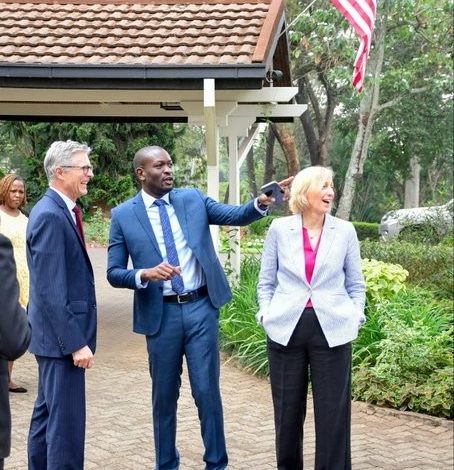
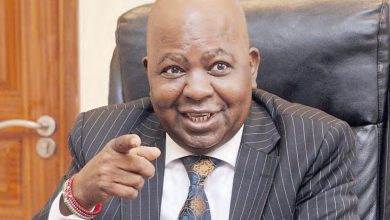
Nairobi Senator Edwin Sifuna’s political rise has entered a new phase, with his expanding engagement with foreign diplomats adding an international dimension to his increasingly visible 2027 presidential ambitions.
His dramatic rise from ODM powerbroker until he was unceremoniously ejected out as the nearly a decade long party’s Secretary General under the firm grip of the late Raila Odinga to one of Kenya’s most talked-about opposition figures has taken a striking diplomatic turn, with the Linda Mwananchi leader now holding a string of meetings with senior Western envoys as his 2027 political ambitions gather momentum.
Sifuna’s latest high-level engagement came yesterday, Friday, September 18, when he met United States Embassy Chargé d’Affaires Susan Burns in Nairobi becoming the latest in a series of Western diplomatic representatives to hold talks with the Linda Mwananchi leader.
Sifuna announced the meeting on X, posting a photograph and saying: “Happening….meeting @USEmbassyKenya Charge d’affaires Susan Burns and her team at her residence in Nairobi.”
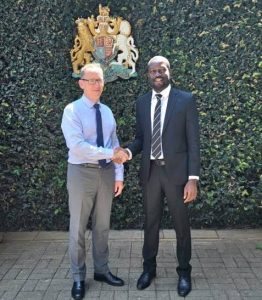
The meeting came only two days after Sifuna met Dutch Ambassador to Kenya Henk Jan Bakker at his Nairobi residence.
Two meetings with senior Western diplomats in less than a week have now added to a rapidly expanding diplomatic circuit involving the United States, Netherlands, Britain, European Union, Germany, Australia and France.
The emerging pattern has inevitably triggered political curiosity over the rising senator and the international interest surrounding his rapidly expanding political profile.
On Wednesday, the senator said he had met Bakker “at his residence in Nairobi this morning”, describing the encounter as part of the relationship between Kenya and the Netherlands.
The latest engagement extends a diplomatic trail that has seen Sifuna interact with representatives of some of Kenya’s most important Western partners.
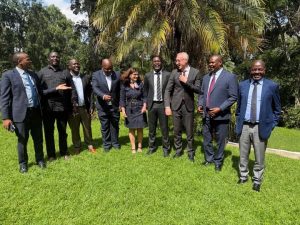
They include British High Commissioner Matt Baugh, European Union Ambassador and Head of Delegation Henriette Geiger, German Ambassador Sebastian Groth, Australian High Commissioner Andrew Barnes and outgoing French Ambassador Arnaud Suquet.
Last month, Sifuna had met five Western envoys within approximately 10 days, describing the encounters as evidence of growing diplomatic interest in the senator as his political profile expanded.
“The meetings in themselves, do not amount to diplomatic endorsement of Sifuna or his possible presidential bid but they are indicative of his unprecedented rise to prominence catapulted by his political ideology of upholding the rule of law and governance as his key pillars,” Kinyuru Munuhe, Diplomacy, Geopolitics and Strategic Communications specialist who also doubles as the Executive Director of a regional think-tank, Governance & Diplomacy Associates observed.
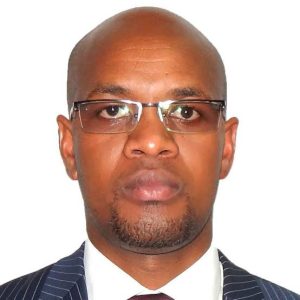
The GDA Associates Executive Director added that Kenya hosts the largest United Nations Mission in Africa and that Nairobi serves as a strategic diplomatic, trade and regional security hub for foreign countries.
Diplomatic missions routinely maintain contacts with government officials, opposition leaders, civil society organisations, business leaders and other political actors.
Such meetings allow foreign governments to understand political developments, economic policy, security issues and the views of actors who could influence Kenya’s future.
For Sifuna, however, the timing and frequency of the engagements coincide with one of the most significant transformations in his political career.
Once principally known as an ODM strategist and party official, the Nairobi senator is now building Linda Mwananchi into a national political vehicle while increasingly discussing the possibility of seeking the presidency.
In July, Sifuna said Linda Mwananchi was “very strongly considering” fielding a presidential candidate in 2027. He said the decision would ultimately be made collectively after nationwide consultations.
By September, the language around his candidacy had become more definite.
Linda Mwananchi spokesperson and Suba South MP Caroli Omondi said the movement intended to nominate Sifuna as its presidential flagbearer before entering discussions with other opposition formations over a possible joint candidate.
The development represents a major change from Sifuna’s earlier political positioning.
His break with ODM, following his removal as Secretary-General and subsequent political realignments, opened space for him to attempt something considerably bigger: transforming his personal political brand into a national movement.
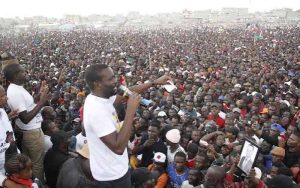
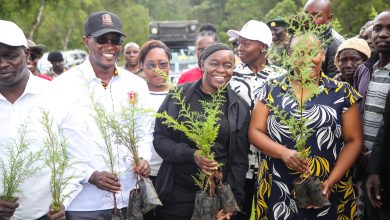
Linda Mwananchi has since embarked on countrywide mobilisation, presenting Sifuna as part of a new generation of opposition leadership.
The movement has also attracted politicians from different parts of the country, while Sifuna’s public appearances have increasingly shifted from conventional parliamentary politics towards nationwide political mobilisation.
The diplomatic meetings now provide another layer to that emergence.
Sifuna is not alone in attracting such attention.
Wiper leader Kalonzo Musyoka and former Interior Cabinet Secretary Fred Matiang’i have also held meetings with foreign representatives as opposition consultations intensify.
Matiang’i, for instance, met Burns in July and said their discussions covered Kenya’s development agenda and the aspirations of Kenyans.
The significance of Sifuna’s engagements therefore lies less in any individual meeting and more in the emerging pattern.
Within a matter of weeks, he has been in contact with representatives of the United States, Netherlands, Britain, European Union, Germany, Australia and France.
That breadth places his political project increasingly within the field of attention of international actors who have substantial interests in Kenya.
Washington, London, Brussels, Berlin, Paris, Canberra and The Hague all have economic, security, development or diplomatic interests in Kenya and the wider East African region.
For Sifuna, the challenge is now to convert growing visibility into a coherent national political organisation.
A presidential campaign requires more than rallies and diplomatic meetings. It requires structures across the counties, candidates, financing, policy positions, coalition negotiations and a clear answer to the question of who will constitute the political coalition behind the candidate.
Sifuna has already acknowledged the scale of that task.
In July, he said Linda Mwananchi had visited only 16 counties and needed to establish whether its support was sufficiently solid before making final decisions about a presidential campaign. He also said the movement intended to develop structures capable of accommodating supporters, volunteers and candidates at different electoral levels.
The political stakes are therefore rising.
Sifuna’s emergence has begun to intersect with the ambitions of other opposition figures, including Kalonzo Musyoka, Matiang’i and former Deputy President Rigathi Gachagua, even as talks continue over whether the opposition can eventually settle on a common presidential candidate.
His own allies are increasingly presenting him as a national rather than Nairobi politician.
And the diplomatic circuit has become another visible marker of that transition.
For now, the meetings with foreign envoys should be read for what they are: high-level diplomatic engagements, not endorsements.
But they also underline a broader political reality.
“Sifuna is no longer operating solely within the familiar confines of ODM politics or the Nairobi Senate. He is building a national movement, testing the possibility of a presidential campaign and engaging a widening circle of domestic and international actors, Kinyuru added.