A cloud hangs over Bank of Baroda amid Sh3billion debt row, fraud and bank-run fears
Sh2.996billion court decree puts Kenyan lender’s assets on auction path as internal-control and fraud controversies pile pressure on global operations.

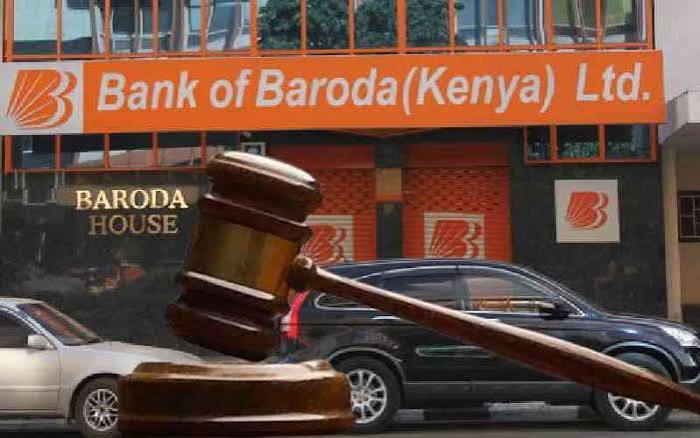
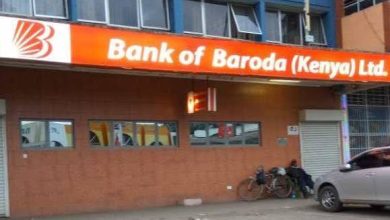
The Bank of Baroda (Kenya) Limited is facing a potentially bruising asset seizure after the High Court paved the way for the attachment and public auction of its movable property to recover nearly Sh3billion owed to an industrial developer.
The enforcement action places the Kenyan arm of the Indian state-owned lender under an uncomfortable spotlight, coming as questions over its operations, internal controls and conduct in other markets intensify.

On September 15, 2026, the Milimani High Court Commercial and Tax Division issued a warrant of attachment against Bank of Baroda’s movable and attachable property following a Sh2.996 billion judgment in favour of Infinity Industrial Park Limited.
The warrant, signed by Deputy Registrar Stellah N. Sagwe, puts the amount due at Sh2,996,003,000—comprising the Sh2.996 billion decretal amount, Sh1,500 in further costs and another Sh1,500 collection fee.
Moran Auctioneers has been ordered to move against the bank’s property and attach sufficient assets to satisfy the decree.
The attached property can then be sold by public auction after the required 15-day notice and completion of the proclamation process.

The warrant must be returned to court by October 15, carrying details of how it was executed—or why it could not be executed.
The enforcement action follows a September 1 judgment by Justice Peter Mulwa in HCCOMM No. E322 of 2024, arising from a bitter commercial dispute over an industrial park along Nairobi’s Eastern Bypass.
Sh3billion blow
Infinity Industrial Park had accused the bank of delays in releasing land documents and portions of its project land, claiming the delays disrupted the construction and sale of warehouses and serviced industrial plots.
The company initially sought a permanent injunction stopping Bank of Baroda from selling or otherwise dealing with LR No. 31978 (Original No. 11522), Njiru, as well as an order compelling the bank to approve a Sh650 million development loan for a second cluster of 50 warehouses.
Alternatively, Infinity wanted the lender to release another 15 acres of the project land so it could obtain financing from other financial institutions.
The developer blamed delays, Covid-19 disruptions and an election year for significant losses and cash-flow problems.
But in a dramatic narrowing of the dispute, Infinity subsequently withdrew most of its prayers.
A notice of withdrawal dated August 6, 2026 was allowed and adopted by the court. The withdrawn claims included injunctions, additional financing, release of land, declarations of breach of contract, a further 15-month moratorium, relief over credit-reference-bureau listings and general damages.
The Sh2.996 billion special-damages award survived.
Now, unless the decree is satisfied or further court orders intervene, the bank’s movable assets face attachment and sale.
Pressure beyond Kenya
The Kenyan legal battle comes amid a string of developments surrounding Bank of Baroda’s operations elsewhere.
In India, police in Uppinangady registered a criminal case against Subrahmanyam, 30, a joint manager who was posted at the Perne branch and was responsible for ATM operations, following allegations of misappropriating cash and gold jewellery worth more than ₹71.4 lakh (Sh9.7million).
The case reportedly followed an internal audit covering alleged irregularities over nearly two years.
The bank has also launched a forensic investigation after customer data and internal documents from the lender reportedly surfaced on the dark web. Bank of Baroda confirmed the investigation on July 27, 2026.
And in another Indian case, the Bombay High Court ordered the bank to refund ₹18.79 lakh (Sh2.5million) to a 75-year-old Mumbai woman and her daughter-in-law who lost money through unauthorised internet-banking transactions.
The transactions followed an alleged SIM clone or swap that disabled SMS alerts.
The court found that the petitioners were not negligent.
A bench comprising Justices Bharati H Dangre and Manjusha A Deshpande, in an April 20 ruling, referred to a “similar modus operandi” in an earlier case, noting that SIM swapping had disabled SMS alerts and that “the transaction never received authentication by the account holder.”
Global retreat?
The bank’s international network has also faced contraction.
The South African government asked Bank of Baroda to close its operations there, while the lender was also asked to close its retail operations in the United Kingdom.
The bank is simultaneously dealing with the financial fallout from the collapse of UAE-based healthcare group NMC Health.
In July 2026, Bank of Baroda agreed to pay $600 million, approximately ₹5,700 crore, to the joint administrators of NMC Health and its affiliates to settle claims connected to the group’s insolvency.
Against that international backdrop, the Kenyan enforcement proceedings have created a new pressure point.
For the Kenyan case, the warrant requires the auctioneer to return it to court by October 15, 2026, indicating how it was executed or explaining any failure to execute it.
Unless execution is stayed or otherwise restrained by a subsequent court order, the attachment process may proceed.