19 SDA pastors reject apostasy label and termination, threaten court action

By Fatuma Rashid
Nineteen Seventh-day Adventist pastors have rejected accusations of apostasy, terming their removal unlawful and punitive, and signalled plans to seek legal redress over what they describe as defamatory and procedurally flawed actions.
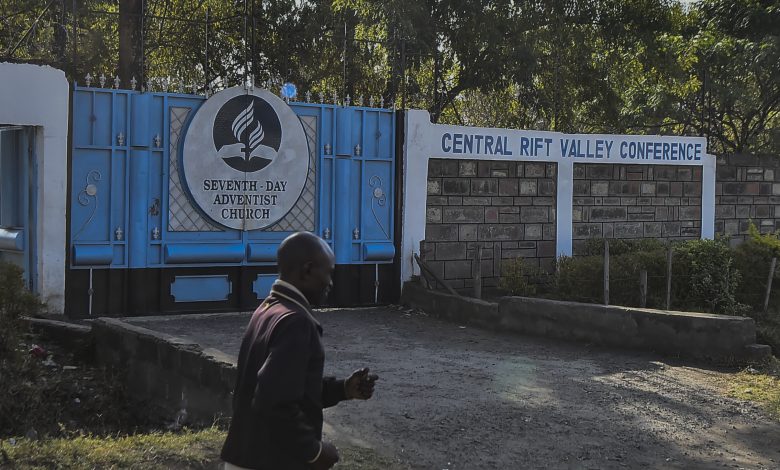
The pastors were dismissed by the Central Rift Valley Conference following a February 3, 2026 communication issued under Executive Committee minute 26EXCOM 010 of February 1, withdrawing their credentials with immediate effect.
The conference cited “gross misconduct and formation of apostasy organisation under Mid Riftvalley Union of Churches Conference” as grounds for termination, saying the actions contravened church policy and the Church Manual.
“Accordingly, all churches are hereby instructed that these individuals are not authorized to participate in any religious, administrative, or ministerial activities within any Seventh-day Adventist Church under the CRVC,” read the notice signed by Acting Executive Secretary Olgar Kemuma.
Those affected are Stephen Nginga, Moses Atemba, James Kibuchi, Joseph Atika, Peter Okeyo, Harrison Tenkeet, Sammy Kiptui, Daniel Kerochi, John Githinji, Enock Ongono, Haron Ongweso, Jeremiah Ngotho, Peter Mwangi, Kevin Murage, Joel Chepkowny, John Kahiro, Charles Kanyoro, John Mwangi and Zipporah Ongweso.
At a press conference in Nakuru on Thursday, the pastors issued a joint statement firmly rejecting the apostasy label, terming it a mischaracterisation, and challenging both the legality and motive behind their abrupt removal from office.
They said apostasy in Adventist theology refers to “a conscious, deliberate departure from revealed truth,” not disagreements over governance or administrative ethics within church structures.
“To conflate governance concerns with apostasy is to redefine the term beyond its biblical and theological meaning. We therefore reject the label of apostasy in its entirety,” they said in a statement read by Pastor Charles Kambo.
The pastors maintained they had not rejected Scripture, denied salvation through Christ, abandoned the 28 Fundamental Beliefs, or opposed the Spirit of Prophecy, insisting the dispute was not doctrinal.
“Our disagreement with the leadership of CRVC and EKUC is not on any doctrinal matter,” they stated, adding that their concerns relate to governance, accountability, transparency and ethical leadership.
They outlined what they described as credible concerns over high-level immorality within church leadership, alleging moral misconduct among senior officials had been tolerated or selectively handled.
They also questioned alleged mismanagement and misuse of denominational funds, arguing that tithe and offerings are sacred and must meet the highest standards of integrity, openness and auditability.
Among disputes cited was the Narok land saga, which they said involved unresolved questions regarding ownership, acquisition, transfer or management of church property held in trust.
“Church property is denominational trust property and must be managed transparently and lawfully, with clear communication to stakeholders,” the pastors said, calling for investigations.
They further referenced concerns surrounding the Vanga Road apartment property in Nairobi County, saying governance requires clear documentation, financial disclosure and transparent reporting on denominational assets.
The group also cited the WSG OptiCoin Kenya controversy, alleging that association or involvement of church leaders in the collapsed investment scheme had raised ethical and reputational concerns.
OptiCoin, a cryptocurrency platform, collapsed in late 2025 after promising returns of up to 20 percent weekly, leaving thousands of Kenyans with losses and attracting scrutiny over individuals who promoted it.
Additional grievances included allegations of age manipulation in official records, intimidation and victimisation of workers, and governance practices they described as dictatorial and dismissive of consultative processes.
The pastors further accused conference leadership of breaching confidentiality by releasing the termination letter publicly before formally serving them, exposing them to public judgment without due process.
“Releasing the letters to the public before serving us violated all known ethical and professional standards,” the statement read, adding that they had no responsible option but to respond publicly.
They warned they would pursue legal redress if what they described as defamatory actions persist, signalling a potential court challenge over their termination and related public statements.
Some SDA adherents familiar with the dispute said they longed for unity within the church, stressing that it is not a political platform but a spiritual community centred on worship, service and the shared mission of preaching and redeeming souls.
“But our purpose is to preach, not to go public, not to go to court, but if there are Christians out there let them listen and understand that our purpose is to work and redeem souls that are out there; not to fight amongst ourselves as a church,” Mary Gichana noted.
The Central Rift Valley Conference has not issued a detailed public response to the governance and moral allegations beyond its February 3 communication citing misconduct and apostasy as grounds for termination.
Organised in 2014 and later reorganised and divided in 2020, the conference covers Baringo, Laikipia, Nakuru, Narok, much of Nyandarua and Samburu counties. As of June 30, 2025, the conference had 417 churches, 43,015 members and a population of 5,420,613.