Varsity dons call for joint curriculum development with industry

Vice-Chancellors of two East African universities want industries to be involved in formulation of higher education curriculum.
The VCs of Mt Kigali University Rwanda (MKUR) and Mt Kenya University (MKU) maintained that closer academia-industry ties would effectively tackle the skills mismatch challenge.
They urged the region’s universities to reach out to industry and other employers in developing curricula, while at the same time underscoring the role of industry training, internship and apprenticeship.
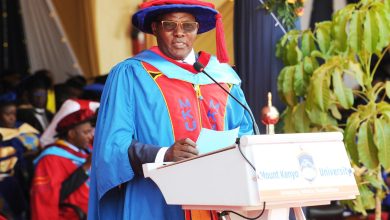
The Vice-Chancellor for MKUR Dr Martin Kimemia and his MKU counterpart Prof Deogratius Jaganyi spoke at the close of the Inter-Universities Council of East Africa (IUCEA)’s biennial Academia-Public-Private Partnership Forum (APPPF) in Kigali, Rwanda.
Dr Kimemia described the forum as a vital gathering, key to finding solutions to challenges facing the region.
He said: “IUCEA has been at the forefront of enhancing partnerships to address the persistent skills mismatch between university education and the evolving demands of the job market.”
Jaganyi on his part said it was time to cultivate closer academia-industry partnerships, noting top minds had gathered at the forum to share important ideas on how to tackle common challenges.
The Chairman of the Education Sector at the Kenya Private Sector Alliance (KEPSA), who is also Chairman of MKU’s University Council, Dr Vincent Gaitho, also emphasiSed the need for higher education institutions to develop curricula in direct collaboration with industry stakeholders.
“There are many highly qualified experts in the industry, including PhD holders, who can contribute significantly to academic training. We need to involve them to make education more practical and aligned with real world demands,” said Dr Gaitho.
He argued that universities must serve as solution providers to businesses and employers. This is especially key in ensuring graduates are well-equipped for the job market.
During the forum, MKU’s Principal for Corporate Services and Director Linkages and Partnerships, Prof Peter Wanderi, said the institution was walking the talk on academia-industry collaboration.
He highlighted the initiatives both MKU and Mount Kigali University were involved in that are helping to produce graduates fit for the job market.
Prof Wanderi explained how universities can promote Sustainable Development Goals (SDGs) through the United Nations Academic Impact initiative (UNAI).
As a long-standing UNAI member, MKU previously served as the SDG 10 Hub on Reduced Inequalities (2021–
2024) and has now been selected as the SDG 9 Hub Chair (2025–2027), emphasising Industry, Innovation, and Infrastructure.
Wanderi observed that the university aligns its policies, research, and community engagement with the SDGs through various initiatives.
“The MKU Innovation and Incubation Center, co-sponsored by the European Union through the Erasmus Plus Program, plays a crucial role in fostering entrepreneurship and technological advancements,” stated Prof Wanderi.
The Annual Research and Innovation Week at the university provides a platform for students and faculty to engage in industry-driven research, ensuring that academic work contributes to practical solutions.
Additionally, he added, the African Center for Career Enhancement and Skills Support (ACCESS) Project, a DAAD-funded program, is instrumental in equipping students with job-ready skills to meet the demands of the
evolving job market.
The SDG Champions Program has appointed 50 student leaders across various campuses, including Mount Kigali University, to promote sustainable development efforts within their academic communities.