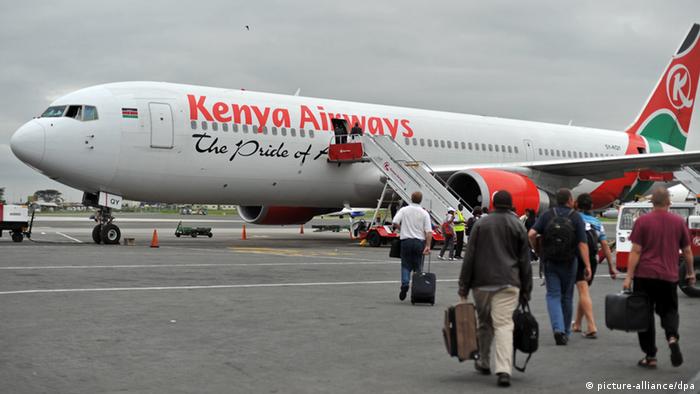
The national carrier Kenya Airways (KQ) has continued posting a record of losses despite a fresh bailout from the government to steady its operations.
While it is helpful to keep Kenya Airways in mind when it comes to the impact of the COVID-19 crisis on international airlines, it does not answer the larger question of why the airline seems to go from one crisis to another.
In recent years, Kenya Airways has received a series of government bailouts, and is reported to be seeking further government support due losses linked to COVID-19.
Last week, the government, through the National Treasury, bailed out the struggling airline by allocating Sh26.5 billion and other undisclosed expenditures to the national carrier in the mini-budget tabled in Parliament.
The allocation to Kenya Airways emanated from slow-moving projects, Treasury Cabinet Secretary Ukur Yatani saying that the boost is to help the airline maintain its stalled planes, pay for utilities, salaries and also counter the effects of the pandemic.
However, the national carrier has announced staff rationalization under a major restructuring process as part of the bailout.
According to the company’s Chief Executive Allan Kilavuka, they will also reduce routes and flight frequency to speed reforms on Kenya Airways route network, fleet and operations.
The airline’s boss says that the Sh26.6 billion bailouts would help strengthen cashflow to up the momentum for the next phase.
“It’s however important to mention that the support from the government is conditional. Suppliers, bankers, shareholders, employees and other stakeholders should adhere to the agreed reforms to support the turnaround,” said Kilavuka in a letter to staff.
Kilavuka noted that the planned restructuring would be guided by US- based consultancy Seabury Group which will conduct assessment of all aspects of the business and business plans, support leadership in developing a comprehensive restructuring plan covering the network, fleet and required resources and implement the plan.
The Treasury targets to offer Kenya Airways Sh53.4 billion in direct budget support in the 2021/ 22 and 2022/23 financial years, making it the largest corporate bailout in Kenya’s history.
The parastatal has 36 aircraft, 19 of which it owns and the rest are leased.
Embraer makes up the bulk of its fleet with 15 planes flying to 56 destinations worldwide, 46 of them in Africa.
It closed in 2020 with a workforce of 3,652, having lost 1,123 employees. Half of the number left through resignations or early retirement.
Last year, the airline was eyeing government’s bailout Kilavuka saying that the national carrier was in a precarious financial position and that the recovery of revenues to pre-coronavirus levels looks set to delay up to 2024, especially given that Africa lags in the vaccination against the disease.
The airline posted a Sh11.49 billion net loss in the six months ended June, 2021 a 19.8 per cent cut from the Sh14.33 billion loss it incurred in the preceding similar period, taking its accumulated losses over the years to above Sh127 billion.
KQ said the long recovery prospects and diminishing revenue in an environment of increased costs due to tight health and safety measures mean it will require a bailout to stay afloat. “The financial situation of the company is precarious.
We are in a negative equity position, which means we are insolvent as an organisation, obviously made worse by the pandemic,” Kilavuka said.
“Definitely the company needs financial support and this is not a secret. We still need financial support from our principals or elsewhere.”
He did not specify the amount and the nature of support for an airline that in 2020 tapped a Sh11 billion loan from the government to fund its operations at a time the Covid-19 pandemic had grounded its operations.
KQ in May, 2021 picked a UK consultancy firm, Steer Group, to craft a viable turnaround strategy option in the face of deepening financial losses and depressed passenger numbers.
The airline’s key routes, including London, India, and Guangzhou, had experienced travel restrictions, leading to depressed demand.
With about two per cent of Africa’s adults vaccinated compared to 51 per cent in the US and 61.6 per cent in the UK, recovery looks set to delay since Africa is a key route for KQ in connecting travelers to other destinations around the world.
“We have a tough period going forward but we are conscious of our responsibility as a national carrier and we must not just be seen as a profit generator,” KQ chairman Michael Joseph said.
“The International Air Transport Association and ourselves don’t see a return to 2019 levels soon. Possibly, 2024 is what we are looking at.”
KQ, as the airline is known by its international code, previously borrowed from international financiers and nearly all of the country’s leading banks, including KCB and Equity.
The airline, however, defaulted on the local lenders who now only maintain a revolving credit facility agreed with the company earlier as part of the restructure of their combined Sh17 billion worth of unsecured loans in 2017.
International lenders like JP Morgan and Citibank have secured their loans using the aircraft purchased by the company.
KQ’s liabilities outstripped assets by Sh73.85 billion as at end of June compared with Sh64.16 billion in June last year, keeping it technically insolvent.
Accumulated losses and revenue dip caused the company to breach the terms set by the global financiers, underlining the airline’s debt distress.