Western Kenya political shake-up as Ruto eyes alliance shifts ahead of 2027

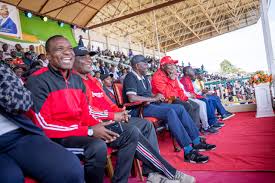
President William Ruto’s unannounced appearance at a football tournament hosted by Kakamega Governor Fernandes Barasa in Bukhungu Stadium has sent shockwaves through political circles, particularly in Western Kenya, where speculation over shifting alliances is intensifying.
The visit, coming amid signs of discontent with key allies, has raised questions about the president’s strategy in a region critical to his 2027 re-election prospects.
Recent surveys by Infotrak Research Consulting show Trans Nzoia Governor George Natembeya as the most influential political figure among the Luhya, with 50 per cent of respondents citing him as the community’s leader of greatest influence.
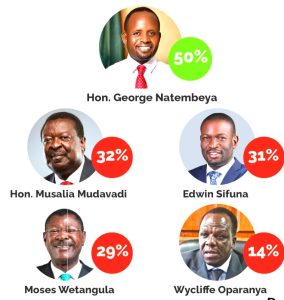
Prime Cabinet Secretary Musalia Mudavadi followed at 32 per cent, ODM Secretary-General Edwin Sifuna at 31 per cent, and National Assembly Speaker Moses Wetang’ula at 29 per cent. Other Luhya leaders, including Wycliffe Oparanya, Eugene Wamalwa, Cleophas Malala, and Kakamega Senator Bonny Khalwale, recorded lower influence ratings.
Ruto’s presence at the football tournament without the attendance of top Western Kenya figures, notably Mudavadi, Wetang’ula, and Oparanya has sparked speculation about the state of his relationships with these traditional allies.
Observers note the conspicuous absence of these political heavyweights from an event meant to showcase presidential support for local initiatives, suggesting potential friction within the Kenya Kwanza Alliance.
The attendance of newly elected Malava MP David Ndakwa, a key UDA ally, signals the president’s active interest in nurturing younger, more dynamic leaders.
Historical and recent political developments offer context for Ruto’s maneuvering.
The Luhya community, Kenya’s second-largest ethnic group, has long been fragmented politically, with regional elites failing to unite behind a coherent agenda.
While older leaders like Mudavadi, Wetang’ula, and Oparanya have maintained influence over decades, their ability to galvanize grassroots support is increasingly questioned.
The narrow UDA victory in the Malava by-election and the lukewarm reception they received during the funeral of former Cabinet Minister Cyrus Jirongo illustrate growing dissatisfaction among voters, especially younger constituents, with the old guard.
The contrasting reception between established leaders and emerging figures such as Sifuna, Vihiga Senator Godfrey Osotsi, former Vihiga Senator George Khaniri, Fred Gumo, and Khalwale at Jirongo’s funeral highlights the generational shift and appetite for new leadership styles focused on grassroots engagement and regional development.
Critics argue that Mudavadi, Wetang’ula, and Oparanya are seen as aloof, self-interested, and disconnected from the day-to-day realities of the electorate, undermining their influence.
Ruto’s strategic calculus appears aimed at consolidating his support base by cultivating emerging leaders and reevaluating alliances in Western Kenya. The recent defection of Kakamega Deputy Governor Ayub Savula from DAP-K to UDA further complicates the political landscape and signals the potential for a broader realignment of loyalties.
The Luhya region’s historical political fragmentation, dating back to post-independence divisions between KANU and KADU and later factional rivalries among leaders such as Masinde Muliro, Moses Mudavadi, Elijah Mwangale, and Martin Shikuku, has shaped the region’s competitive environment.
Subsequent political generations, including Wamalwa, Mudavadi, Wetang’ula, and Oparanya, have struggled to unify the community, despite occasional moments of cohesion such as Wamalwa’s vice-presidential tenure in 2002.
Current developments suggest that entrenched political dynasties may be losing their grip. Leaders like Sifuna, Osotsi, Khalwale, Khaniri, and Natembeya represent a new wave, appealing to younger voters and challenging the status quo. Sifuna’s remarks about considering a 2027 presidential bid reflect a broader push for assertive, independent Luhya leadership.
For President Ruto, securing Western Kenya is pivotal. The region’s five counties—Kakamega, Vihiga, Busia, Bungoma, and Trans Nzoia—hold significant electoral weight. With opposition figures such as Natembeya, Sifuna, Khalwale, and Malala gaining traction, the effectiveness of traditional Kenya Kwanza allies is under scrutiny. Ruto’s recent moves suggest he may realign support toward younger or more politically active leaders capable of mobilizing the electorate and delivering votes crucial for his re-election.
As Western Kenya undergoes a generational and strategic political shift, longstanding leaders face pressure to adapt or risk losing relevance.
Meanwhile, Ruto’s calculus of alliances and engagement with emerging figures will be critical in determining the political landscape of the region ahead of the 2027 elections. The evolving dynamics indicate that the old political order in Western Kenya may no longer dominate, opening space for new leadership and alliances that could reshape the region’s electoral trajectory.