Win for MPs as Court of Appeal reinstates NG-CDF law, quashes High Court ruling

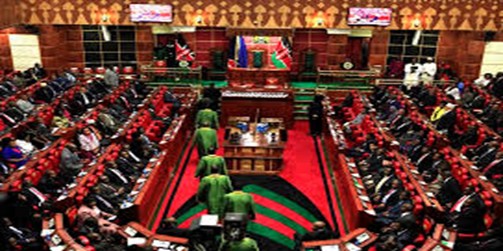
The Court of Appeal has restored the National Government Constituencies Development Fund (NG-CDF) framework, overturning a High Court decision that had declared the entire NG-CDF Act, 2015, unconstitutional—a ruling that, if upheld, would have disrupted the delivery of crucial services across Kenya’s constituencies.
In a judgment delivered yesterday, a three-judge bench led by Court of Appeal President Justice Daniel Musinga, with Justices Francis Tuiyott and Aggrey Muchelule, allowed an appeal filed by the National Assembly. The High Court ruling, issued in September 2024, had questioned the constitutional validity of the entire NG-CDF Act, citing concerns over devolution, public finance management, and separation of powers.
The appellate judges, however, found that the High Court erred by nullifying the law wholesale without a detailed, principled examination of the Constitution. “The High Court erred in law by nullifying the whole statute without conducting a detailed and principled examination of the Constitution, particularly on questions touching on public finance management, devolution, and the separation of powers,” the Court noted.
The Court clarified that amendments introduced to the NG-CDF Act in 2022 and 2023 did not render the original petition moot. However, it emphasised that the mere existence of amendments was insufficient grounds to strike down the law entirely. By reinstating the Act, the Court confirmed that constituencies are administrative platforms, not units of government, used by the national government to deliver certain services, including education support, bursaries, and security-related infrastructure. These projects fall squarely within national government functions as defined under the Fourth Schedule of the Constitution.
“The NG-CDF Act does not transfer devolved functions to the national government nor confer executive authority upon Members of Parliament,” the Court ruled. It further concluded that the framework does not undermine the devolved system of government or encroach on functions constitutionally assigned to county governments.
On separation of powers, however, the Court partially agreed with the High Court, declaring section 43(9) of the Act unconstitutional. This section linked the tenure of constituency fund managers to the life of Parliament and election transition timelines—a connection the judges deemed incompatible with constitutional principles. The provision was severed, while the remainder of the Act was preserved.

The appellate bench also rejected claims that the NG-CDF framework violated public finance principles. It cautioned against invalidating legislation based on speculative misuse of funds, noting that NG-CDF expenditure is approved annually through the Appropriations Act and subject to audits by the Auditor-General, as well as parliamentary oversight.
In criticizing the High Court, the Court of Appeal noted that the trial court failed to clearly show how the impugned provisions conflicted with specific constitutional clauses. The ruling represents a significant victory for the National Assembly, ensuring continuity of the NG-CDF framework, which channels billions of shillings annually to constituencies to fund local development initiatives.