Unending supremacy battle between NPS and NPSC rekindled as IG Kanja defies Sh60billion payroll surrender order

The unending vicious supremacy battle between the National Police Service (NPS) and the National Police Service Commission (NPSC) has been rekindled with the police payroll being at the centre of the new war revolving around human resource or operational functions.
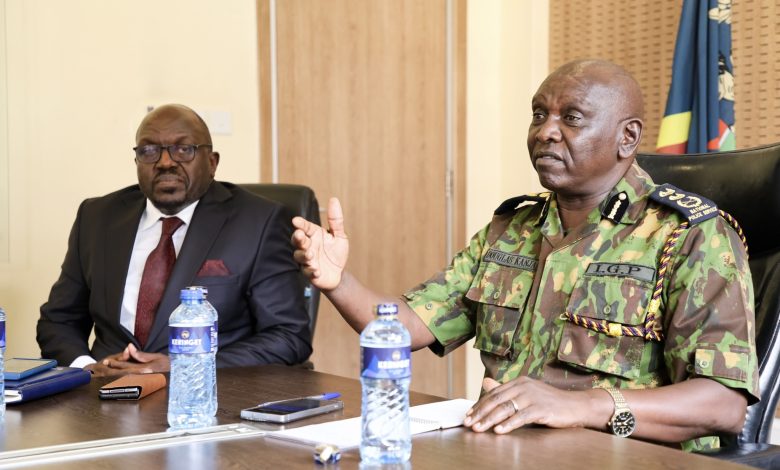
The Inspector General of Police Douglas Kanja vowed not to surrender the Sh60billion annual payroll budget to NPSC as requested by the parliament.
According to the NPSC Chief Executive Officer, Peter Leley, the commission has been unable to operate and fulfill its mandate due to hostilities from the police command.
While appearing before the National Assembly Public Accounts Committee, Leley lamented that NPSC is unable to develop policies covering police recruitments, appointments, promotions, transfers, disciplinary actions, human resource audits, police welfare, and appeals because they do not have access to the payroll of the service men.
The CEO asked the Assembly to intervene and help them have access to the payroll, a directive that was issued to the IG during the committee.
“NPSC has had difficulties accessing the NPS payroll and auditing it to determine the implementation status of formulated policies. This Parliament has assisted us before, and we are ready to appear here together to be cross-examined. We urge Parliament to enable us to take over the human resource function of the NPS,” the CEO lamented.
However, the legislators accused NPSC of failing and sleeping on its job, questioning why NPSC was seeking help when the Constitution already grants it control over the police payroll.
On his part, IG Douglas Kanja said surrendering the payroll to NPSC will be a violation of the constitution, as he is the accounting officer for the service.
“The Inspector General of Police, as the Accounting Officer of the Service, is solely responsible for the custody, integrity, and administration of payrolls within the National Police Service. The payroll, being a financial instrument, naturally falls under the IG’s purview as an expenditure record and a sensitive accountability document,” Kanja stated.]He warned the parliament and NPSC of overstepping their mandate, citing the Public Finance Management Act (PFMA), 2012, and Articles 245 and 249 of the Constitution as the legal basis for his authority.
While acknowledging the NPSC’s role in human resource management under Article 246, the IG stated that this does not include financial control.
“It does not extend to financial or payroll management, and any attempt to assert authority over such areas lacks constitutional backing,” Kanja said.
According to the IG by human resource management, NPSC is supposed to ensure compliance through reporting, auditing, and inquiries, but not administrative micromanagement.
Kanja cautioned against actions that undermine the operational independence of the police.
This is not the first time that the NPSC and IGs have openly fought over the control of the Service.
It dates back to the first Inspector General of Police, David Kimaiyo, who also had a supremacy battle with the then NPSC chairperson, Johnstone Kavuludi.
Among the memorable battles was when Kimaiyo unilaterally decided to 141 county commanders, with 47 being drawn from the regular police, 47 from the Administration Police, and 47 from the then Criminal Investigations Department (CID), now rebranded to the Directorate of Criminal Investigations.
The appointment by Kimaiyo came when the Kavuludi-led commission had advertised for the said posts.
NPSC protested the move, leading to the former Interior Cabinet Secretary, the late Joseph Ole Lenku, to intervene as he affirmed that the appointments were permanent.
Before dust could settle, the then IG again side-stepped Kavuludi and appointed 130 new office Station Commanding Divisions.
The struggle between the two reached the point where the parliament had to intervene and see the IG given more power, including being the chairperson of the commission, which never came to fruition.
Later in 2016, after Kimaiyo left office and Joseph Boinnet took over as the IG, the supremacy battle continued with the remarkable one being when confusion emerged when the National Police Service Commission promoted 52 senior officers and hours after the names of the officers were published, the Inspector General of Police Joseph Boinnet issued his list, leaving out at least six officers including spokesman Charles Owino.
This exposed differences over the running of affairs within the commission, where the IG and his deputies are members.
The supremacy battle proceeded even when Kavuludi left and Eliud Kinuthia took over, and Hillary Mutyambai succeeded Boinnet as the Inspector General of Police.
The memorable moment of the fight was when the National Police Service dismissed as null and void an announcement by the National Police Service Commission that there would be a recruitment of 5,000 police officers in 2020.
This came a day after the NPSC held a full commission meeting and made public a decision to hire the constables and 150 cadet officers, as well as 250 civilians.
IG Hillary Mutyambai, in a contradicting tweet, denied the existence of a police recruitment.
“We wish to advise the members of the public to treat information appearing on social media on Police recruitment as null and void. The NPS has not announced any recruitment drive,” the tweet by NPS stated.
The commission was set to bring in more officers into the service to settle the acute staff shortage, as there has been no recruitment in the last two years.
It had estimated that about 3,000 police officers have left the service in three years.
In the same year, the government froze hiring for the next three years in austerity measures to reduce the country’s wage bill.
Treasury’s tough conditions for approving funding requests presented by ministries and state departments are expected to put government agencies in inevitable budget cuts of monumental proportions.
With Kinuthia still at the helm of NPSC, last year, former Inspector General of Police Japheth Koome rejected the appointment of 51 civilian staff by the National Police Service Commission, terming it as unlawful.
While defending the move, Kinuthia said the deployment of the civilian staff was part of the policy direction on delinking the police service civilian staff from the Public Service Commission (PSC) to NPSC as stipulated in the Constitution.
Though the Constitution bars PSC from extending its function to office or positions subject to NPSC and other commissions, PSC has been deploying civilian staff to the police service.
Koome directed the officers not to allow the newly appointed staff access to the police headquarters.
NPSC revealed that Koome and his deputies deliberately absconded from meetings without apology, all of which recruitment and appointment of NPS civilian staff was part of the agenda.
A the battle continues even this year, insiders blame the conflict between the two; it is alleged that some officials at the Harambee House office have always wanted to continue to control the police affairs for their selfish benefits.
According to security analyst and retired General Service Unit Officer George Musamali, the battles are intended to bend the constitution and those who always want to change in how promotion, discipline, and other human resource management aspects within the police are handled.
“The argument that the Inspector General of Police should have more powers is hogwash. For us who have been in service understand that,” he said.
Musamali previously said that the service is too rotten to be left to absolute command and control by one person who, at different times, might be a victim or beneficiary of the system.
As the power struggles continue to evolve differing views have been offered by different people who say the NPSC should operate like the Judiciary Service Commission (JSC).