Tata Chemicals shutdown threatens devastating impact on water, manufacturing sectors
Reports indicate that Nairobi City Water and Sewerage Company has already issued an emergency alert, warning that the shutdown of TCML would affect water treatment operations.

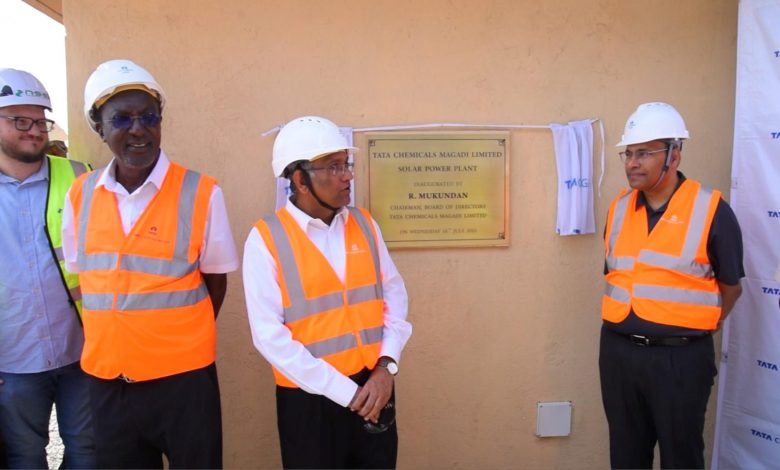
By Adieri Mulaa
The suspension of mining operations by Tata Chemicals Magadi Limited – the makers of soda ash – last month, will grossly affect efficient provision of clean water and sanitation services by water companies in the counties.
Deficiency of the vital chemical in production of clean water, stands to largely affect Nairobi City Water and Sewerage Company (NCWSC) treatment works plants, and all other water and sanitation service providers in the country, if TCML closure is prolonged.
Soda ash is the main product manufactured by Tata Chemicals Magadi Limited from dredging in Lake Magadi, Kajiado county.
On July 29, 2026, Mining, Blue Economy and Maritime Affairs Cabinet Secretary Hassan Ali Joho ordered the immediate suspension of all mining operations by Tata Chemicals Magadi Limited, until the company fully complies with the Mining Act, its Regulations and all other applicable laws governing Kenya’s mining sector.
According to a senior expert water engineer who sought anonymity, TCML company produces soda ash, that is cleaned upto 97% purity, which meets the standard required for water treatment.
”If the plant closes down, Nairobi City Water and Sewerage Company will have to source soda ash from outside Kenya, creating a significant supply risk, especially given the on-going disruptions in the international shipping and global supply chains”, the water engineer told The Informer Weekly in an exclusive interview.
Water and sanitation companies in the counties use soda ash in their water treatment works plants, to correct or neutralise the pH levels of municipal water.
”It is an important step in the water treatment process. However, the demand for soda ash by water treatment plants in all the counties constitutes about 50% of the quantity used in the Nairobi City Water and Sewerage Company treatment works plants alone”, said the expert.
Officials in the Nairobi City County water sector have also expressed concerns that the Ministry of Mining may not have considered the grave impact of shutting down all operations by TCML.
“It will affect water production operations in Nairobi City. We are now being forced to seek soda ash from outside the country”, said the county Chief Officer, Water and Sewerage, Oscar Omoke.
However, Omoke noted that the sector was striving to ensure the quality of water and the cost to the residents is maintained.
The suspension of Tata Chemicals Magadi Limited has send severe shockwaves in Kenya’s manufacturing landscape.
TCML is the only domestic manufacturer of natural soda ash in Kenya. Suspension of its operations has caused local industries which use the product to face immediate supply crunch, with indications of rising raw material costs, and logistical emergencies.
Besides disruption in the vital water sector, the shutdown of TCML has impacted several other key manufacturing sectors in the country’s economy.
These include glass and bottle manufacturing, which threatens packaging timelines for Kenya’s large beverage, alcohol and pharmaceutical sectors. Consequently, commercial suppliers of glass containers are now scrambling for alternative supplies.
Reports indicate that Nairobi City Water and Sewerage Company has already issued an emergency alert, warning that the shutdown of TCML would affect water treatment operations.
Further reports indicate that NCWSC relies on TCML for the supply of over 360 tonnes of soda ash every month, to adjust and stabilise water pH levels, and control corrosion in the water distribution pipes.
According to CS Joho, his decision follows years of sustained engagement between the State Department for Mining and TCML, regarding its statutory obligations under the Mining Act, Cap. 306, the Mining (Licence and Permit) Regulations 2017, the Mining (Royalty Collection and Management) Regulations 2024, and other relevant legal frameworks.
The company has been directed to submit comprehensive documentation and evidence demonstrating full compliance with all the statutory obligations, and to address any outstanding liabilities before it can resume operations.
Soda ash is a fundamental builder used in the manufacturing of fast-moving consumer goods like powder detergents and other cleaning products, to soften water and improve washing effectively.
While KAM supports regulatory compliance, the manufacturers lobby group is aggressively pushing the government for a phased immediate solution on TCML status.
The Association has petitioned the Ministry of Mining to withdraw the outright, indefinite freeze on TCML operations. It warns that prolonged closure is punitive and risks creating long-term irreversible damage to the entire national manufacturing ecosystem.
It has also sounded an alarm on massive job risks of over 1,500 formal and contractual jobs, and supply – chain jobs that are at immediate risk.
KAM argues that forcing such an anchor industry in Kajiado county offline creates a domino effect, posing instant threat to livelihoods across the transport, logistics, manufacturing and distribution sectors nationwide.
Using its solid platform, Kenya Association of Manufacturers (KAM) has stepped in, urging the Mining ministry and TCML to reach a quick structured consensus.
This will allow the country’s sole domestic natural soda ash producer to resume operations as soon as possible.
The shutdown of TCML is detrimental to the supply of clean water in Nairobi City, and the attendant functionality of sewerage service. It is bound to affect the seamless supply of clean water to virtually all parts of the capital.
But the Ministry has set conditions for compliance, including clear mineral beneficiation/value addition strategy, outstanding royalty reconciliation, the payment obligations, insufficient export reporting and reconciliation, and implementation of Community Development Agreement (CDA).
It also wants TCML to address inadequate employment and skills transfer for Kenyan citizens, weak procurement of local goods and services, and environmental compliance shortfalls.
CS Joho has given assurance that the Ministry is steadfast in its commitment to ensure Kenya’s mineral resources are exploited responsibly, sustainably, and in a manner that delivers maximum economic value to the country, while safeguarding the environment and protecting interests of the host communities.
Nairobi City Water and Sewerage Company has several water treatment works plants, which supply the commodity to the capital. They include Ng’ethu Water Treatment Works plant located in Gatundu North, Kiambu county.
Ng’ethu Water Treatment Works plant is the largest. It supplies most of Nairobi’s drinking water, with a capacity of 440,000 cubic meters per day.
The plant primarily draws water from Thika Dam (also known as Ndakaini Dam) on the Thika River. Other supplementary flows into Ndakaini Dam system come from the Chania River, through the Northern Collector Tunnel.
Local rivers in the southern slopes of the Aberdare Ranges catchment area that have been tapped to contribute into the Ndakaini system include Githika and Kayuyu rivers.
Sasumua Water Treatment Works in Nyandarua is the second largest plant that supplies water to Nairobi city. It treats water from the Sasumua Dam system. Kabete Water Treatment Plant is located closer to the city. It mainly treats water originating from Ruiru Dam.
Kigoro Water Treatment Plant in Kanunga area is a newer infrastructure treating water harnessed from Maragua, Gikigie, and Irati rivers, through the Northern Collector Tunnel.
Nairobi City Water and Sewerage Company has two waste water and sewage treatment plants. Dandora Estate Waste Water Treatment Plant (Ruai Sewage Treatment Plant) is located along Kangundo Road in Ruai area. It handles about 80% of Nairobi’s domestic and industrial waste water, using stabilisation ponds.
Kariobangi Sewage Treatment Works located off Outer Ring Road utilises conventional trickling biological filters to process waste water.
Soda ash is used in adjusting and neutralising the pH levels of acidic municipal and industrial waste water.