Ruto signs sweeping tax and tech reform laws

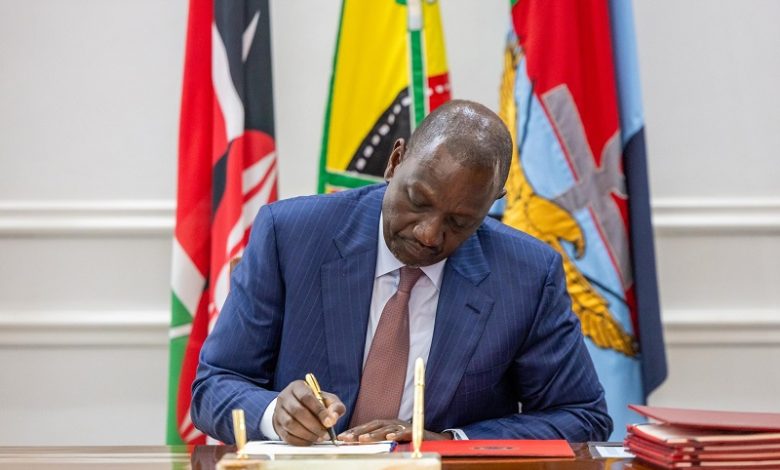
President William Ruto has today morning, Monday, May 11, 2026 signed into law three major Bills aimed at reforming Kenya’s tax regime, attracting investment and accelerating the country’s transition into a regional technology and innovation hub.
The President assented to the Income Tax (Amendments) Bill, the Special Economic Zones (Amendments) Bill and the Technopolis Bill during a ceremony at State House Nairobi attended by senior government officials.
Among those present were Deputy President Kithure Kindiki, ICT Cabinet Secretary William Kabogo, Attorney General Dorcas Oduor, National Assembly Speaker Moses Wetang’ula, Majority Leader Kimani Ichung’wah and Minority Leader Junet Mohamed.
The latest assent marked the seventh presidential assent ceremony of 2026 and highlighted the administration’s push to implement legislative reforms geared towards economic growth, industrialisation and digital transformation.
Speaking during the event, Deputy Chief of Staff in the Executive Office of the President Josphat Nanok said the Income Tax (Amendments) Bill seeks to streamline the administration of capital gains tax and align Kenya’s tax framework with international best practices.
“The amendments are intended to create a more efficient and predictable tax environment while supporting business restructuring and investment growth,” Nanok said.
The new Income Tax law introduces significant reforms targeting internal company reorganisations. Transfers of property between a company and its shareholders during restructuring will now be exempt from capital gains tax, provided the transfers reflect the proportional shareholding of the parties involved.
The reforms are expected to ease corporate restructuring processes and reduce tax burdens on firms reorganising their operations. The tax changes are set to take effect in the 2026/27 financial year beginning July 1, 2026.
The law also comes amid wider government discussions on reforms to Pay As You Earn (PAYE), including proposals aimed at expanding tax exemptions for low-income earners.
President Ruto also signed the Special Economic Zones (Amendments) Bill, 2026, which seeks to modernise the Special Economic Zones framework and attract large-scale investments into the country.
The amended law incorporates upstream and midstream petroleum operations into Special Economic Zones and introduces a guaranteed 10-year tax incentive regime for developers, operators and enterprises licensed under the programme.
It further introduces VAT zero-rating on certain supplies within Special Economic Zones and removes the previous 10-year cap on withholding tax exemptions for royalties and management fees under the Income Tax Act.
At the same time, the President assented to the Technopolis Bill, 2024, establishing a legal framework for the creation of a Technopolis and the Technopolis Development Authority under Kenya’s Vision 2030 development agenda.
The legislation is expected to support the growth of innovation ecosystems and attract technology-driven enterprises into the country by outlining governance structures, licensing procedures and compliance mechanisms for the establishment and management of a Technopolis.
The new law also revokes the earlier Konza Technopolis Development Authority Order and provides for a transition to the new authority structure.