Childbirth is considered a contribution by a housewife during divorce – Njoki Ndung’u
Njoki said that in case a dispute arises during the division of matrimonial property, the court decides based on the number of children the wife had for her ex-husband, even if she made no monetary contribution during the marriage's lifetime.


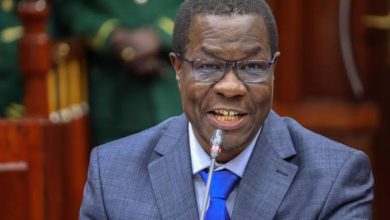
Childbirth is considered a contribution by the wife during divorce, Supreme Court judge Njoki Ndung’u has revealed.
Justice Ndung’u said that in case a dispute arises during the division of matrimonial property, the court decides based on the number of children the wife had for her ex-husband, even if she made no monetary contribution during the marriage’s lifetime.
She added that both direct and indirect contributions, as well as monetary and nonmonetary contributions, are factors considered during the division of matrimonial property following a divorce.
The judge gave a hypothetical example where the husband is employed and takes a mortgage for a house but the wife is a housewife who has borne him six children.
Justice Ndung’u was speaking at the Jomo Kenyatta University of Agriculture and Technology School of Law on “Supreme court jurisprudence on family law“ to commemorate 12 years since the top court’s inception.
She said the court would look at it from the perspective that the house had someone running it while the husband was away working, including feeding the family and preparing the children to go to school.
“The court will take into consideration and has taken into consideration as a contribution even the factor of childbirth, and it can be assessed in terms of percentage as well as the man who with salary contributes to the mortgage,” she explained.
According to Justice Ndung’u, the division of matrimonial property is often very controversial because parties rarely consider indirect and non-monetary contributions to the union.
She referred to a 2020 divorce case that came before the Supreme Court where a couple married under customary law sought dissolution of the union.
The judge said that the Supreme Court held that Article 45(3) of the constitution provides for equality of rights between spouses during the dissolution of marriage, but does not automatically grant a 50:50 division of property without proof of contribution.
In the case, a lower court awarded the wife a 30 per cent share of the matrimonial home and a 20 per cent share of rental units they had constructed during the subsistence of the marriage.
Aggrieved by the decision, the wife appealed the decision, and the appellate court ruled that the property be divided on a 50-50 basis after assessing her beneficial interests.
According to Justice Ndung’u, the man moved to the Supreme Court to challenge the decision arguing that the Constitution speaks of marriage equality but does not mean that the property be divided equally upon divorce.
“We did dismiss this appeal; we upheld that the 50-50 distribution was the correct one but we did say that the equality in Article 45 of the constitution does not apply to matrimonial property. Matrimonial property will be done based on contribution and it will be done case by case. So the courts below us have to check each case by case and consider the contribution that was made and in this particular case we accepted that the 50-50 ratio had been done correctly,” the judge added.