Time to save tea farmers from KTDA’s mismanagement


Kenya’s tea sector, once the pride of the agricultural economy and a dependable foreign exchange earner is again in crisis as farmers shoulder the burden of poor governance at the Kenya Tea Development Agency (KTDA).
The Tea Board of Kenya’s recent revelation that KTDA’s poor managerial decisions contributed to a staggering Sh26 billion loss has reignited long-standing concerns over mismanagement, opaque operations and entrenched inefficiencies within the agency that oversees the livelihoods of over 600,000 smallholder farmers.
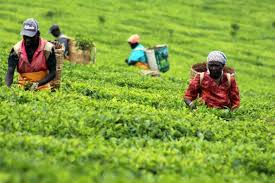
For years, KTDA has positioned itself as the guardian of the smallholder tea farmer. Yet farmers increasingly feel trapped under a system that undervalues their hard work while rewarding managerial complacency. The Tea Board’s findings point to a disturbing pattern, poor-quality leaf handling, weak oversight at factory level and compromised production standards that directly undermined both the price and global perception of Kenyan tea.
At the heart of the crisis is the continuous sale of poor-quality green leaf.
In an industry where global buyers demand consistency, flavour and high standards, KTDA’s failure to enforce strict quality control has eroded Kenya’s competitive advantage. Factories struggling with mismanagement and lack of accountability often accept substandard leaf, prioritising volume over value.
This has driven down prices at the Mombasa Tea Auction, a marketplace where even minor quality drops translate to significant revenue losses.
What is even more alarming is that these quality lapses occur under the watch of managers whose decisions have direct financial consequences on thousands of farmers.
Poor leaf handling marked by delayed collection, improper transportation, and weak factory-level monitoring means that by the time the leaf reaches processing lines, the damage is already done. When such compromised tea enters the global market, Kenyan tea loses its premium status, dragging down earnings for everyone.
KTDA’s structural problem is two-fold; governance failures and misaligned incentives.
Managers often operate in insulated bubbles, far from the realities of the farm gate. The farmers, who should be the core beneficiaries of the system, have little say in how factories are run or how marketing decisions are made. Meanwhile, opaque procurement practices, inflated operational costs and administrative inefficiencies continue to erode the farmer’s final earnings.
The Tea Board of Kenya’s rebuke should serve as a turning point. The sector cannot survive without decisive reforms. First, quality enforcement must be uncompromising. KTDA should adopt strict penalties for factories and field officers who bypass quality standards. Investments in efficient leaf collection systems, transport logistics and farmer training must be prioritised to restore leaf quality.
Second, governance must be democratised. Farmers need stronger representation in decision-making structures. Transparent elections, independent audits and clear accountability frameworks would help dismantle the entrenched patronage networks that have kept KTDA shielded from scrutiny.
Additionally, diversification and innovation are essential. For too long, Kenyan tea has relied on black CTC tea alone, ignoring the growing global demand for orthodox teas, specialty blends and value-added products.
KTDA’s failure to embrace diversification has left farmers exposed to volatile global prices. Countries like India and Sri Lanka have successfully adapted to these shifts Kenya must follow suit.
Finally, the government must strengthen regulatory oversight. The Tea Board’s bold stance should be backed by enforcement powers, regular audits and clear penalties for non-compliance. As custodians of the sector, regulators cannot hesitate where farmers’ livelihoods are at stake.
Saving the tea farmer requires more than rhetoric. It requires confronting the hard truth, KTDA has failed in its duty to protect the farmer, and without structural reform, the industry risks long-term decline.
The Sh26 billion loss is not just a number, it represents school fees unpaid, farms neglected, families struggling and communities sinking deeper into poverty.
Kenya’s tea farmers deserve a management system that values their sweat, protects their interests and restores the global reputation of Kenyan tea. The time for reform is now.