IPOA indicts police over handling of protests, failure to report all deaths
Report says police did not respond to counter-protests that appeared to support the government, used disproportionate force

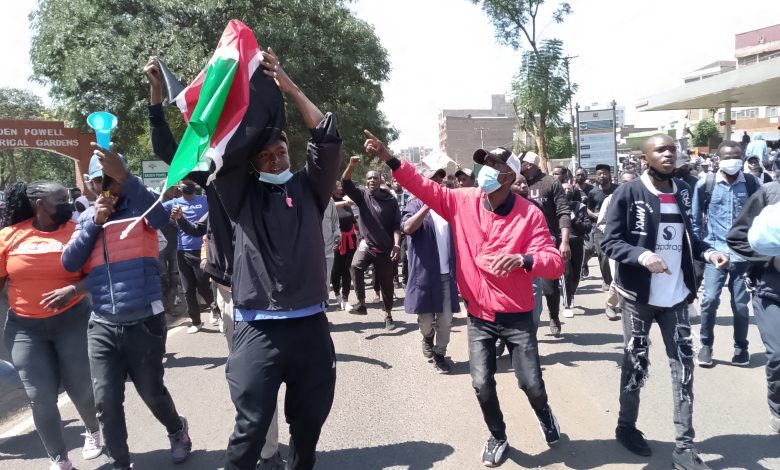
The Independent Policing Oversight Authority (IPOA) has criticised the manner handling last month’s strikes, which led to a total of 65 fatalities, mostly from gunshots and tear gas canisters.
In a report released on Thursday, IPOA says the police treated them as riots and thus focused on quelling them instead of facilitating the demonstrations by ensuring the maintenance of peace and order as envisaged under the Public Order Act and instead deployed disproportionate force, which undermined the possibility of holding peaceful protests.
In its analysis of reports filed by its monitors during the protests, which first took place on June 12 following the killing in police custody of teacher cum blogger Albert Omondi Ojwang, IPOA says the police response ranged from providing security from a distance to active engagement involving the use of tear gas, arrests, rubber bullets and live ammunition.
“In some documented instances, police response was restrained; however, in some cases, the use of force resulted in injuries and fatalities. The Service did not effectively facilitate the protests as envisioned under Article 37 of the Constitution,” the report adds.
It says that police did not also respond to counter-protests that appeared to support the government. Some police vehicles had concealed number plates and some commanders had hidden their rank insignia and nametags.
Uniformed officers were also seen with hidden nametags or service numbers on their uniforms.
According to IPOA, protests in most of the areas it monitored began peacefully before they were disrupted by goons, hired private persons guarding businesses and police officers both in uniforms and civilian clothes.
It says the infiltration of the protests by goons undermined the principle of peaceful assembly and led to the escalation of violence, injuries and fatalities.
“Except in Mombasa during the 25th June 2025, protests in other areas monitored begun peacefully but later turned chaotic culminating in the looting of shops and other businesses. Goons looted, torched and vandalised government and private properties in Nairobi, Kiambu, Nyeri, Nyandarua, Meru, Kirinyaga, Kajiado, Embu and Laikipia,” the report notes.
It adds that during the protests, rival demonstrations were determined to stop them from taking place, with some claiming to be protecting businesses from looters emerged in Central Business Districts in Nairobi, Mombasa and Eldoret.
Participants in the counter-protests used motor cycles and walked through the streets wielding wooden sticks, and crude weapons such as stones and knives.
Despite the widespread destruction of public and private property, including arson attacks on vehicles, government buildings and private businesses, the police appeared overwhelmed and could not manage the situation effectively.
A police officer has since been arraigned in court after shooting mask hawker Boniface Mwangi during repeat protests on June 17. He later died of brain damage.
According to the report, out of the 65 fatalities recorded by July 23, 10 occurred in Nairobi while nine were recorded in Kiambu County, Kajiado (8), Murang’a (4), Nyeri (4), Nakuru (3), Laikipia (3), Embu (3), Meru (2), Machakos (2), Makueni (2), Nyandarua (1) and Kirinyaga (1).
The report also shows that a total of 342 civilians suffered injuries mostly from gunshots and tear gas canisters while 1,126 people were arrested.
On the other hand, 171 police officers were injured, mostly in Laikipia, Murang’a, Nyeri and Embu counties.
During the Gen Z Anti-Finance Bill 2024 commemorative protests, 23 fatalities were recorded while 195 civilians were injured. There were 362 arrests.
At the same time, 99 police officers were also injured.
The report says that out of the 65 deaths recorded, police only notified them of five, which it says undermines IPOA’s independent oversight, legal reporting obligations and signals a worrying culture of non-compliance, adding that it has attended 61 autopsies and will attend the rest when they are scheduled.
IPOA recommends that the Inspector General of Police that the Service respects and protects the right to peaceful protests, in line with Article 37 of the Constitution and that lawful protests must not be characterised as riots to minimise violence, injuries and resource strain.
The IG should also ensure that all police assets and vehicles are properly marked and adopt the use of body-worn cameras and videography during protests to strengthen accountability and support evidence-based prosecution of offenders.
In addition, IPOA wants the IG to ensure that medical personnel are facilitated during protests and that prompt medical aid is provided to the injured. Also, he should establish a dedicated Public Hospital Security Unit to safeguard public medical facilities and support medical responders especially in high-risk protest areas.
IPOA also recommends that the IG establishes mechanisms for proactive engagement with protest organisers to reduce tensions and foster mutual agreements on the security and management of assemblies.
“The Inspector General of Police should allocate a sufficient budget to ensure meals, water and allowances are provided to police officers deployed to provide security during protests,” the report further says.