Legitimacy questions dog Ruto’s Sovereign Wealth, Infrastructure Funds as cabinet convenes

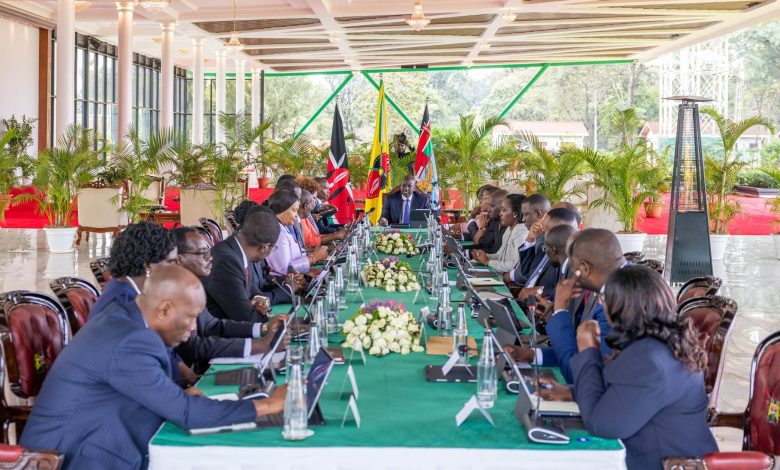
Questions over legality, governance and public participation are mounting around the proposed establishment of the Sovereign Wealth Fund (SWF) and the National Infrastructure Fund (NIF) even as President William Ruto convenes cabinet today to push forward key economic reforms.
President Ruto plans to raise Sh5trillion through the introduction of the controversial funds to finance large-scale development projects across the country, which lawyers said are not recognised by the constitution and that their establishment, would require a constitutional change.
At the centre of the controversy is whether the two funds have been anchored in law and constitutional processes, or introduced through executive action that critics argue bypasses Parliament and public scrutiny.
Civil society groups, constitutional lawyers and opposition figures say the move risks creating powerful financial vehicles with weak oversight, exposing public resources to abuse.
The proposed Sovereign Wealth Fund is intended to pool revenues from state-owned enterprises, natural resources and strategic assets to finance long-term development and stabilise the economy.
The Infrastructure Fund, on the other hand, is designed to mobilise capital for roads, energy, housing and other large projects. Government officials say both funds are critical to unlocking investment and reducing reliance on expensive borrowing.
However, critics argue that Kenya’s constitution requires clear legislative frameworks before such funds can be operationalised. They point to unresolved questions on ownership of assets to be transferred, management structures, reporting obligations and the role of Parliament in approving withdrawals and investments.
“Fellow Kenyans, our constitution only recognise three categories of funds; the Consolidated Fund, the Contingencies Fund and the Equalisation Fund. There is absolutely no provision that creates the so-called infrastructures Fund. To create the infrastructures fund, Ruto must amend the constitution,” Njiru said.
Njiru claimed that any other fund is an illegality.
While attending a church service at Karure AIPCA in Gathundu North yesterday, Ruto said the fund will serve as a dedicated financing vehicle for flagship mega-projects, blending public resources with private capital from local and international investors, development finance institutions and pension funds.
“Tomorrow (today) is when will officially start our journey transforming Kenya from third-world to first-world. Tomorrow is when we will pass a special fund, National Infrastructure Fund that will be used to raise Ksh5 trillion of transforming this country. We are not joking, Kenya must be transformed by all means possible,” Ruto said.
Opposition leader Kalonzo Musyoka has also criticised the proposed creation of the two funds.
Kalonzo said the proposed “alternative financing mechanisms” contradicted constitutional principles, which, according to him, emphasise transparency, parliamentary oversight and equitable distribution of fiscal responsibilities across generations.
“Ruto’s push for ‘alternative financing mechanisms’ flies in the face of a constitution that deliberately anchors public finance in transparency, parliamentary oversight, and the fair distribution of burdens across generations. By seeking to bypass these guardrails in pursuit of a Ksh5 trillion so-called national transformation project, he is attempting to erode the very pillars of fiscal prudence and democratic accountability,” Kalonzo said.
Ruto used his November 20, 2025, State of the Nation Address to unveil an ambitious Sh5trillion plan to ‘move Kenya from developing to developed” status, anchored on large-scale investment in people, irrigation, energy, and transport’ and financed without piling on unsustainable debt.
President Ruto has consistently argued that sustained investment in infrastructure is critical to accelerating economic growth and lifting millions of Kenyans into the middle class.
The Head of State said Kenya must “cast off the prevailing mindset of being content with the average” and emulate Asian Tigers such as South Korea and Malaysia, which he said rose through discipline, strategic investment and refusal to accept mediocrity.
“And all this work I am doing is not because I am looking for votes. I have passed the level of seeking votes. I want to change Kenya. That is my mission.”
“Because if it is about votes, didn’t you vote for me in 2022? Isn’t that vote you gave me enough for me to do this work for you? So people should not bother themselves with issues of votes. The vote will come later, and God is the one who will decide. And those citizens are the ones who decide that the person of bragging, noise, insults, and all that should be taken home quickly,” Ruto said.
The President acknowledged that for years Kenya has relied on debt – including major infrastructure loans from China and other lenders – to finance roads, rail, ports and energy projects, but said this model must change.
To fund the new push, Ruto announced the creation of a National Infrastructure Fund and a Sovereign Wealth Fund that will ring–fence privatisation proceeds and natural resource royalties for long-term investment, instead of using them to plug annual budget gaps.
All proceeds from privatisation of State corporations will be channelled into the infrastructure fund, which will then be used to attract up to 10 times more in private capital from pension funds, sovereign partners and development financiers.
The Sovereign Wealth Fund will, he said, save a portion of resource revenues for future generations, provide a stabilisation buffer against global shocks and invest commercially in strategic projects.