Ruto: I am not acared of rivals, Kenyans will judge our plans
The president’s remarks came against the backdrop of an increasingly organised opposition campaign seeking to challenge his administration ahead of the 2027 polls. The United Opposition and the Linda Mwananchi movement have intensified criticism of the government, focusing on the cost of living, governance, public services and the implementation of key government programmes.

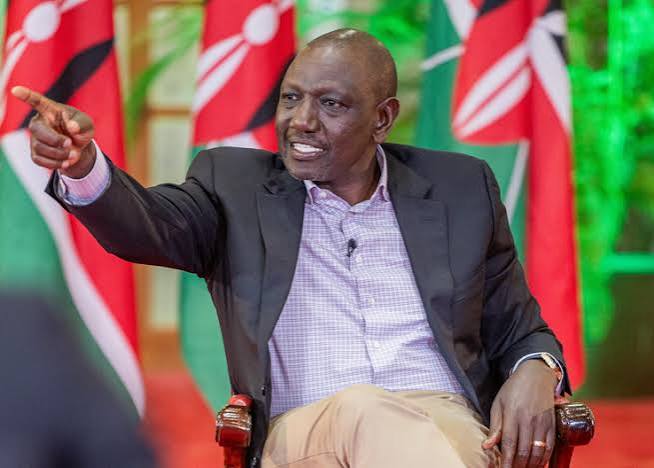
President William Ruto has dismissed growing opposition to his administration, declaring that he is “not scared” of his political competitors and expressing confidence that Kenyan voters will distinguish between political rhetoric and credible plans ahead of the 2027 General Election.
In an interview with the Daily Nation on Friday, August 21, 2026, Ruto said his rivals would struggle to convince voters through name-calling, slogans and insults, challenging them instead to present alternative policies and demonstrate how they would govern the country.
“I am not scared at all. I mean, those people, I trust the judgement of the people of Kenya that they can be able to see where a plan is and where an agenda is. It is not possible for you to engage in name-calling, you know, sloganeering, insults, and expect the people of Kenya to vote for you on account of that,” Ruto said.
The president defended his administration’s flagship programmes, arguing that some of the initiatives that have become targets of opposition criticism were central components of the economic programme on which he was elected in 2022.
He particularly defended the Hustler Fund and the Bottom-Up Economic Transformation Agenda, saying the “Hustler” concept was not merely campaign rhetoric.
“Some of them make a mistake to think that I was elected because there was hustler and there was bottom up. Hustler was not a slogan; it was a plan. Today, Hustler Fund has lent Ksh90 billion to 27 million Kenyans,” Ruto said.
He said the Bottom-Up approach was designed to channel government support towards ordinary Kenyans and small-scale economic players, including traders and boda boda operators.
Ruto also defended the Social Health Authority, the affordable housing programme and the university funding model, which have faced criticism from opposition leaders and sections of the public. He criticised calls to abolish or halt the programmes without, he said, providing workable alternatives.
“I encourage leaders to tell the country, William Ruto has done this, I can do better, this is how I can make things better and the people of Kenya are rational, that is why they elected me,” he said.
The president’s remarks came against the backdrop of an increasingly organised opposition campaign seeking to challenge his administration ahead of the 2027 polls.
The United Opposition and the Linda Mwananchi movement have intensified criticism of the government, focusing on the cost of living, governance, public services and the implementation of key government programmes.
Ruto has in turn accused his predecessor, retired President Uhuru Kenyatta, of playing a role in organising and sponsoring opposition activities against his administration.
In the interview, Ruto said he had previously approached Kenyatta and former Prime Minister Raila Odinga seeking their involvement in developing what he described as a broader national vision.
“But he was reluctant, you know, and he said he wasn’t sure he wanted to do that. Well, those are choices that people make. So, of course, he chose to be, to do what he’s doing, organizing the opposition and sponsoring them,” Ruto said of Kenyatta.
The accusation has become a recurring feature of the political contest, with Kenyatta recently rejecting claims that he is financing opposition activities.
At a memorial service for former Vice President Michael Kijana Wamalwa in Kitale on Sunday, August 23, Kenyatta dismissed the allegations with humour while insisting that Kenyans should be free to choose their leaders.
Ruto’s comments also come amid his repeated warnings about what he describes as the dangers of an opposition victory in 2027.
Weeks earlier, while addressing a broad-based coalition parliamentary group meeting in Naivasha, the president said the coalition must win the next election, arguing that the contest was about the country’s future rather than individual political interests.
“We must win the next election. By God’s grace, we must win the next election, Insha’Allah. Not for your sake but for the sake of Kenya, because the alternative is difficult to fathom,” Ruto said.
He further warned that a united opposition without what he considers a coherent governing programme would pose a risk to the country.
“We have no choice because the alternative, I shudder. A group of people who have no plan, no agenda, no policy, no vision is too dangerous for Kenya,” he stated.
As political alliances continue to take shape, Ruto is seeking to frame the 2027 contest as a choice between his administration’s programmes and what he portrays as an opposition campaign driven largely by criticism.
His rivals, meanwhile, are increasingly presenting their challenge as a referendum on the government’s record.
Ruto insisted that the ultimate decision would rest with voters, urging his competitors to move beyond political chants and attacks and offer detailed alternatives.
“My competitors have to think beyond insults, slogans and chants. They have to think beyond that,” he said.