Kenya pushes for safe, inclusive digital access for schoolchildren, says First Lady Rachel Ruto

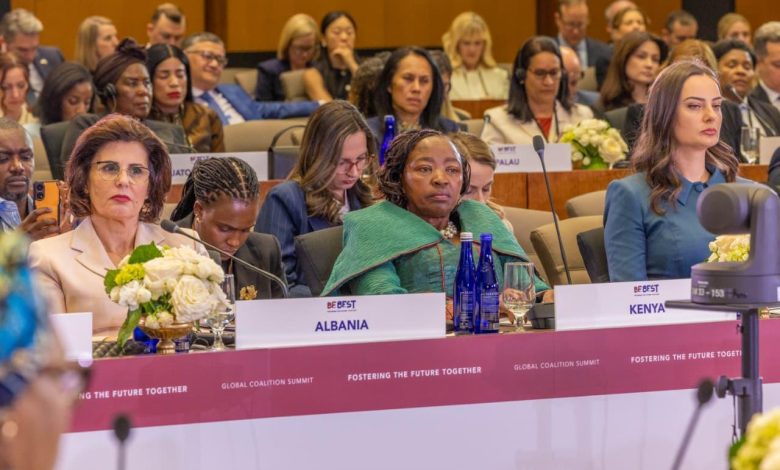
Kenya is intensifying efforts to ensure that school-going children can access digital technologies safely and equitably, First Lady Rachel Ruto has said.
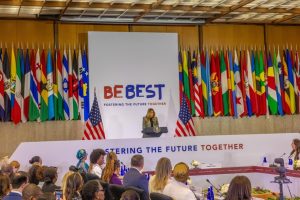
Speaking during a forum of First Ladies convened by Melania Trump, Rachel Ruto highlighted the growing role of digital tools in shaping children’s learning and creativity, noting that technology is now deeply embedded in the everyday lives of young Kenyans.
She observed that children across the country are increasingly embracing digital platforms to explore skills such as coding, digital art and content creation.
“Kenyan children are discovering a love for coding and digital art through their gadgets. They are creating animations, designing apps, composing music, and sharing their work with the world,” she said.
With mobile phone access reaching over 90 percent of households and internet usage continuing to expand, Rachel Ruto noted that the conversation has shifted from whether technology will influence children to how it can do so responsibly.
“The question is no longer whether technology will shape our children. It is how it will empower them, safely, equitably and meaningfully,” she added.
To address this, Kenya has rolled out policy and programmatic interventions aimed at guiding digital growth.
The First Lady pointed to the recently launched National Artificial Intelligence Strategy for 2025–2030, aligned with the country’s Vision 2030 agenda, as a key framework for fostering innovation while ensuring inclusion and accountability.
Digital literacy has also been integrated into the national curriculum, supported by teacher training initiatives designed to equip educators with skills suited for modern classrooms.
At the same time, the government is expanding access to devices in schools and investing in digital infrastructure to improve connectivity.
Beyond government initiatives, Rachel Ruto said her office is championing programmes to deepen access to technology, including distributing devices and promoting robotics training, particularly in girls’ schools.
However, she stressed that access must be matched with robust safeguards. Kenya is strengthening child protection measures through the Children’s Act, with a focus on regulating online content and protecting young users from digital risks. Systems such as the Kenya Education Management Information System are also being leveraged to support data-driven decision-making in the education sector.
Looking ahead, Rachel Ruto outlined four key priorities: expanding equitable access to digital learning, integrating artificial intelligence responsibly, strengthening online safety frameworks, and supporting the broader ecosystem around the child — including teachers, parents and communities.
“As First Ladies, we stand at a unique intersection where policy meets people. We see the realities behind the data — and it is from this place that we must lead,” she said.