IEBC must get its house in order before Kenyans go to the ballot
An election technology tender should withstand scrutiny from bidders, political parties, civil society, the media, auditors and ordinary voters. Every requirement should have a clear justification. Every specification should be measurable. Every qualification criterion should apply equally to all bidders. Every correction should be publicly explained. And every stage should leave an auditable trail.

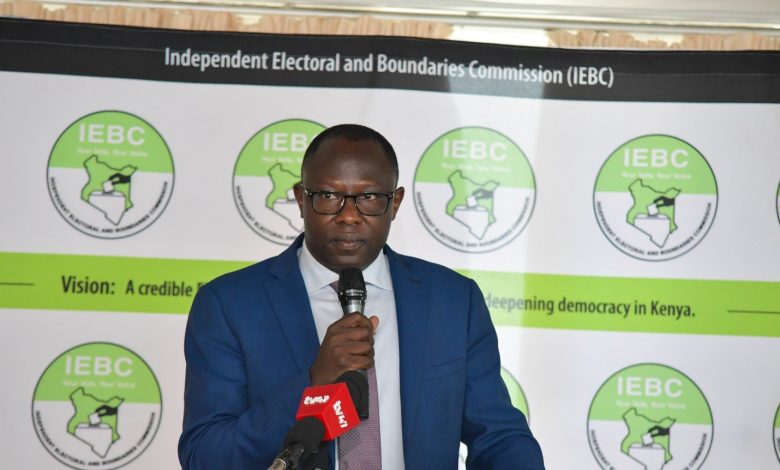
The Independent Electoral and Boundaries Commission (IEBC) cannot afford to enter the 2027 General Election under a cloud of procurement disputes, procedural errors and political suspicion.
The commission’s admission that its tender for a new Integrated Elections Management System (IEMS) contained an error in the requirement for performance security should be treated as a wake-up call, not a minor administrative inconvenience.
Elections are too important to be left to avoidable mistakes.
IEBC has acknowledged that its tender mistakenly required bidders to provide performance security equivalent to 20 per cent of the contract price and says it is preparing an addendum to correct the error.
Whatever the explanation, such an error in a procurement as sensitive as an election management system raises legitimate questions about the quality of internal controls, legal scrutiny and oversight before tender documents are released to the public.
The commission must therefore understand that credibility begins long before election day.
If the procurement process is riddled with ambiguities, contradictions and corrections, it gives political actors and unsuccessful bidders ammunition to challenge the integrity of the entire electoral system.
That is precisely what IEBC must avoid.
The dispute before the Public Procurement Administrative Review Board (PPARB), brought by Galadirel Investments Limited, provides an opportunity for the commission to demonstrate that it is committed not merely to conducting an election, but to conducting one that Kenyans can trust.
The applicant alleges that the tender contains material omissions, contradictions and undefined requirements that could undermine competition and equal treatment of bidders.
It has also questioned the absence of a clearly stated tender value while IEBC prescribed a Sh30 million tender security.
IEBC disputes these claims and insists that the procurement is lawful, that the tender security is permissible for a framework contract and that its specifications were not designed to favour any particular bidder.
These are matters that should be settled through the procurement process and, where necessary, the courts and relevant oversight institutions.
But IEBC should not interpret legal defence of its tender as a substitute for administrative excellence.
The commission must aim for a procurement process that is not merely legally defensible, but transparently beyond reasonable suspicion.
That distinction matters.
An election technology tender should withstand scrutiny from bidders, political parties, civil society, the media, auditors and ordinary voters.
Every requirement should have a clear justification. Every specification should be measurable. Every qualification criterion should apply equally to all bidders. Every correction should be publicly explained. And every stage should leave an auditable trail.
The commission must also resist the temptation to dismiss every criticism as political interference.
Some criticism may indeed be politically motivated. Claims that the IEMS tender has been designed to favour South Korean technology company Miru Systems Limited, for example, should be supported by evidence rather than political rhetoric.
Former Deputy President Rigathi Gachagua’s allegations that the procurement could facilitate manipulation of the 2027 election are serious and should not be casually treated as political noise.
At the same time, allegations of electoral manipulation must be subjected to evidence and institutional scrutiny.
This is where IEBC must be smarter.
Transparency is the best antidote to suspicion.
Rather than simply insisting that its tender is above board, the commission should proactively publish sufficient information to demonstrate why the specifications were chosen, how they were developed, who participated in their preparation and what safeguards will prevent manipulation of the system.
The public should not have to rely on competing political narratives to understand how its election technology is being procured.
There is also a lesson for IEBC in its local-content requirement.
The decision to require 40 per cent local content is commendable if properly implemented. Kenyan companies should benefit from technology procurement through skills transfer, training, support services and participation in implementation.
But local content must never become another ambiguous requirement that bidders interpret differently.
The same principle applies to tax compliance, technical capacity, cybersecurity, data protection and system interoperability.
Every requirement must be precise.
The commission has a constitutional responsibility to deliver elections that meet the highest standards of integrity.
That responsibility extends beyond counting votes.
It includes voter registration, candidate nomination, ballot production, transmission of results, technology procurement, cybersecurity, dispute resolution and public communication.
A weakness at any stage can undermine confidence in the whole process.
This is why the current procurement dispute should be viewed as an opportunity rather than merely an obstacle.
If PPARB identifies weaknesses in the tender, IEBC should correct them promptly.
If the commission is vindicated, it should still consider whether greater disclosure and stakeholder engagement would strengthen confidence in the procurement.
There should be no shame in correcting an error.
The shame would be ignoring a known problem until it becomes an electoral crisis.
IEBC must also develop a stronger culture of consultation.
Political parties, technology experts, procurement professionals, civil society, persons with disabilities, election observers and other stakeholders should have meaningful opportunities to scrutinise critical aspects of the electoral system.
Public participation should not be reduced to a procedural box-ticking exercise.
The commission must particularly guard against procedural hurdles that could delay procurement until the last minute.
Kenya has been here before.
Election technology cannot be procured in haste, tested inadequately and then presented to voters with assurances that everything will work.
The IEMS must undergo rigorous independent testing, cybersecurity assessment, stress testing, audit and public demonstration well before election day.
There must also be credible contingency mechanisms in case technology fails.
Kenyans must know what happens if systems go offline, results transmission is interrupted, biometric identification fails or a cyberattack is detected.
A resilient electoral system assumes that things can go wrong and prepares accordingly.
COTU Secretary-General Francis Atwoli is also right to warn against political rhetoric that could undermine confidence in the electoral commission. His concerns over what he described as a “proof by assertion fallacy” should reinforce the need for political leaders to pursue genuine grievances through established institutions.
But the best way for IEBC to neutralise political accusations is not to demand silence from its critics.
It is to make its processes so transparent that unfounded allegations cannot gain traction.
The commission should therefore embrace scrutiny, not fear it.
It should invite questions, publish answers and correct mistakes openly.
And political leaders must equally accept that an independent electoral commission cannot be expected to favour a technology company merely because it is politically preferred.
Ultimately, however, the responsibility rests with IEBC.
The 2027 election will be judged not only by who wins but by whether Kenyans believe the process was free, fair and transparent.
That confidence cannot be manufactured after the votes are counted.
It must be built now.
IEBC must get the procurement right. It must get the technology right. It must get the safeguards right. And, above all, it must get the procedures right.
The commission should not allow avoidable procurement errors, opaque contracting, inadequate consultation or unnecessary legal disputes to become the Achilles’ heel of the 2027 election.
Kenya does not need another election whose credibility is debated for years because institutions failed to address obvious weaknesses beforehand.
The message to IEBC is simple:
Do not merely comply with the law. Exceed the expectations of Kenyans.
Fix the tender. Remove ambiguities. Open the process to scrutiny. Test the technology. Publish the safeguards. Listen to stakeholders.
And ensure that when Kenyans walk into polling stations in 2027, they have confidence that their vote will be protected from the moment it is cast to the moment the final result is declared.
A free and fair election begins with a transparent process — and IEBC must start proving that transparency today.
By Emmanuel Rono, Reporter at The Informer Media Group.