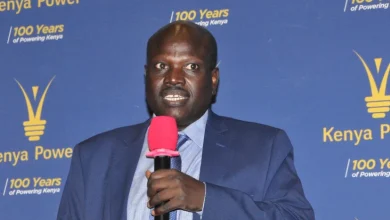
MKU chair Simon Gicharu calls for sustainable model of higher education funding
He proposed the creation of a National Students Financial Aid Corporation, like South Africa’s National Student Financial Aid Scheme


Mount Kenya (MKU) chairman and founder Simon Gicharu has urged the government to adopt a more sustainable model of finance for higher education funding.
Gicheru stated that the model needs to be more sustainable beyond reliance on the exchequer.
The Chairman proposed the creation of a National Students Financial Aid Corporation, like South Africa’s National Student Financial Aid Scheme (NSFAS).
He argued that such an independent and professionalised entity should have the legal capacity to source funding from diverse avenues beyond government allocations.
These could include education bonds, unclaimed financial assets, employer training levies, and contributions from private sector beneficiaries of skilled graduates.
“The funding body must be empowered to attract investment, raise alternative revenue, and ensure efficient loan recovery mechanisms. This will guarantee that every student has access to higher education while securing the financial future of our universities,” he stated.
He also recommended shifting higher education financing from a predominantly grant-based system to a loan-based model, supplemented by performance-based scholarships for priority government programs.
In his proposal to Education Cabinet Secretary Julius Ogamba, Gicharu emphasised that Kenya’s university sector has witnessed exponential growth over the past 15 years, with the number of institutions rising to 79 and student enrolment nearly doubling with the current funding structure is unsustainable, as public universities struggle with underfunding, accumulating pending bills estimated at Sh80 billion, and operational challenges.
He noted that the government’s new funding model, which ties student funding to financial need, has faced legal and logistical hurdles, putting further strain on the sector.
“The growing student enrolment and declining capacity of the Exchequer demand a long-term solution. We must move beyond a grant-based approach and adopt a structured financing model that ensures sustainability,” He stated.
With the government aiming to increase TVET enrolment to two million in the short term and university admissions projected to reach 290,950 by 2027, Gicharu stressed that an independent funding mechanism is the only viable path to ensuring long-term stability in the education sector.
“The time to rethink our approach is now. If we do not act, we risk an education funding crisis that could derail Kenya’s progress in producing a skilled workforce for the future, ” Gicharu warned.